Originally published: October 23, 2021 | Updated: October 15, 2026
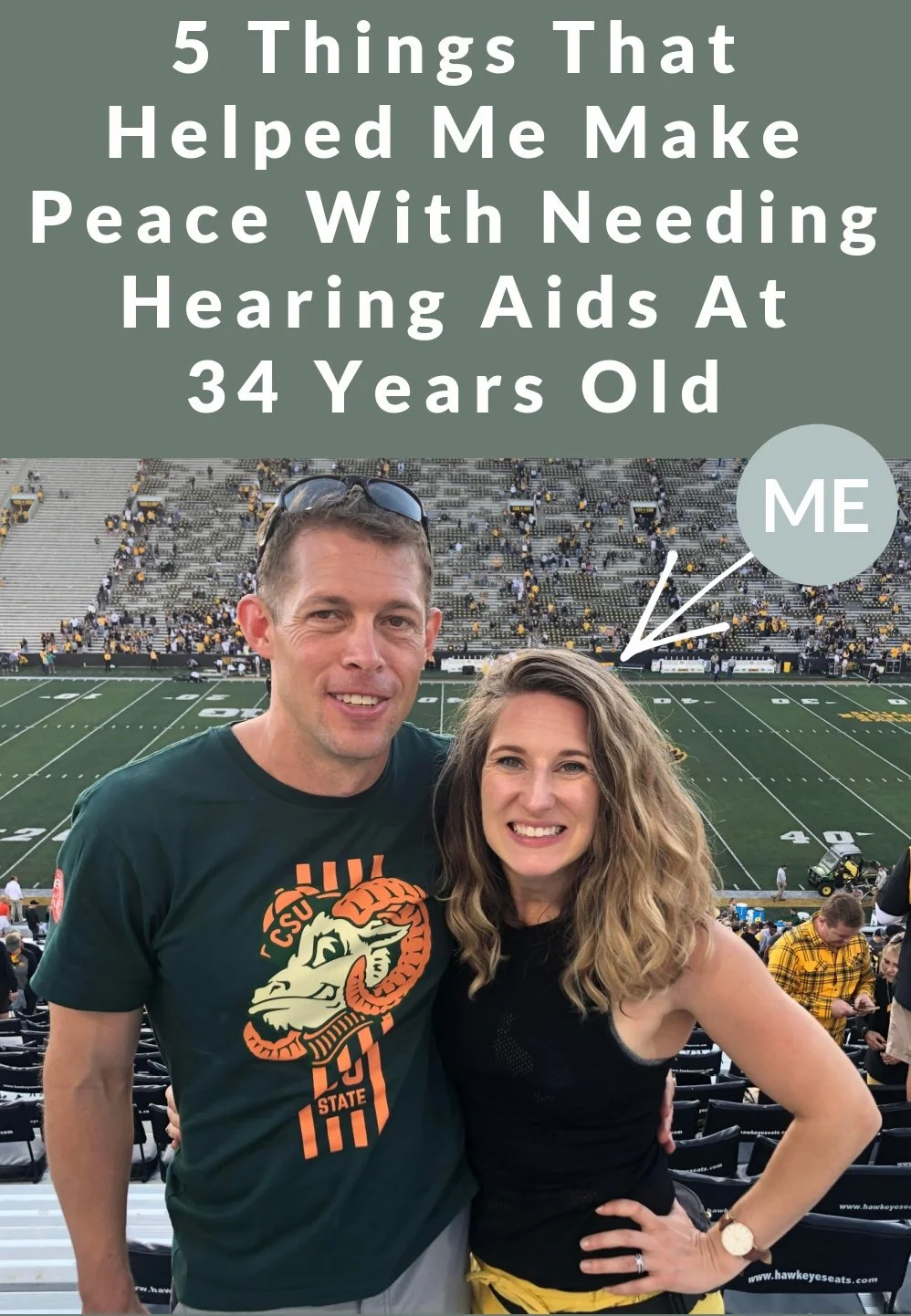
Needing hearing aids at 34 years old feels moderately devastating when you’re diagnosed with early-onset hearing loss. Here are 5 things that helped me make peace with my decision to get hearing aids in my 30’s.
1. I Compared Two Versions of My Future Self, and I Picked the One I Liked Best
When I was first diagnosed with mild to moderate early-onset hearing loss in October 2021 at 34 years old, I spent a few minutes thinking about whether I’d get hearing aids or not.
RELATED POST: I'm Getting Hearing Aids at 34 Even Though I'm Terrified
The audiologist recommended them, but she did tell me, “You could choose not to get them.” Technically, I could be stubborn and go without, as long as I didn’t get hit by a car I didn’t hear (yet).
So I thought about two future versions of myself.
Version 1: Future Lauren has hearing aids, and she hears better than she currently does. She has done what’s best for both her long-term and short-term health.
She’s the kind of person who grieves her current season but owns what she can’t control, trying to find the purpose and benefits of hard seasons. She doesn’t avoid hard things, even if they make her cry.
This future Lauren is navigating life with hearing aids, even if it’s awkward or clumsy at times. She gives herself grace in the moments she needs it. She’s sharing her story because she knows there are probably other women (and men) like her, googling “fancy hearing aids” while crying on the bed after hearing they need them.
Version 2: Future Lauren has decided to avoid hearing aids until they’re absolutely necessary. She freaks out and puts off her next hearing appointment because she’s afraid her results will be worse, and most importantly, because she doesn’t want to look in the mirror and know she isn’t doing what’s best for her long-term health.
She refuses to talk about hearing aids, or hearing in general, with her family and husband. She gets so upset over the fear of needing hearing aids that she cries or leaves the room when anyone asks about it.
She feels like crap because she knows she’s actually harming her brain by not getting hearing aids, and that doesn’t sit well with her. But she’s so afraid of what others might think that she isn’t ready to wear them, deal with them, or learn how to use them. She’d rather sit in her fear of what hearing aids say about her than get curious and learn how to live with them.
When I looked at both versions of future me, I picked Version 1. I wanted to own my story, and right now that includes needing hearing aids. I wanted to stare down the hard thing and show up for it. I wanted to grow into a better version of myself who doesn’t care what other people think about hearing aids and realizes they’re no different than needing glasses.
My versions might feel extreme to you, but my recommendation is to remember that current you and future you are different people. Future you makes different choices, has different skills, and struggles with different things.
If you think about this choice and how it’ll affect future you, or what future you will look like in each scenario, you’ll probably pick Version 1 too.
[Image]
Photo by Toa Heftiba on Unsplash
2. I Decided That If I Couldn’t Control It, I’d Own It
Listen, I like control as much as the next girl, but somehow I always end up in situations where it doesn’t actually exist. Like when I decided to accidentally fall in love with a Marine who decided to serve for 20 years. There’s a significant amount of control missing in our day-to-day and month-to-month lives.
When hearing aids became a recommendation, I decided that if I couldn’t control it, I was going to own it. This became my mantra.
I held onto it so deeply that I feel it in my bones. I’m becoming the type of person who owns her season, whatever it is. I’m evolving like a wild, squirrelly caterpillar into a butterfly, and during the transformation, I’m holding onto this: if I cannot control it, I WILL OWN IT.
If you own your story, you get to write the ending. If I own THIS story, I’m going to write the beginning, middle, and end, and you’d better believe there will be some confetti and shiny things involved.
So if you’re in a hard season, or you’re getting hearing aids too, girlfriend, lean in and figure out what it means to own it in your life.#3 Googling the term “fancy hearing aids,” with my husband #batman
RELATED POST: 8 Ways To Help You Make The Medical Appointments That You're Avoiding
3. I Googled “Fancy Hearing Aids” With My Husband
On the day I got the results saying I needed hearing aids, my husband, whom we call #batman, was able to come home early.
We spent two hours lying in bed (I was too sad to lie on the couch) talking about hearing aids, what they’d look like, what they’d mean, and where I’d go from here.
Then we did something that brought an actual smile to my face. We googled “fancy hearing aids.”
When you google fancy hearing aids, you find some surprising things, like this:
[Image]
This concept hearing aid is a little wild for me, but it’s awesome for people with gauges, and for the people who were creative and innovative enough to design it.
While most hearing aids looked fairly normal, I did feel a bit better knowing there are some that fit inside the ear, and that behind-the-ear hearing aids are much less bulky than they were in the ’90s.
Here are the main types of hearing aids, as far as I’m currently aware:
Completely in the canal (CIC)
In the canal (ITC)
In the ear (ITE)
Behind the ear (BTE), receiver in canal (RIC), and receiver in the ear (RITE)
Open fit
For more information on the types of hearing aids, this article seems to be fairly clear.
The biggest take away from googling fancy hearing aids, is to be curious enough about your new situation to find something light hearted about it.
Hearing aids are not fancy. That is why googling “fancy hearing aids,” brought me a little bit of joy on an otherwise tear filled day.
Maybe what you google is different — or maybe what you do is find a community of like situationed individuals that are within the same age group as you.
When I told my bff that I needed hearing aids due to early onset hearing loss at 34, she told me that ironically she had just went down a rabbit hole on tik tok all about hearing aids.
While I don’t have tik tok, it made me smile to know there are people out there sharing their journey and finding ways to make an otherwise not ideal situation work for them. They’re owning their journey and that makes me happy.
4. I Shared My Story to Give This Season Purpose
I started taking blogging seriously right around the time I realized I needed to stop avoiding the audiologist and get my hearing tested. It was kind of a coincidence that it all happened at the same time, but I’m grateful nonetheless.
Writing has always been cathartic for me. Ever since I was a kid, I’ve written poems in diaries and notebooks, stringing words together and letting them flow into something magical. I never saw myself as a “blogger,” but when I struggled to find a way to bring all my passions together, it was really the only thing that fit.
When I was sitting in the waiting room of the Audiologist, I started this blog post because I thought — maybe my experience right now and my perspective in this moment is valuable.
I was finding purpose in this journey even as it was still unfolding.
After I got my results, I drove to a park and wrote the rest of the post in the Notes app on my phone, through tears and tissues and deep breaths. It felt right to get my experience out on “paper,” to feel like it meant something, and to know that other people in a similar situation could find it if they needed to and know they weren’t alone in their feelings and fears.
I’m not sure what creating purpose out of your hard season will look like. Maybe it’s simply holding tight to the fact that you’re growing into a stronger, different, more resilient version of you.
But whatever it is, I hope you write about it, on the internet or in your notebook. I hope you take a moment to capture who you are in this moment, because you will never be her again.
5. I Learned the Neuroscience Behind Getting Hearing Aids Early
One of the biggest takeaways from my appointment with the audiologist was that getting hearing aids early is infinity times better than putting them off.
There’s a concept called neuroplasticity, which means your brain is always changing. It’s usually talked about in a positive light, meaning an old dog can absolutely learn new tricks. The brain can evolve, adapt, and become more efficient throughout your lifespan.
But neuroplasticity works in two directions. It builds new connections, and it also reassigns areas of the brain that aren’t being used. It’s this reassignment that puts people at risk of losing brain areas associated with hearing if they put off getting hearing aids.
When the brain doesn’t receive sound (auditory input) in a meaningful way, hearing doesn’t happen. The areas of the brain that light up when we hear become more dormant the longer hearing loss goes on, and those dormant areas are then repurposed for other things.
Mild to moderate hearing loss is associated with cognitive decline, and hearing aids have been shown to improve cognitive performance within six months. Mild to moderate hearing loss can cause brain changes as early as three months after the loss begins, and evidence suggests that well-fitting hearing aids may be able to reverse some of those changes.
One of the biggest takeaways for me is that even with mild to moderate hearing loss, your brain has to work harder to hear. That leads to increased activation of the frontal cortex (the front part of the brain), which leaves less brain power available for other thinking tasks.
This is likely why so many people with mild to moderate hearing loss feel drained in social situations. Using hearing aids early reduces the effort it takes to hear, which can make people more willing to spend time in social settings, since it takes less energy than it used to.
When I think of future Lauren, I really want her to have the most efficiently working brain possible, and in this case, that means hearing aids. Let’s just hope the five years I avoided getting my hearing tested didn’t lead to long-term changes.
In my humble opinion, the good things hearing aids do for your brain far outweigh the hassle, or the fear of what others might think. (At least, that’s what I’m telling myself as I wait for my hearing aid consultation, and how I’m making sure I get myself there.)
If you’re on a hearing loss or hearing aid journey, I hope you find comfort in knowing your decision is helping your ears, your brain, and your relationships.
And it’s okay if our biggest hassle is remembering to charge them. We already do that with our phones, our watches, our computers, and our iPads. What’s one more, right?
About the Author
Dr. Lauren Baker holds her Doctorate in Physical Therapy and Certification in Manual Therapy from The University of St. Augustine for Health Sciences. She has built a thriving career while navigating the unique challenges as a military spouse, including serving as an adjunct professor in the DPT curriculum, owning multiple successful cash-based mobile pediatric physical therapy practices, and authoring multiple books on baby development and pediatric physical therapy for both parents and healthcare providers. She now focuses on empowering proactive parents & providers through her books, website, and YouTube channel @drlaurenbaker.