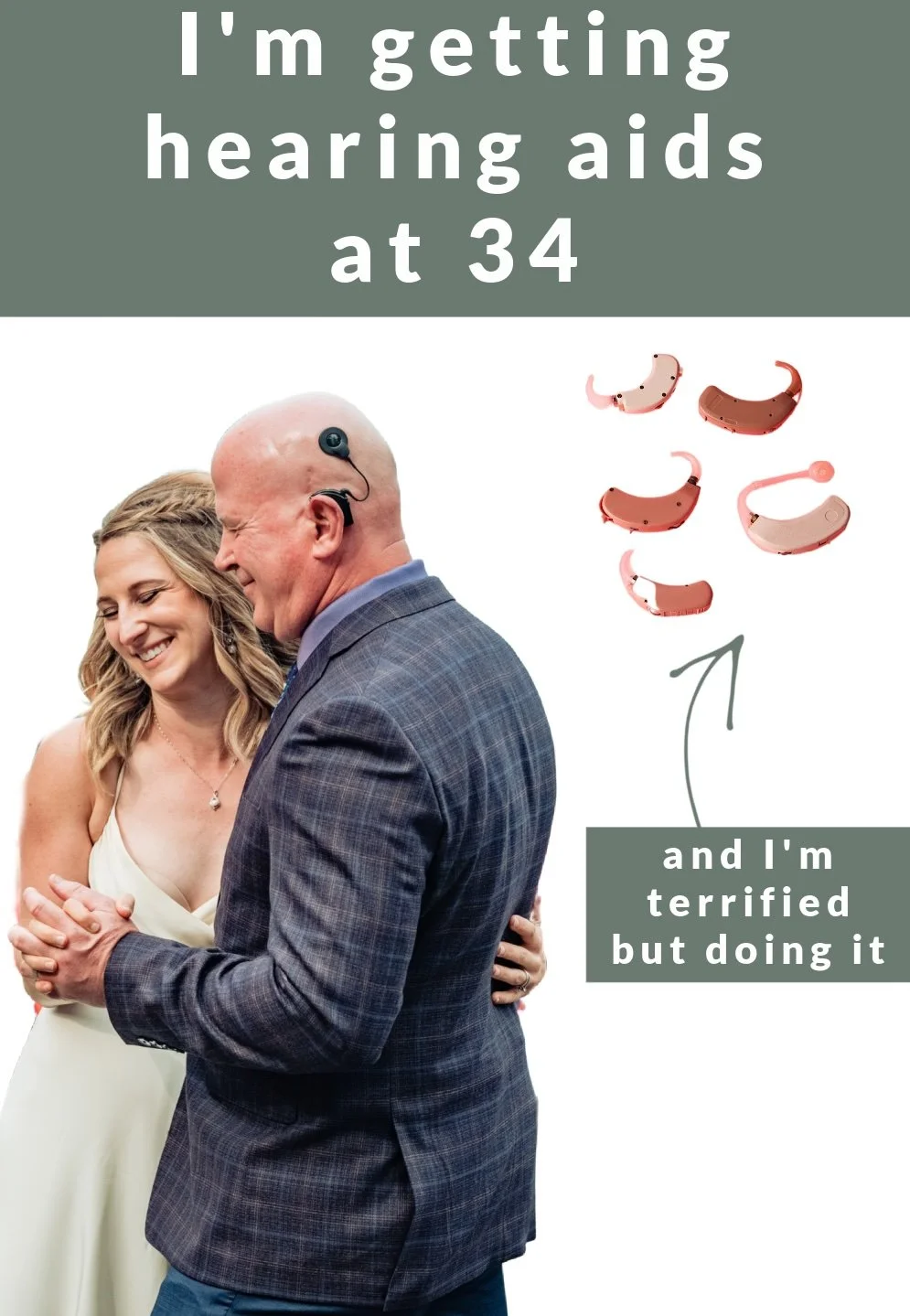
Originally published: October 22, 2021 | Updated: October 15, 2026
Avoiding your hearing test is not a healthy choice, especially if you’re 34 with a family history of hereditary hearing loss. This is the story of my first hearing test, why I cried over my results, and why I’m glad I finally went to the audiologist.
Looking for Tricare’s hearing aid criteria or a gentle audiologist in Milwaukee? They’re at the end of the post. But if you’ve been avoiding an appointment of your own, I hope you’ll read the whole story.
Why I Avoided My Hearing Test for Years
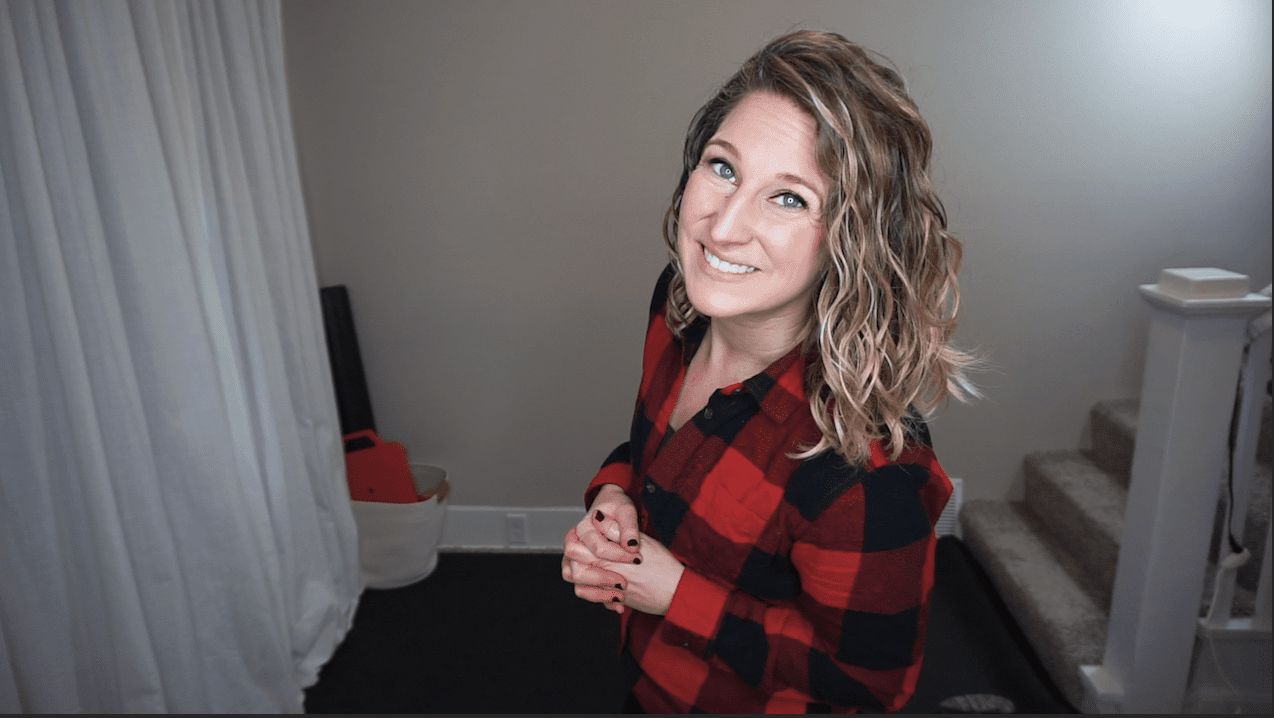
Hi I’m Lauren, a 34 year old with a family history of hearing loss and a strong aversion to making medical appointments.
There was a time when I avoided making an appointment for a hearing test like the actual plague. I would laugh and say it wasn’t something I needed, that my family history of hearing loss didn’t mean anything for me. But really, I avoided any conversation about my hearing because I was scared to death of what the results would say, and maybe more accurately, what they would mean for me and my way of life.
It took several events for me to even realize how much I was avoiding it.
The biggest was a fight with my husband while we sat around a campfire with my best friend and her husband on a gorgeous Washington State night next to our rented cabin. I legitimately freaked out when my husband mentioned that a baseline hearing test would be a good thing for me to get. I don’t think either of us realized how triggering that statement would be for me, or that there was a huge emotional difference for me between talking about hearing loss in general and talking about the potential for me to have hearing loss.
After that fight about how I didn’t need a hearing test, he helped me see that a baseline test would be good for us to have, just in case. I promised him that “after our next move,” I would make an appointment within a year. We’re a military family, and I convinced him that starting care in Washington State when we only had a year left wasn’t ideal.
So there I sat in September 2021, a full year into ignoring that promise and wishing it would go away, when my mom planned a surprise birthday party for my dad and invited his brother and sister, my aunt and uncle.
We were all sitting at my parents’ kitchen table when, of course, the conversation turned to hearing loss. My family has hereditary hearing loss, and my entire dad’s side of the family (aunt, uncle, dad, grandpa) has had hearing aids since their 20s. My dad didn’t get hearing aids until his 40s, but that’s likely because he avoided going to the audiologist, just like me.
A conversation with my aunt, who’s had hearing aids since her 20s, made me realize that a hearing test was deeply distressing and triggering for me, and that was why I’d been avoiding getting a referral or even mentioning it to my doctor.
She told me how she realized her hearing loss was affecting her safety when her boss called her into his office and said her co-workers were concerned about her. She explained that when she got hearing aids, she shocked her co-workers by responding to questions she had never heard before because they were asked from across the room.
She gently encouraged me to find a way to make the appointment easier. That’s when I realized I couldn’t rely on my husband, because I was too terrified of what potential hearing loss would mean for us. I’ve lived what it means for my parents and my extended family.
Let me be clear: when I was avoiding appointments and convincing myself everything was fine, I really didn’t think my hearing was pathological, or bad enough that I needed significant help to hear. But I knew it wasn’t perfect, and I knew it would probably suck to find out how imperfect it really was.
What Hereditary Hearing Loss Has Meant for My Family
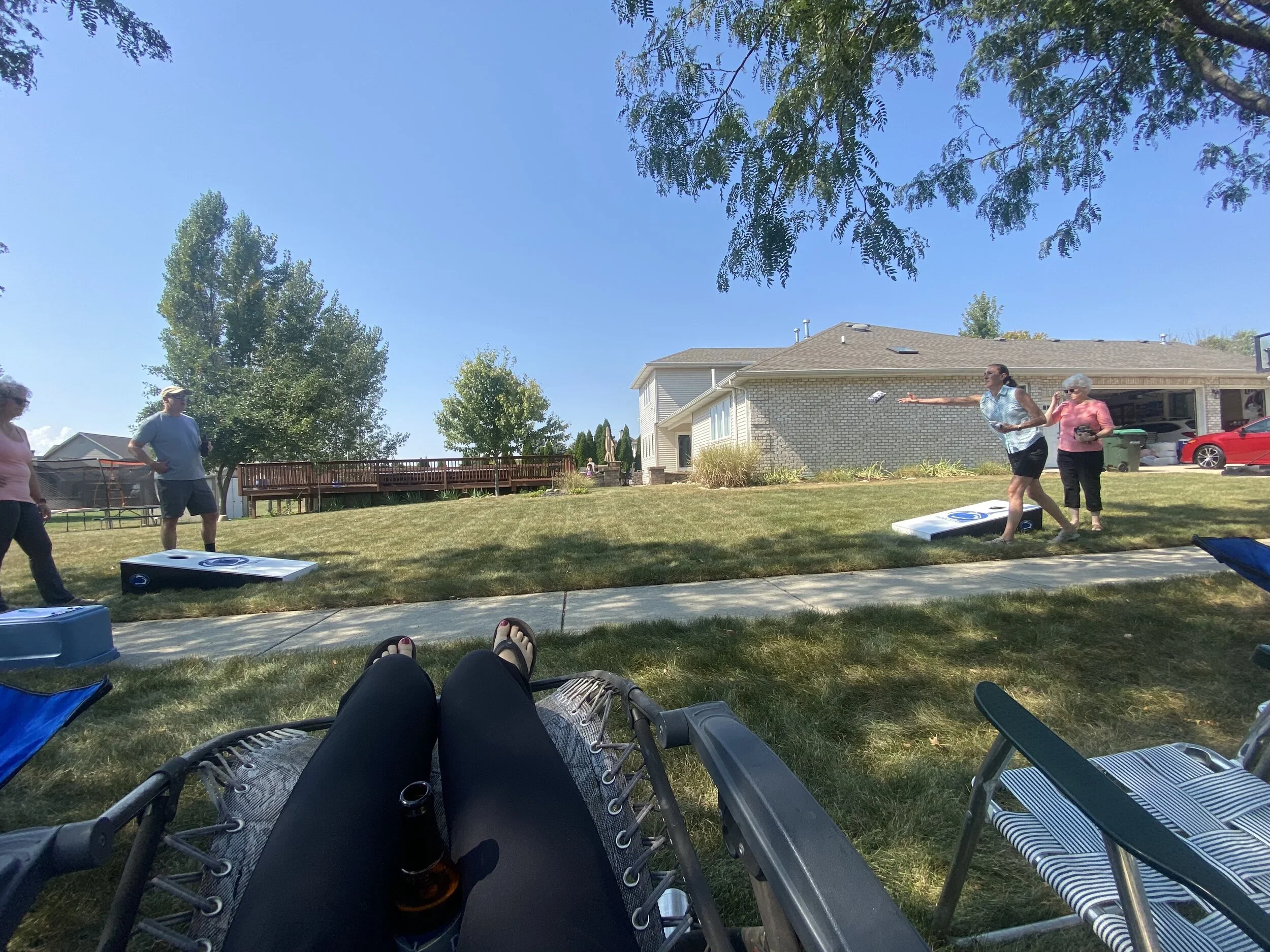
one of the only pictures I took of my Dad’s surprise 60th Birthday Weekend. My Aunt Barb in pink and Uncle Steve in Grey.
My family has a significant history of hearing loss, and it affects a lot. My aunt and uncle both have hearing aids, and while they work, it takes a lot of effort at times on everyone’s part to make sure the closeness of everyday conversation, something we all take for granted, isn’t lost.
One way this is palpable for my family is when someone tells a joke. The laughter is often missing from my family’s faces, because with background noise and hearing loss, they can’t catch the setup or the punchline in time.
In those moments, it’s heartbreaking for all of us, because it would be impossible not to feel left out. You’re physically part of everything, but you’re on the outside looking in on spontaneous moments. And it’s those spontaneous moments that build on each other and help us feel connected. Without them, it isn’t a neutral feeling. Something negative is often left in their place. Do you remember what it felt like to be the outsider in a group when someone told an inside joke and you didn’t get it?
When hearing loss is your journey, it takes really compassionate hearing friends and family to fill those gaps so the person with hearing loss doesn’t feel that way. It also takes grit from the person with hearing loss, because it often happens so fast that the hearing people in their lives can’t fill the gaps, or don’t realize there’s a need, because they heard everything and might not notice the flat expression of their friend or family member.
There’s a specific picture from the week after my physical therapy graduation that explains this perfectly. It’s heartbreaking and hilarious all in one. My mom, my dad, my best friend Kacie, and I were at the Santa Monica Pier in one of those expensive themed photo booths. The first photo was a nice, cute one. Then a voice came on the intercom and said, “Look like a shark is going to eat you all!” My mom, Kacie, and I all look terrified, and my cute, sweet, hearing-impaired father is still smiling, unsuspecting that a shark graphic is about to appear behind us.
It’s just a small example of the itsy-bitsy pieces of connection that can go missing for someone with hearing loss. As a family, we laugh about them, because what else are we supposed to do? Cry? Yeah, we sometimes do that too.
I remember growing up wishing there were more ways I could connect with my grandpa. We couldn’t talk on the phone because his hearing loss was so severe that calls couldn’t go beyond a minute or two of “Hi, how are you, love you, Grandpa.” They lived in Pennsylvania and we lived in Illinois, so besides yearly family trips, there wasn’t a way in the 1990s to have a close relationship except writing letters, which for whatever reason we never got into as a family.
We just lived with the genetic hand we were dealt and made the best of it. But there was always a wondering in my heart: if Grandpa could hear what we were all saying, would our family be different? Would he be more outgoing? What would have changed?
It’s not something that does us any good to think about daily, but those questions sink deep into your bones and become who you are and what you fear.
When My Dad’s Hearing Got Worse
In 2016, when I was living in North Carolina and my family was back in Illinois, my dad got really sick. So sick that stomach pain turned into an abscess leaking into his gut, a hospital stay, IV antibiotics, and emergency surgery.
It was terrifying. He fought hard and had great doctors, which we’re thankful for. He physically recovered, but some things started changing. I noticed our phone calls weren’t as in-depth as they used to be. I started hearing “uh huh,” or laughter, or silence, or “What’s that?” Telltale signs he wasn’t hearing me, even though he was trying and focusing and paying attention. He started saying, “Oh, you’re in the car? Call me when you get home.”
Then he went to his yearly hearing test, and it was really bad. He had lost 90% of the hearing in his right ear, a huge decline from the year before. It was likely a side effect of the IV antibiotics, a necessary evil we would pick again, because alive is still our top priority. If hearing loss is the drawback, we’ll take it, tears and all.
When the audiologist told my dad he was now a candidate for a cochlear implant, all I could think about was how much worse his hearing could get. It was so hard to see how this device could make anything better.

my Dad and I at my wedding in Juneau, Ak in 2019
I saw my relationship with my dad getting harder, because my husband and I are a military family and the phone is all we have a lot of the time. If I lost that, I knew I’d lose so many opportunities to share life with my dad. Communication isn’t everything, but it does affect so much. It’s the glue that holds humanity together, and it’s scary to think about losing it in the traditional sense.
I was terrified of the cochlear implant, but it turned out to improve his hearing more than his hearing aids had. He ended up with two, since his left ear qualified as well.
There are downsides, of course. He has to plan ahead for extra batteries. We can’t talk to him while he’s watching a video or the TV, because they connect directly to his Bluetooth cochlear implants. It’s like trying to get the attention of someone wearing noise-canceling headphones.
I can talk with him in the car again, although wind or extra noise can still make it tough. My family still misses out on things. We can’t talk much in noisy restaurants or bars, so we pick quieter options. If you want to talk to Dad, you sit next to him so the closeness cuts down on background noise.
All of these things are so integral to our family that they can’t help but take root in our bones. They’re our shared life experience as Frauenheims: our shared fears, and our tenacity to keep from losing the closeness that comes a little easier to others.
Finally Making the Appointment
So after talking with my aunt and uncle at my dad’s 60th birthday party in September, I made it my mission to get my butt to the audiologist.
I realized I couldn’t have my husband be the one to help me, because I was too scared of what hearing loss would do to our relationship. So I asked my friend Katlin, the gentlest soul I know, to help me: to check in on whether I’d made the appointment by November, to help me make jokes about going, and to help me pick a treat so I could focus on the reward instead.
It worked. I called my primary care physician and got an appointment for a referral to the audiologist. I lucked out, and the care coordinator scheduled the audiology appointment for me so I couldn’t chicken out.
RELATED POST: 8 Ways To Help You Make The Medical Appointments You're Avoiding
My First Hearing Test at 34
And so I find myself in an audiologist’s waiting room on a Wednesday morning at 8:30 a.m. It’s an October day, one year and two months after we moved to Milwaukee, Wisconsin.
When I made the appointment, I asked the nurse to schedule me with the nicest audiologist they had on staff, and it turns out she did.
When the audiologist calls my name, I walk with her. I already have tears in my eyes, because I’m sure I don’t want to know the results or go through the testing. I’m scared of what it’ll all mean. I’m just plain scared.
She asks how I am, and I look at her and just shake my head. I try to speak, but I know if I do, I’ll start crying right there in front of all the elderly people in the waiting room. She gets it and leads me to the room. She hands me some tissues, and I’m grateful.
We talk about my family history and why I’m here. I tell her I don’t think my hearing is pathological (meaning I don’t think I’ll need hearing aids, but I’m equally scared it’ll turn out I’m wrong).
She asks a bunch of questions and then walks me through how the test will go. I’ll hear words at different volumes and repeat them. I’ll hear beeps at different volumes and pitches and raise my hand when I hear them. She tells me it’s okay if I don’t hear everything; that’s the point. They need to find the quietest level I can hear, so they’ll keep going until I don’t hear anything anymore.
This relieves me. The test is designed for me to fail. She reminds me that whatever the outcome, it doesn’t mean I’m broken.
Typing that out still brings a new wave of tears. I’m not broken, whether I can hear or not. Whether I have hearing loss or not. I’m not broken now, and I never will be. But dang it if that evil feeling doesn’t pop up again and again when I’m faced with something I can’t control.
We start the test, and I breathe through it. I try to focus and not think about what it all means. There are a lot of sounds I think I hear but can’t be sure of, so I wiggle my hand instead of raising it. I know she’ll know. I know it’s okay to be honest. It’s okay to struggle.
The test lasts 25 minutes. She prints the results and asks how it went. I’m honest when I say I think my left ear might be a little better. When I tell her my brain feels tired the way it does after a social event, something I don’t think it used to do, she understands and is quiet for a moment.
My Hearing Test Results
She goes over my results with me. They’re not great. They’re not bad, but in a way, they’re bad enough.
I tell her I was really hoping they’d be a little better. I keep thinking, I’m only 34. She says she was rooting for them to be better too. There are tears, like a lot of tears. And Kleenex.
She tells me I have mild to slightly moderate hearing loss centered in the cochlea, which means it’s permanent and likely genetic. That feels true, and I’m not shocked. I knew that if there was any hearing loss, it would be permanent, based on my family history.
I can’t hear high-pitched tones. That makes sense, since one time I sat with a thermometer in my mouth for a while before looking at my husband and asking, “It beeped already, right?” And he said, “Yeah, a while ago.” ...Shit.
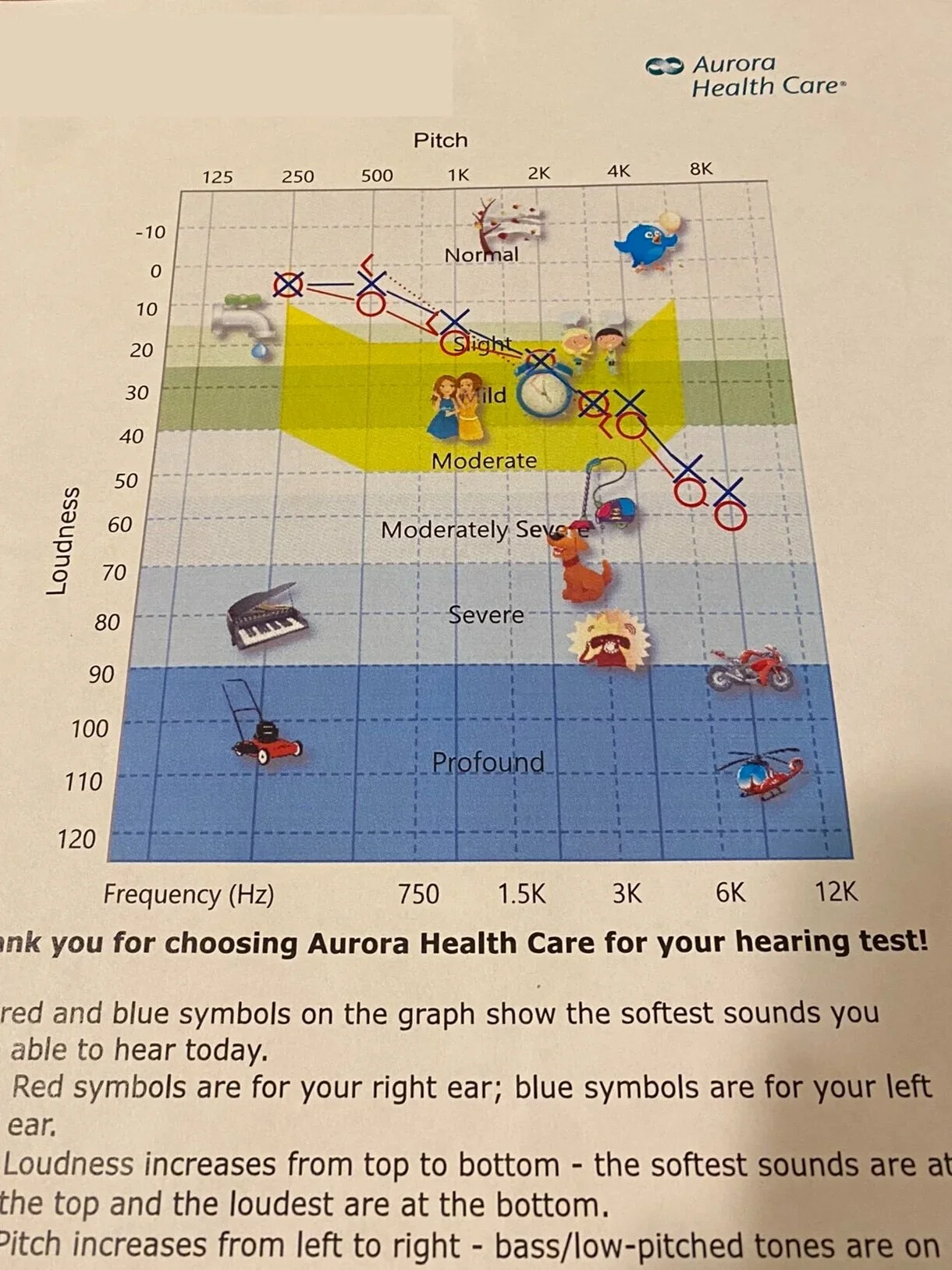
my results from my first hearing test
It explains why I sit with the remote when we watch movies, turning the volume up to 40 or 50 when people talk and down to 30 for music or quiet moments. It explains why we don’t even attempt to talk from different rooms. It explains why parties make me more tired than they used to. It’s not because I’m not extroverted. It’s because hearing takes more energy than it used to.
I ask what this means and what she recommends. She recommends hearing aids. More tears.
I nod. She says I can choose not to get them, that I’m functioning okay right now. Then she looks at me and says, “But I think you’d be surprised at what you’re missing if you got them.”
I know I’ll get them. I don’t want to get them. I’m scared to get them. But I know I don’t want to live as a person who doesn’t do what she knows she needs to do: the hard thing, to see what life is like on the other side.
Why I’m Glad I Went
I didn’t want this to be my story, but it is nonetheless.
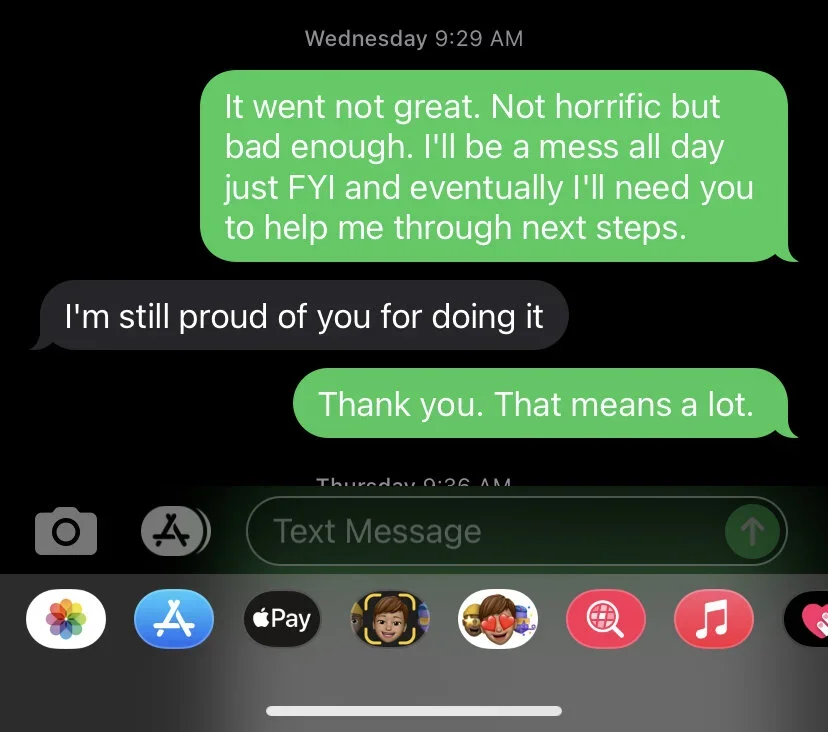
I text my husband while I’m crying in the car. I tell him the results aren’t great, not bad, but bad enough. He tells me, “I’m still proud of you for doing it.”
I start crying harder.
This girl, 34 years old, sitting in her car with the truth, crying tears of grief and fear: I want to BE her. I don’t want to be the 34-year-old who avoided her hearing test. I want to be this girl, tears and all, sitting with the truth.
RELATED POST: 5 Things That Helped Me Make Peace With Needing Hearing Aids At 34 Years Old
What’s Next: My Hearing Aid Consultation
The audiologist told me the next step is a hearing aid consultation, and that they’d check whether I meet my insurance’s criteria. From my understanding of Tricare’s criteria, I do (in two areas, technically).
Tricare, in 2021, covered hearing aids when any one of the following is met:
A hearing threshold of at least 40 dB HL in one or both ears when tested at 500, 1,000, 1,500, 2,000, 3,000, or 4,000 Hz
A hearing threshold of at least 26 dB HL in one or both ears at any three or more of those frequencies
A speech recognition score below 94%
For children: a hearing threshold of at least 26 dB HL in one or both ears when tested at 500, 1,000, 2,000, 3,000, or 4,000 Hz
My speech recognition score is 88% in my right ear and 100% in my left. My hearing level is 26 dB HL at 2K, 3K, and 4K in both ears (my left ear might be 25; I’m not 100% sure reading my chart), plus 40 dB HL at 4K in my right ear.
So at the very least, I’d qualify for a hearing aid in my right ear, although I’ll likely get both even if it means paying out of pocket, since my left ear follows a similar pattern, just slightly better.
My hearing aid consultation is in November 2021, and we’ll see what that brings. I’m hoping for in-ear hearing aids if possible, but honestly, this is all so new that we’ll see what they say.
please note: Tricare does not cover hearing aids for retirees or their spouses. So now, in 2026, when my current hearing aids are at the end of their lifespan, we will be paying out of pocket for both. I obviously don’t love this, but I really love hearing things and my husband is obsessed with my hearing aids (says it makes his life so much easier!) so it’s in the budget.
My Audiologist Recommendation in Milwaukee, WI
If you’re in Milwaukee and need a really sweet, gentle, “it’s okay if you cry during your appointment” audiologist, I have the perfect one for you.
Her name is Dr. Michelle Wadewitz, AuD, CCC-A, and she currently works with Aurora Health Care. I went to the Aurora Neurotology and Audiology clinic at 4448 W Loomis Rd, Suite 200, Greenfield, WI 53220. To make an appointment, call 414-817-3444.

About the Author
Dr. Lauren Baker holds her Doctorate in Physical Therapy and Certification in Manual Therapy from The University of St. Augustine for Health Sciences. She has built a thriving career while navigating the unique challenges as a military spouse, including serving as an adjunct professor in the DPT curriculum, owning multiple successful cash-based mobile pediatric physical therapy practices, and authoring multiple books on baby development and pediatric physical therapy for both parents and healthcare providers. She now focuses on empowering proactive parents & providers through her books, website, and YouTube channel @drlaurenbaker.