Originally published: October 22, 2021
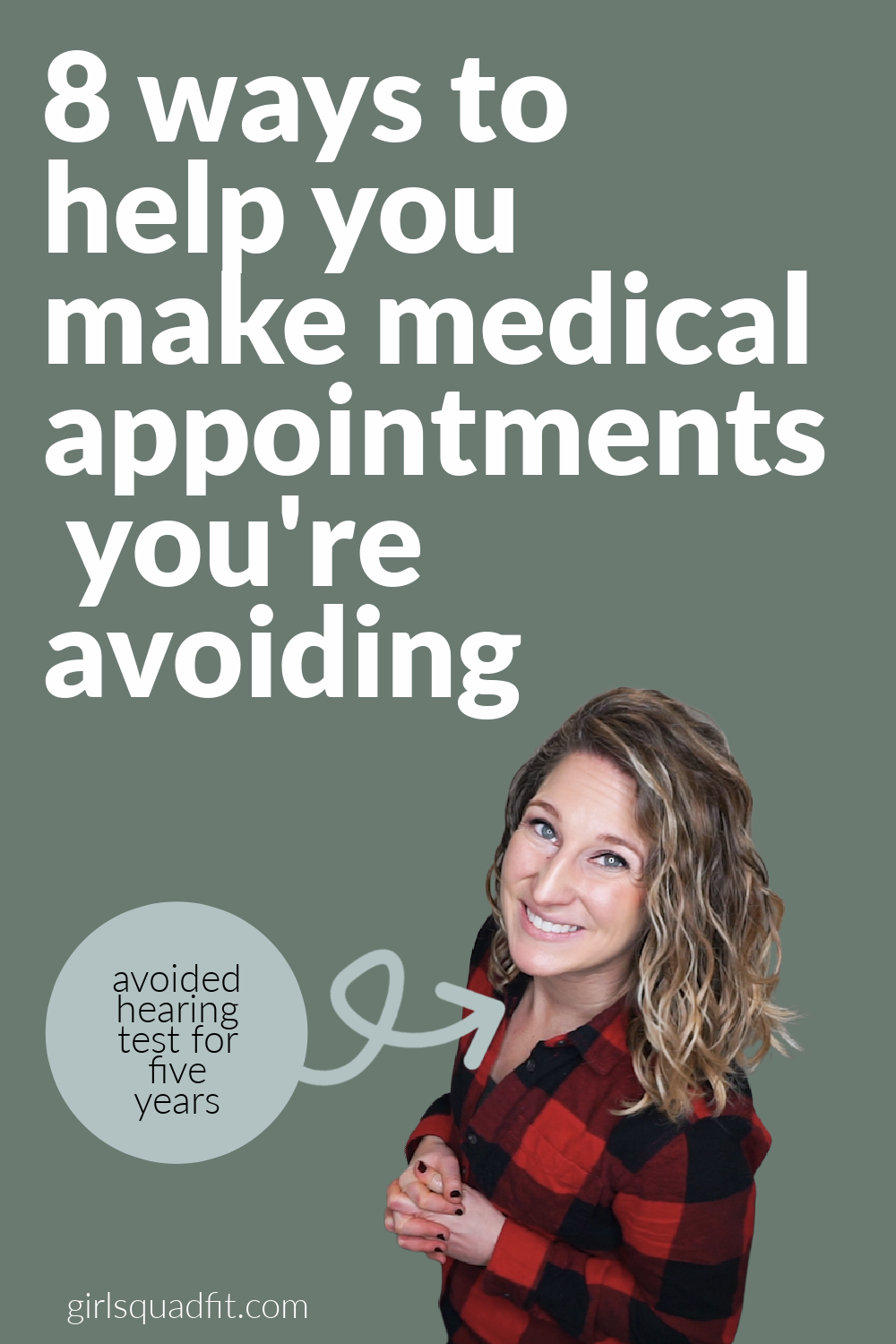
Here are eight strategies to help you finally call and make the medical appointments you know you need, but are terrified of making because of fear of bad news from the doctor or general health anxiety.
I avoided getting my hearing tested for at least five years after I should have gone for a baseline test, especially with a family history of genetic hearing loss.
These are the eight strategies I used to make an appointment with the audiologist (and actually go), even though I was terrified of what the results would mean and wanted to keep avoiding it.
1. Be Curious About Why This Appointment Is Triggering You
There are these things called emotions that no one tells us how to manage, and they influence absolutely everything.
There are a million reasons why you haven’t made the doctor’s appointment you know you need to make, but the only reasons that matter are how you feel about making it. The absolute best thing you can do is get curious about what’s stopping you from the inside.
It isn’t about not having time or not knowing what to do or who to call. Those things take ten minutes on Google.
Let’s be real, girlfriend: what’s stopping you has everything to do with what you’re afraid the doctor will tell you, or what going to that appointment will require of you physically, mentally, emotionally, or, let’s be honest, all three.
Getting curious about what’s emotionally triggering about this appointment or condition is what will help you get to the next step and ultimately take action.
Why are you afraid to call? Is it because of something that happened medically in the past?
Are you afraid of what the doctor will say or how they’ll behave (bedside manner isn’t always their strength)?
Is it the actual test you’re worried about undergoing?
What about this experience are you most terrified of, or want to avoid the most?
Start there. Lean into the discomfort and hold it like you’re cradling a scared kitten you found on the side of the road.
It’s okay to be gentle with yourself right now. Chances are, the reason you’re scared is because of what this will mean for future you. But you’re not future you right now. You’re current you, and current you needs to hold your current fears with compassion and curiosity.
2. Find a Gentle, Neutral Friend
We don’t come into this world alone. Someone carries us for over nine months in their belly, close to their heart. Regardless of what happens after, we can take solace in knowing we were never meant to do hard things alone, from the first second we were placed on this earth.
That includes making tough medical appointments.
We all need a good, sweet, gentle friend who’s willing to hold us accountable to the things that are good for us, but who’s also compassionate when we say this thing we need to do is emotionally exhausting and will take a lot from us to tackle.
Be honest with them. Text or call and ask, “Hey, would you be willing to be my person on this?”
Let them know that making this medical appointment is something you’ve been avoiding, and you need someone to help you do it.
I personally like when this person is one degree removed from your immediate family. A husband, mom, dad, brother, or sister can be amazing helpers in a lot of things in life, but in my experience, they were too close to help me with medical situations I was avoiding.
I often realized they were part of the reason I was avoiding the appointment in the first place.
I subconsciously wanted to avoid hurting them with potentially bad news, or I’d go to a dark place about “what a bad test result would mean for my relationship with my husband,” etc. A gentle friend you aren’t planning to spend the rest of your life with is a better choice.
My friend was Katlin, and we picked a date six weeks out by which I would have an appointment scheduled. I gave myself PLENTY of time and space so it didn’t feel quite as heavy.
We also created an inside joke for what we’d call my appointment. I honestly can’t remember what we decided on now, but having shared language for a hard thing that didn’t use a triggering phrase like “hearing appointment” was huge for me.
It also made it feel like Katlin and I were in it together, having a shared experience, even though it was mostly on me to do the heavy lifting of making the appointment, going to it, and living with the results and next steps.
3. Decide on a Reward
Good behavior needs to be rewarded.
We often think of this in terms of other people, but it’s equally important to do it for ourselves. A reward can be anything: a cute outfit, a date night, a spa day or float session, a food treat, etc.
For me, it was a very large vanilla and apple pie sundae from Kopp’s Frozen Custard. I might have also gotten a burger and onion rings, but who’s counting?
Plenty of people probably have opinions about comfort food and how we should, could, or ought to pick healthier options. But if I’m being real, I wanted custard, and it was all I was thinking about on the way to that appointment. So if something that is less than ideal from a healthy standpoint works, do it without any guilt.
But maybe get one sundae, not five tubs of ice cream from the grocery store that you eat in one week.
4. Go for the Easy Road
If someone offers to make this experience easier for you, let them.
When I went to get my hearing test referral from my primary care doctor (to whom I had never once mentioned concerns about my hearing, by the way), they had someone on staff who helped make those appointments.
I went in thinking I’d get the referral and then have to call the audiologist myself. But when someone offered to do it for me? I accepted. We joked a lot during that phone call that this way I “couldn’t back out and forget to call.”
I think, in their experience, having someone on staff to help patients navigate specialist appointments helps us all not freak out and actually get the appointment scheduled. So if you have the opportunity, let them schedule it for you. It’s worth it.
5. Create Space Around the Appointment
There are times and places to cram your life to the brim and hustle. The day of an appointment you’ve been avoiding for months or years is not one of them.
Create as much space around the appointment as possible. Ask someone to babysit the kids during the appointment and for an hour or two after, so you have time to process. Ask for the full day off work, not just the few hours it takes to get there, have the appointment, and go back.
How much space you need depends on your level of avoidance and how emotionally triggering the appointment is, but I took the entire day.
My appointment was at 8 a.m. I had a slow morning, went to the appointment, then drove to a park where I wrote this blog post and cried for an hour while I waited for Kopp’s to open. I took a walk around the park, got that vanilla apple pie sundae, and drove home.
Then I put on The Kissing Booth 3 and at least one more chick flick before #batman came home early because he knew I was struggling. We lay on our bed googling “fancy hearing aids” and talking about how everything is going to be okay because we’re in this together.
I was emotionally raw for at least three more days, and every time I thought about hearing aids, I wanted to puke because I hadn’t reached acceptance yet. It’s okay that it takes longer to process than it did to get the results or the news.
Be gentle with yourself as you try on this new version of life with the information you have now.
I technically haven’t gotten my hearing aids yet, but my hearing aid consultation is scheduled for two weeks from now, and I’m at least a little closer to acceptance and more emotionally neutral than I was then.
PS I could’ve gotten an earlier appointment, but I told my audiologist, “So to be honest, I’m not in a rush, also if I could avoid this all together, I’d be okay with that too.” Clearly, she wasn’t going to let that fly and for me, two weeks was enough time to process but not enough time to get too “in my head” about them coming.
For you, the space you create for your appointment might look different. Maybe you get a massage, or go out to dinner with your spouse instead of cooking that night. Maybe you go straight to bed because the world is a little too grey for your eyeballs. Maybe space is actually the exact opposite of what you need that day, but exactly what you need three days later.
Whatever it looks like for you, give yourself more space than you think you’ll need either day of or within a few days. You’ll be glad you have it.
6. Let Your Family Know It Might Be a High-Emotion Day
You are not too much. Not now, not ever. You are simply a human with feelings and needs and desires and hard days.
That being said, expectation management is necessary for a healthy relationship. It’s important to be honest with the people you live with and let them know in advance if something is up.
If you don’t want to talk about it, that’s fine too. Say something like, “Hey, I just wanted to let you know I might have more emotions than usual tomorrow. I’ve decided not to talk about it, but I wanted you to know in advance.”
I invited my husband to the medical appointment on my Google Calendar. That way, he knew the day and time, so if I forgot to mention it that morning, he was still aware without me spending any more energy than necessary managing myself.
I definitely added a note in the description that said something like “emotional day,” just to be clear and unapologetic about what my experience was likely going to be.
7. Lean Into Your Emotions and Protect Your Emotional Self
There are times when actively processing your emotions is a really healthy, amazing thing. It’s one of the reasons I absolutely love the Tapping Solution app and use it 10 to 20 times a month.
And there are times, like this one, when passively letting your emotions flow, settle, and just be what they are is essential too.
When you’re facing a potential big life or health change, it’s 100% okay to be sad about what a negative or less-than-optimal test result means for your future.
It’s okay to grieve your previous self. It’s okay to forgive your past self for putting this appointment off. You can’t change the past, but you can grieve your present.
While you’re in this space, it’s absolutely necessary to protect your emotional self. That might mean not talking about your test results with anyone for 24 hours. It might mean only you and your immediate family know. It might mean letting your kids know you’re sad, but not telling them why just yet.
If you get positive or neutral results, it might mean holding that sacred too, while you let yourself breathe in fresh air and relief; letting go of the fear you had been holding.
You don’t have to justify whatever feels right to you. Your needs in that moment are yours alone, and if someone doesn’t understand, it’s okay to tell them, “Hey, I know you want to support me in this. The best way to do that is to give me some time to process. I promise I’ll share with you when I’m ready, but please know that me not sharing doesn’t mean I love you any less.”
8. Have a Follow-Up Plan
You’re going to have next steps. They might involve more appointments, sharing information with family members, or researching devices and assistance.
For me, it meant making a follow-up hearing aid consultation. I gave myself a week to process, but I knew I had to call and make the appointment the next Monday.
Building a follow-up plan is easier when you envision the type of person you want to be while navigating this new season.
I wanted to be the type of person who decided that if she couldn’t control it, she’d own it.
I’m 34 with genetic early-onset hearing loss, and I can’t control that. But I can control getting hearing aids and owning that this is my story.
I can connect with others who have a similar story. I can find the coolest hearing aids on the planet and buy them. I can start living as the type of person who leans into hard things instead of avoiding them.
I can decide I’d rather be the girl crying over negative medical test results than the girl who refused to have the tests.
I can decide I’d rather sit with the truth, even if it requires a lot of me. I can decide that the person I become having lived through this experience is the better version of me, and I’d like to keep choosing to be her.
You Can Do This Too
You can choose all of those things too. I promise.
You can make the medical appointment even though it scares the pants off you. You can sit with the test results, by yourself or with people who love you, and celebrate them or grieve them. You can look at your new future or season and decide that if you can’t control it, you’re going to own it.
You’re not going to avoid it any longer, because now you have the tools to hold your emotional self close and help her find ways to do the hard things, because she knows you have her back.
About the Author
Dr. Lauren Baker holds her Doctorate in Physical Therapy and Certification in Manual Therapy from The University of St. Augustine for Health Sciences. She has built a thriving career while navigating the unique challenges as a military spouse, including serving as an adjunct professor in the DPT curriculum, owning multiple successful cash-based mobile pediatric physical therapy practices, and authoring multiple books on baby development and pediatric physical therapy for both parents and healthcare providers. She now focuses on empowering proactive parents & providers through her books, website, and YouTube channel @drlaurenbaker.