Originally published: October 27, 2018
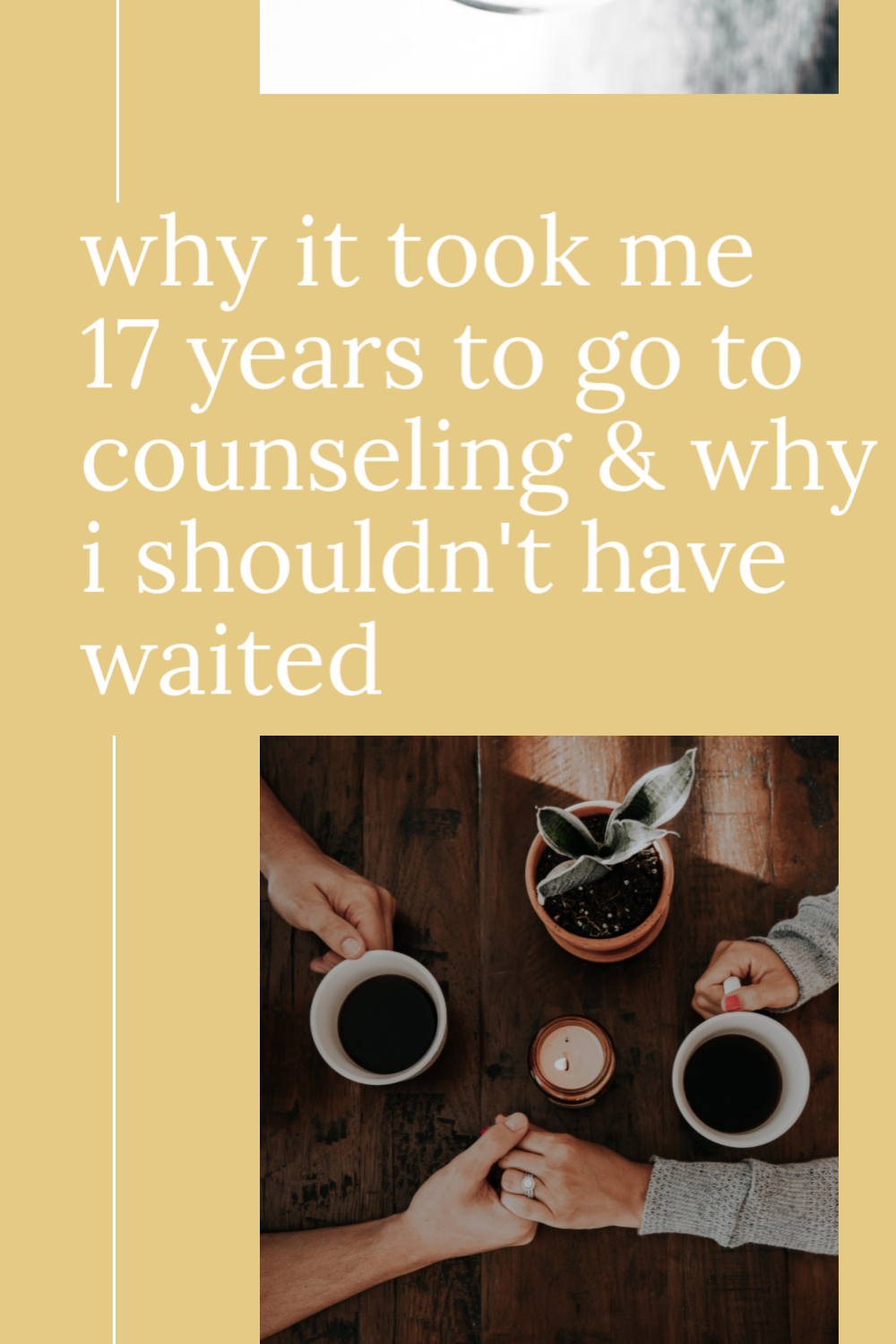
Counseling is a tool surrounded by a lot of misconceptions about how it can be used. If the reason you’re avoiding therapy is that you don’t want to be given advice, a specific type of therapy like EMDR (eye movement desensitization and reprocessing) may work for you, as it did for me. This post is about why it took me 17 years to go to counseling and why I shouldn’t have waited so long.
Content warning: This post discusses sexual assault (SA). I’ve written it in the gentlest way possible, but please take care of yourself while reading.
It All Started When I Was In Eighth Grade
In 2001, something bad happened to me. Something traumatic, life-changing, life-altering.
I was in eighth grade: innocent, barely interested in boys, the quintessential “good girl” in every way possible. On New Year’s Eve of 2000, I went to sleep a trusting soul. When I woke up, I would never quite see the world the same way again.
The moment I woke up, I knew something was very seriously wrong. I felt pleasure but fear, disoriented and afraid. I didn’t know what was happening, but as I slowly came back to consciousness, I realized I was being sexually assaulted by a family friend.
He was one year older than me. Our families had grown up together. We played in the backyard together, and his sister was one of my best friends. My brother, his sister, he, and I all slept on the basement floor of their Pennsylvania home, where we were visiting. We were far from home, but why wouldn’t that have been the safest place in the world to be?
It wasn’t, though. Not that night. It was the most life-altering, traumatic event ever to take place in my world, then or since.
This was before “fight, flight, or freeze” was a well-known idea. At the time, people only talked about fight or flight, and I froze.
I froze because every fiber of my being told me that if I dared to scream, I would die. I had no evidence to support that, but it felt true from an instinctive place, likely bred into my genetic code; I knew I could not make a sound.
After a while, I pretended to turn over, like I was “waking up.” Then, after an eternity, I crawled upstairs and hid in the bathroom for hours, crying by myself.
The next day, I told his sister and my parents, and we left immediately. I would black out the next four months of my life, crying alone in the basement under the stairs. I still did well in school, I still talked to my parents, and I “turned out okay.” I’m so grateful for that.
Why I Didn’t Go to Counseling Back Then
My parents would ask if I wanted to go to counseling, and I always said no. They did the best they could, and I will never, ever fault them for that.
In some ways, I think their experience was even harder than mine. While I was focused solely on healing, they were juggling a million different options and fears all at once. Not knowing how I would be after this traumatic event had to have been terrifying for them.
If you’re a parent who has had to make these decisions, please know that no matter what, we know you did the best you could. If you’re in the middle of the unknown with your own kiddo, please know the best healing you can offer is to love them, remind them they’re loved, and simply be there.
My parents did more healing with their love than I think they’ll ever realize, and for that, I’m eternally grateful. Mom and Dad, I’m so proud of you for making the best choices you could with the information you had, and for loving me through every decision.
Looking back, I’m honestly not sure whether it would have been better or worse if my parents had made me go to counseling.
Where I was at the time, I think I needed them to let me have control over my own healing, and I think it would have been worse if I felt like I didn’t. I needed to know they trusted me enough to give me some control back.
Then again, I think if I had a great therapist, I would’ve had a few painful first sessions and then opened up and maybe my healing journey would’ve been shorter.
We’ll never truly know, since we can’t go back in time, and I’d encourage everyone to make the decision that’s best for them or their family. Because in the end, I think the fact that I’m still able to trust people reflects the way my parents loved me back to life.
How I Tried to Heal on My Own
As I grew up, I became more open about my experience. I talked with my girlfriends in high school about it after leaving class in tears during a documentary on the subject. I talked with girlfriends in college and, since then, understanding on some deep, messed-up level that there are so many more of us than there are not.
I learned that we all heal in different ways: rebellion, avoiding sexual behavior, escalating sexual behavior, timidness, slipping grades, becoming obsessed with control, overachieving and hustling for our worth, or becoming depressed.
The number one thing I’ve discovered is that in the beginning, we all feel that WE are to blame. I felt that I should have screamed, that I should have fought back, and that because I didn’t, I must be weaker than others.
My whole life since then, I’ve been the one to take on more than anyone else, to prove to myself and to others that I am the furthest thing from weak. I am strong, but in ways that exhaust me, not in ways that fill me up.
We strive for years and decades to prove to ourselves that we’re stronger, more resilient, that we are not victims.
Yet if we keep striving forever, we’re not actually healing. We’re pushing and proving and being all things to all people, but never what we need in the deepest parts of ourselves.
We need to be loved, to feel worthy, to accept, to forgive (ourselves most of all), to believe, to trust, and to honor the girl who experienced the trauma, but also to let her go, because she can’t be who we are in the most healed version of ourselves.
The Morning of My First Counseling Appointment
So here I am, the morning of my 1 p.m. counseling appointment, the one I swore I’d never make.
The one I told myself over and over that I didn’t need. And that’s part of the problem. I can see that now, because doing everything on my own doesn’t make me stronger. It only makes me more tired.
It’s okay to ask for help, and to be open to seeing whether something works, even if you’re skeptical and can’t see through the fog.
It took friends having open conversations with me about their own counseling experiences. It took Batman, my boyfriend of seven years, pleading with me to learn how to be content with where I am and what I have [psst, this was written in 2018, before Batman and I got married]. My striving is exhausting, and it worries him.
I’m learning that I hustle for worthiness. My addiction to achieving, to being the best at everything I try, is like juggling ten balls at once and never putting one down, adding another ball year after year. I can’t ever stop, because then all the balls will fall, and who will be standing there when the world stops moving?
I’m not sure who I would be if I did less instead of more, but I’m willing to find out. I decided to make an appointment with a therapist trained in EMDR, because even know I wasn’t really that excited to just talk about my problems. While I know that is not all that cognitive behavioral therapy does, from a newbie, it sure felt like it.
With EMDR, my understanding is that yes there will be talking, but then there will also be real time, physical processing of tough emotions and I have a lot of hope for that this type of therapy is going to be a better fit, at least for now.
Why Stress Doesn’t Just Go Away
I know now that stress is cumulative, not passing. It builds and builds and builds if you don’t have purposeful strategies to release it. I had always thought stress would come and then go, so learning it was cumulative was a “mind-blown” moment for me.
It makes sense, though. It explains why each deployment was hard in a different way, and why the third one in three years (each ranging from six months to a year) had me on my knees with a fever every other week.
I had learned to protect myself from painful emotions (fear of something bad happening to Batman, missing him, loneliness living far from family in a state I didn’t love) by numbing out with overwork, taking on more than necessary so I couldn’t feel.
My body, however, gave out. After that, it was my mind’s turn.
I became addicted to audiobooks, in the sense that I wouldn’t allow myself silence anywhere, not in the car or the house, under the guise of constantly “bettering myself” through learning.
The truth is, I was afraid to be alone in silence, because then I would have to feel everything I’d ignored for the past three years. In an effort to fix myself, I learned meditation.
It’s an amazing way to calm down and fill back up, but sitting in silence is really scary for me, so I haven’t been consistent enough for it to help. I know I feel better when I do it, but getting myself to the point of actually sitting down with my eyes closed is chaos.
The thing is, it all builds on itself. The daily nightmares from my assault, mixed with moving every two to three years, starting new jobs, making new friends, deployments, paying off six figures of student loan debt, and trying to be a good friend and partner, can at times bring you to your knees.
Batman is under his own epic storm of stress that the military brings, so he can’t be the person who fixes my emotional trauma. And honestly, I never want him to have to be. It’s healthier for us if I fix this myself, but not by myself.
Start by Talking to Women You Trust
If you’re in a military relationship, or you’ve been sexually, physically, or emotionally assaulted (once or many times), I want to lovingly nudge you to start a conversation with women you trust about whether they’ve ever considered counseling.
Ask about their experiences. Talking about counseling let me see myself in the shoes of the women who went, and surprisingly, about 80% of what I heard was good and helpful.
Most women wished they could go back, but for one reason or another, they haven’t yet. I’d guess that even if you’ve been to counseling before, it’s still tough to spend money on your health, whether physical, mental, or emotional.
Let’s be the group of women who refuse to live under so much anxiety, fear, and overwhelm.
Let’s instead be the women who are vulnerable enough to ask for help, talk openly about receiving it, and empower other women to seek help in whatever way that looks like for them.
Let’s applaud women who seek help, instead of perpetuating the stigma that we’re only strong if we do everything ourselves.
To My Fellow Military Spouses
If you’re a military wife, girlfriend, mom, or sister, know that I still see you as brave. I still see you as strong. I still see you as a pillar of unstoppable power, an amazing force of nature for making it through a deployment, a PCS (move), or the military lifestyle in general.
And if you choose to seek help by talking to someone, gaining strategies and insight so you can be a calmer, clearer, more loving version of yourself when your service member comes home, I’ll see you with even more grace, love, and compassion.
Because to be the strongest version of ourselves, we have to be willing to receive help and release the stress that will never go away on its own.
We have to be willing to open our arms and trust others with our souls, to build up a sacred reserve of strength so we can support our service members when military life asks more of us than we have to give.
The only way we do that is by filling ourselves up daily, learning how to rest, and practicing acceptance of ourselves, our limitations, and our lives. And to do that, to be that, it’s okay that it takes a village.
If You Need Support
If you’re a survivor of sexual assault and want to talk to someone, the RAINN National Sexual Assault Hotline is free and confidential: call 800-656-HOPE (4673) or chat online at rainn.org. Military families can also find free, confidential counseling through Military OneSource.
About the Author
Dr. Lauren Baker holds her Doctorate in Physical Therapy and Certification in Manual Therapy from The University of St. Augustine for Health Sciences. She has built a thriving career while navigating the unique challenges as a military spouse, including serving as an adjunct professor in the DPT curriculum, owning multiple successful cash-based mobile pediatric physical therapy practices, and authoring multiple books on baby development and pediatric physical therapy for both parents and healthcare providers. She now focuses on empowering proactive parents & providers through her books, website, and YouTube channel @drlaurenbaker.