I Wrote a Book on Pediatric Physical Therapy Documentation, Here’s How You Can Write a Book Too
Originally published: August 17, 2021 | Updated: October 15, 2026
This post contains affiliate links, which means if you click on a link and purchase the item, I will receive an affiliate commission at no extra cost to you. All opinions remain my own. As an amazon associate I earn from qualifying purchases. Please see my disclaimer for more information.
My Self-Publishing Journey
In 2020, I self-published a book on Amazon with my colleague and fellow PT, Katlin Middleton, called The Pediatric Exercise Handbook: A Developmental How To for Parents and Clinicians. Since its launch in February 2020, it has sold an average of 60–70 copies a month on autopilot.
That experience taught me two things:
Self-publishing on Amazon takes a lot of guts, courage, and googling for answers, but it’s not actually that hard.
I could and would absolutely do this again.
Since then, I’ve taken on the world of children’s book self-publishing with The Boy and The Boomerang: An Adventure in Haiku, hiring Natia, an illustrator from the Republic of Georgia off Fiverr.
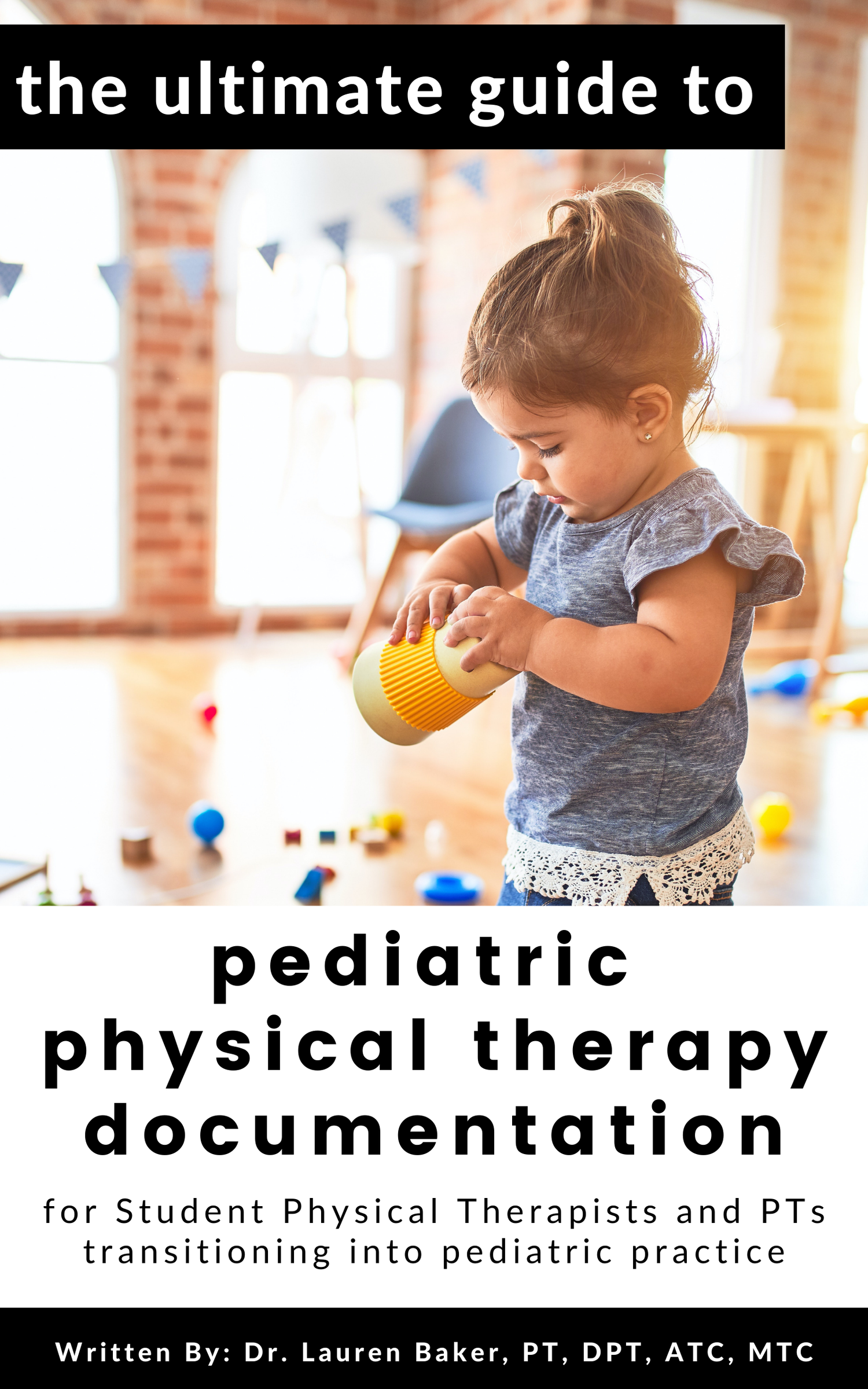
Most recently, I wrote, edited, and self-published The Ultimate Guide to Pediatric Physical Therapy Documentation for Student Physical Therapists and PTs Transitioning into Pediatric Practice.
My newest book came out August 2nd, 2021, and I’m pretty excited about it, mostly because it’s my first solo-written, formatted, and self-published book in an area where I have expertise.
While the children’s book was FUN, the pediatric physical therapy documentation book feels POWERFUL.
Why I Wrote a Book on Pediatric PT Documentation
This book feels powerful because it solves a very specific problem. I know firsthand that the problem exists from working with my students as an adjunct physical therapy faculty member in a DPT program, and from Facebook groups like the Pediatric Physical Therapists group, where people ask for help with it while they’re on clinicals.
You see, the DPT curriculum does a fantastic job of teaching us how to think critically about orthopedic and neurological physical therapy documentation.
But it leaves student physical therapists (SPTs) to learn “on the job” when they have to translate the interventions they complete in pediatric practice while making them sound authoritative and skilled on paper.
Oftentimes, this is a huge stretch for students. I know it was for me during my first clinical rotation in a school district in North Carolina. I could barely understand how to make therapy fun and talk to children in a way that was direct and effective, let alone write what I was doing in a way that sounded intelligent, skilled, and like something insurance companies like Medicaid would pay for.
How I Accidentally Wrote a Book
For this specific reason, I accidentally wrote The Ultimate Guide to Pediatric Physical Therapy Documentation between November and December 2020.
It started off as a short PDF to help my students build sentence structures and prompts, so they could understand where play became structured, skilled therapy, and how to write it down so others would read and interpret it that way.
That “short PDF” became 45 pages, because there were just so many things to cover that I couldn’t stop writing. If you knew me in person, you wouldn’t be surprised that I “accidentally wrote a book.” Being wordy and sharing information isn’t exactly hard for me.
What surprises me is how fast it all came together. From writing to editing to formatting to self-publishing, it took less than a year (nine months), and six weeks of that was spent doing nothing but waiting for the copyright office to approve it.
If you’re looking for a straightforward book that helps you take the interventions you’re completing in the clinic and turn them into efficient, authoritative, skilled documentation, this is the book for you.
If you’re curious how I did it, keep reading.
How to Write and Self-Publish Your Own Book
If you like demonstrations, everything I share here and tons more is in the video below. It runs about 1.5 hours (there’s so much to learn!), so I’ve added timestamps to help you jump to the parts that matter most to you.
Writing and Formatting Your Book
4:59 Start and intro
11:07 My self-published books
13:27 Author proof example and cover changes
16:03 How to write a book / getting started
17:10 The story of how I co-wrote my first book
19:59 Writing a book in google docs and structuring my first book step 1
25:25 Formatting the first book in google docs for edition #1 (printed at staples)
25:43 Why you shouldn’t write your book in google docs
29:30 Formatting nonfiction book version 2 in google doc
34:20 Writing a book in canvas
38:27 Formatting a book in word/pages (mac)
29:30 Formatting nonfiction book version 2 in google doc
34:20 Writing a book in canvas
38:27 Formatting a book in word/pages (mac)
43:18 How to “show invisibles” an absolute must for formatting
44:25 How to justify text
45:45 Insert table of content & make it clickable
47:01 Deciding on spacing and bullets
49:00 Text boxes on top of the page
50:29 Formatting pictures
52:00 Specific pages you want to add for book signings
52:27 Summary of objectives for formatting
Copyright, Amazon KDP, and Getting Paid
52:47 Submit for copyright and copyright page
55:10 KDP website (how you actually get the paperback submitted to amazon)
56:31 Royalty payments and tax considerations
57:34 Sales and marketing ideas
Publishing and Selling on Amazon
1:01:15 Creating a book and publishing on KDP
1:03:17 Keyword research and picking Amazon key words
1:04:38 The top two things you need to sell books on Amazon
1:06:44 Keyword Everywhere for chrome and finding long tail keywords for Amazon
1:08:57 Continuing setup on KDP
1:11:30 The cost of self publishing on Amazon
1:14:00 Example of cover for paperback on amazon
1:16:32 Example of paperback preview in KDP
1:18:53 The cost to print a book and setting your price
1:21:20 Requesting author proofs (the book with the ribbon on it)
1:23:23 Amazon Author Central and your Amazon author page
1:25:50 How much my books have made in sales and profit
1:33:24 Closing and where you can find me
Why More Physical Therapists Should Write Books
Honestly, the biggest takeaway from this entire post is this: I wish more physical therapists would write books. The public needs the information we have locked away in our brains. There are PTs out there who write better than me, know more than me, and are probably better at marketing than me. But that doesn’t mean that the information in my head isn’t valuable.
It is important to share what we know so that we can connect with those who learn best in the way that we teach or explain things. There can be twelve books on one topic, and some readers will resonate with my writing style and some readers will resonate with yours. Both books should be written.
Come join me on this journey.
Writing books might never fully replace your PT income (or maybe it will; you won’t know until you try), but more than that, people all over the world need what you have to offer and teach. If you do write a book, let me know about it by sending me a message on Instagram or writing me an email. You won’t be the first (I love hearing about your journeys and hopefully you won’t be the last either!). I also love promoting other people’s work to my online audience if you’re a peds PT or to my instagram audience if you’re just an awesome human :).
If books aren’t your thing, maybe online courses are. Pro tip: online courses are actually great ways to increase your revenue with book sales, if one book gets $5-10 in your pocket but if 1-5% of readers convert to a higher cost online course, you can increase the lifetime value of each customer/reader. It will also give you an opportunity to get those individuals onto your email list, which increases their lifetime value to your business.
For lifetime access to Teachery.co, the online course platform that I use for my bonus online courses that go along with my proactive play infant milestone series, go here. Teachery.co is a small business, run by Caroline and Jason Zook, who created an online course platform that is pretty, easy to use, and doesn’t come with a monthly subscription model that never ends (which helps your mental state and your monthly revenue!).
Don’t Let Your Fear Stop You
Sometimes, we let our fear stop us from taking action on the things that are calling to us to create. This is so easy to do at first, but over time it can actually become harder and more painful to avoid the thing you’re meant to create than it is to DO the thing or write the book.
The stats for those who actually write a full first draft of a book are atrocious, aka less than 0.1% of people ever write and complete a book. Which is bad, for sure, but absolutely horrifying when 81% of Americans want to write a book. That means out of 80,000 people who want to write a book, only 80 people actually will write a complete first draft.
Don’t be one of the 79,920 people who don’t sit down to write your book. Be one of the 80 people who open a blank document and start pouring love out onto the page in the form of words. Just get it out there, you can edit after 10,000 to 90,000 words are in that document. Don’t judge what comes out, let it. Then sit your butt back down the day or week, and do more of that.
It comes together, I promise.

About the Author
Dr. Lauren Baker holds her Doctorate in Physical Therapy and Certification in Manual Therapy from The University of St. Augustine for Health Sciences. She has built a thriving career while navigating the unique challenges as a military spouse, including serving as an adjunct professor in the DPT curriculum, owning multiple successful cash-based mobile pediatric physical therapy practices, and authoring multiple books on baby development and pediatric physical therapy for both parents and healthcare providers. She now focuses on empowering proactive parents through her books, website, and YouTube channel @drlaurenbaker.
Book on How to Do Tummy Time | Author Unboxing of Tummy Time and Learning to Roll

this blog contains affiliate links
👋 Hello everyone! This is a blog post based on the youtube live I did to celebrate unboxing my new book: Tummy Time and Learning to Roll: A Baby Development Book for Ambitious Parents and Pediatric Healthcare Providers in October 2023!
When I initially did the youtube live to share the moment with my channel and subscribers, it was quite an adventure with technology (I mean of course!). I loved sharing my new book with them and I am excited to share it here with you as well.
To watch the unboxing of my new book, "Tummy Time and Learning to Roll," check out the video linked below.
This book, crafted for ambitious parents and pediatric providers, aims to demystify the often challenging stages of tummy time and rolling, offering guidance to help babies roll independently.
Released in October 2023, when I first held it in my hands it felt surreal, and I'm thrilled to take you through this journey to share more about why I wrote this book and what it’s like to be a self-published author FOUR TIMES now :)
Why This Book?
As a pediatric physical therapist, I've seen firsthand how tummy time can be a struggle for both babies and parents. And rolling? Well, that's another story, with its own set of complexities.
Parents often ask me (or Google) questions like:
Why is my baby rolling in one direction but not the other?
Why over one arm but not the other?
Why does my baby hate tummy time?
When should my baby roll over?
What does it mean if my baby is not rolling over?
And…
Why is my baby not rolling over by… 4 months, 5 months, 6 months, 7 months, etc.
These questions often linger in the minds of parents, and I wanted to create a resource that not only answers these but also provides a comprehensive guide to understanding and facilitating these crucial developmental stages.
I believe that parents are completely capable of influencing how their children move, if they are given access to information.
Do some children absolutely need Pediatric Physical Therapy? Yes.
But could parents truly influence their children’s ability to move if Physical Therapists took the time to educate them in a way that is accessible to the masses? Also, absolutely yes.
That is one of the reasons I feel so called to write books, because they are accessible internationally. In places where Pediatric Physical Therapy might not be.
So I am here, with those resources, for you to take action if that is something you are ready to do.
A Peek Inside Tummy Time and Learning to Roll:
A Baby Development Book for Parents
Let's dive into what makes this book a must-have for parents, caregivers, and pediatric providers:
Tailored for Parents and Providers: Initially titled for a clinician audience, I quickly realized my primary aim was to empower parents.
This book is, first and foremost, for you, the ambitious parent eager to support your baby's development. Pediatric healthcare providers looking to deepen their understanding of baby movement from a pediatric PT's perspective will find it equally beneficial.
The truth is, I included EVERYTHING – because some parents want that, heck some parents who do not have access to a Pediatric Physical Therapist in their area NEED THAT.
If you don’t, it’s totally encouraged to skip the more in depth sections – in fact – there is a “beginners route,” and a more “advanced route,” just so you know in advance which chapters might be a little more in depth.
Trust me, if it feels overwhelming, I would much rather you skip it than try to take on too much. Use this book as a workbook, in any way that feels right to you. It will always be there if you feel ready to tackle more.
More Than Just a Book: What sets this apart is its approachability and practicality. It's almost like having a pediatric PT in your pocket!
With checklists and step-by-step guides, it's designed to be your companion, helping you navigate the nuances of tummy time and rolling with confidence.
I don’t know about you, but I am ALL ABOUT A GOOD CHECKLIST.
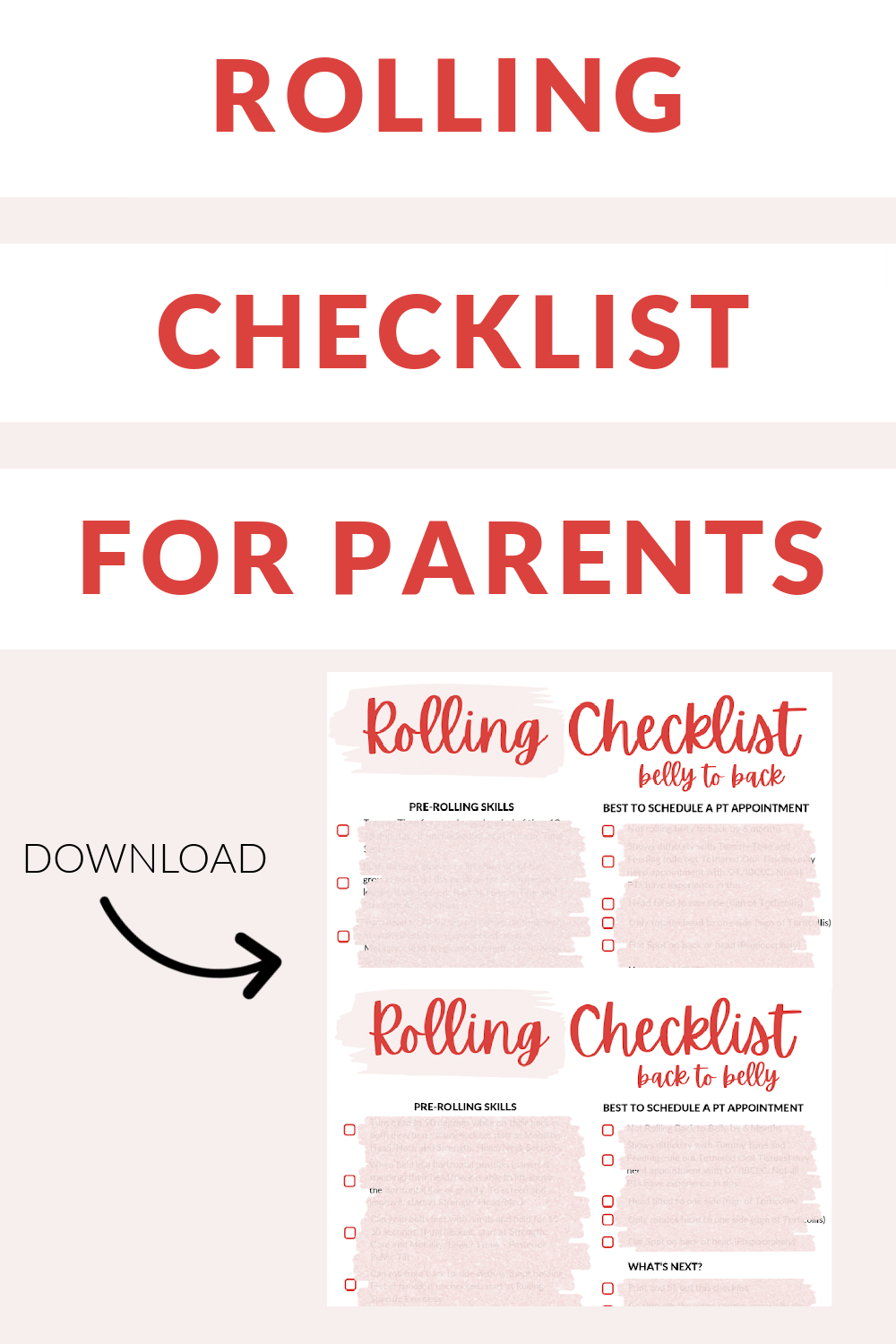
When I have a problem, I want a step by step on how to solve: it’s how my brain works and I was happy to create three for you that are located in this book: tummy time, rolling back to belly, and rolling belly to back.
Unlocking the Free Online Video Course: Yes, you read that right. The book comes with a free online video course to visually guide you through each exercise and concept. This is about making sure you have all the tools and support you need, right at your fingertips.
If you have questions, parents can also find my Online Parent Consultation link to book 1:1 time throughout the course.
From Proofs to the Final Product
Receiving the author proofs was a moment of validation and anticipation. It allowed me to refine and ensure the book's message was clear: This is for parents and caregivers, ready to embark on a developmental journey with their little ones.
The final product, with its vibrant cover and detailed content, is something I'm incredibly proud of. I can’t quite explain what it’s like to hold something that you envisioned in your mind, in real life.
After countless hours and hours over eight months, I was finally able to hold all my work in my hands. It is absolute joy to know it exists to help others, if they need it or are curious about learning more on how babies develop what they need in order to roll.
If you’re curious, here are a few things about the writing process that might surprise you:
My favorite part: writing the book, while sitting at the lake house in GA with a cup of coffee, knowing that my words were some day going to help parents help their littles move well. I was also really surprised about how many mamas were excited to share photos of their babies to help make the book even better.
The hardest part: EDITING. oh my Lord, it is mentally exhausting. This is my longest book yet, and while it is best practice to hire an editor, at the time, I did not feel comfortable about putting the $1,000 to put up front (we were moving and I did not have a job and limited income coming in at the time).
I interviewed a few editors to see if the process would be helpful or needed. The honest part is that I felt kind of crappy NOT hiring an editor, even though this is book #4 and I haven’t hired one yet.
I do think, generally speaking, that hiring an editor is smart. In my case, instead, I had a few Physical Therapists read through the drafts and I paid a Mom friend with a baby in the rolling age to read through the entire book, bonus that she has an English degree.
Then once that was done, I read the entire book out loud twice.
And yes, I most definitely lost my voice on those days. But the amount of changes I made were definitely worth it.
The most creative part: I first felt called to write these books on NYE last year, when I created four book covers on accident in canva. I just thought it sounded like an awesome idea at the time. Once I had the covers created, they were so cute, I honestly couldn’t help myself but put my booty in a chair and write the book.
We’re now over a year from the moment that I first started writing this book (February 2023) and have three more to do, so onto Learning to Sit, in quarter two (April 2024).
The part that used to be really hard but was easy this time: formatting photos so that they look okay in kindle format. For those who haven’t done this before, you might not know that the way you create a book for paperback is MUCH easier than the format you need for it to be read-able on a kindle device. If you have pictures, a lot of authors will make it only available in pdf via kindle, which means you cannot access it on a kindle e-reader, much to my horror when purchasing these books on my own.
I was definitely refusing to be one of those authors, but to be honest, I’ve learned how to do everything from youtube myself so it took a bit of getting used to for the photos to not go completely crazy every time I uploaded it into the kindle website and previewed it (thank goodness for this function!).
When we created our first e-book in 2020, The Pediatric Exercise Handbook, it took me literally an entire month of 20+ hour weeks to figure out how to make it work well, and to be honest, by the end I wasn’t sure how I had even managed it.
This time, I did a little more research to format the pictures the correct way: “move with text,” and “in line with text.” And by correct, I mean it worked this time and hopefully it will next time. Either way it did not give me any trouble and took a few days instead of an entire month!
Inside the Book: A Closer Look
Tailored Sections for Every Stage: Whether you're a new parent figuring out newborn tummy time or a caregiver looking to address specific rolling challenges, there's something for everyone.
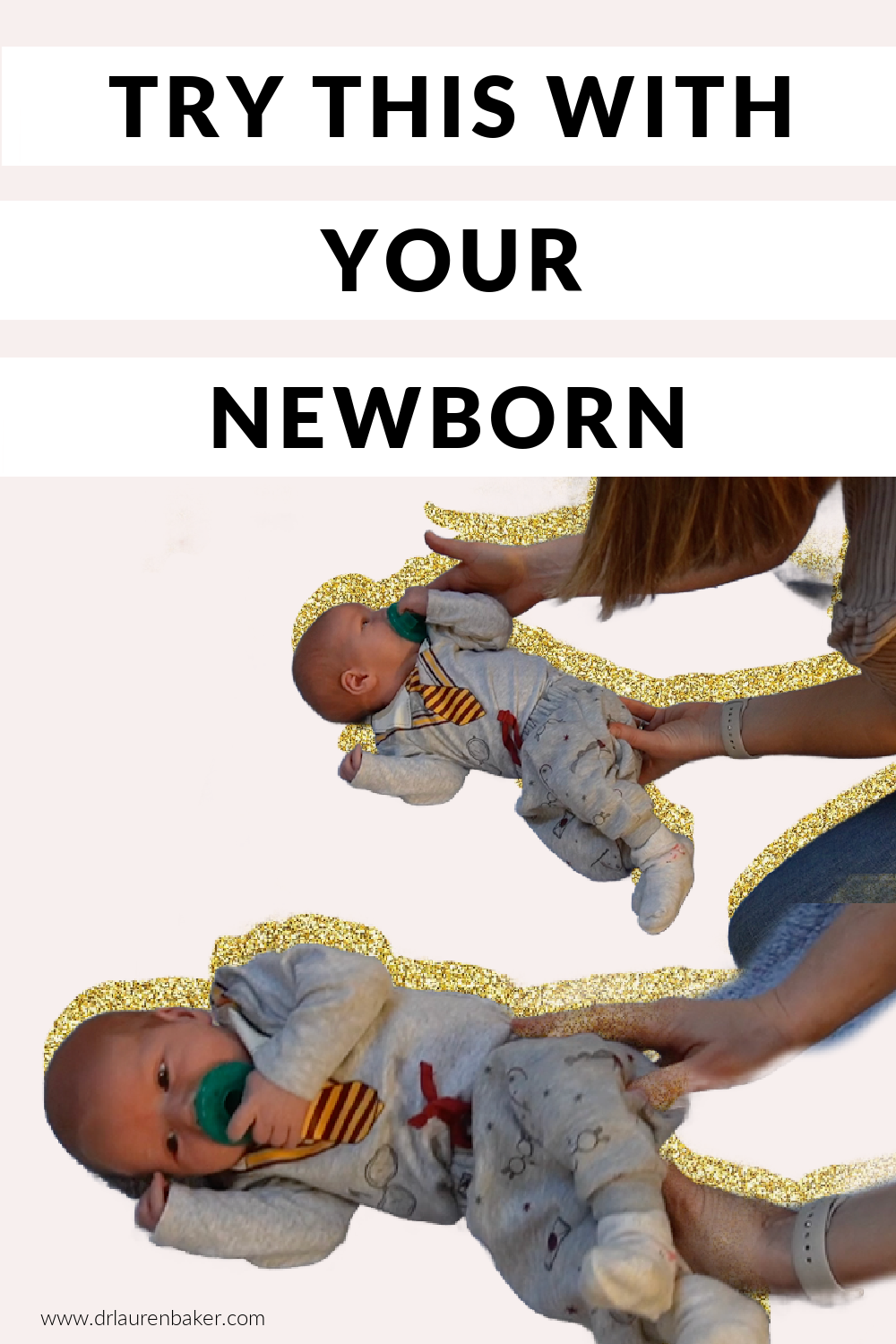
The book acknowledges that tummy time looks different for newborns and provides modified ways to make it more enjoyable and beneficial.
Inclusive and Empowering: I've ensured the book reflects the diverse roles in a baby's life, with images that include dads, uncles, and grandpas. It's important for every caregiver to see themselves in this journey, feeling empowered to engage in meaningful developmental play.
Beyond Tummy Time: Rolling involves more than just mastering tummy time. There are four essential positions, and this book covers them all, providing ideas, exercises, and insights to ensure a well-rounded developmental experience for your baby.
Practical Checklists and Exercises: The book is designed to be interactive, offering checklists and exercises that guide you through assessing and enhancing your baby's development. It encourages a proactive approach, empowering you to identify and address potential challenges early on.
to watch the full un-boxing watch the video below :)
Curious About Learning More on Tummy Time, Rolling, or Both?
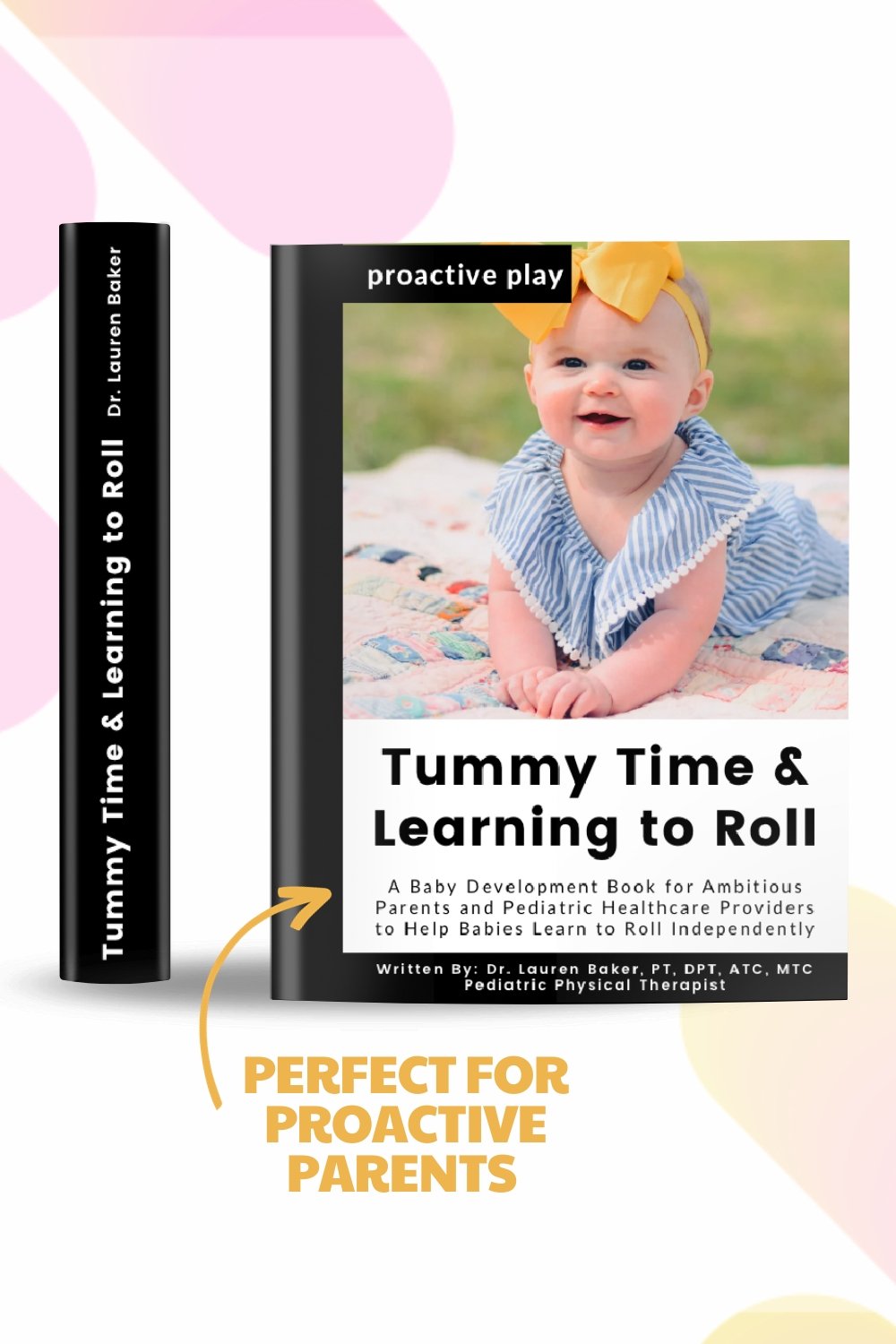
The absolute best book for parents on tummy time and rolling is: Tummy Time and Learning to Roll: A Baby Development Book for Ambitious Parents and Pediatric Healthcare Providers to Help Babies Learn to Roll Independently. The book comes with a free online video course to help parents fully understand how to complete the different exercises, printable checklists to know exactly where your baby is at, and when to reach out for additional help.
This book was written by Dr. Lauren Baker, PT, DPT, ATC, MTC, who is a Pediatric Physical Therapist in Boise, Idaho, trained in helping parents learn how to help their babies move and master their milestones. She loves teaching parents how to see how their babies are moving as well as how to influence those movements though play positions and exercises to help babies move with confidence and ease.
Tummy Time and Learning to Roll is the first book in the Proactive Play series written by Pediatric Physical Therapist Dr. Lauren Baker in order to help Ambitious Parents and Pediatric Healthcare Providers learn how to help babies master tummy time and learn to roll. It is meant to help ambitious parents understand baby development from birth to six months (tummy time to rolling).
This book is a mix of easy-to-follow and more in-depth information than is typically found in baby development books because Dr. Baker believes parents deserve to have all the information at their fingertips.
This book breaks down each piece of movement in checklists so that parents know what their babies need for tummy time and rolling. It also covers what areas might limit a child with rolling, why it is so important, and when to seek help from a pediatric PT.
This book comes with colored photos and easy-to-follow demonstration videos that can help parents implement safe, strategic play-based exercises with their babies in 20 minutes per day.

A Great Resource For:
Parents and Pediatric Healthcare Providers of babies 0-6 months
Parents of babies who are struggling with tummy time, rolling back to belly, belly to back, or only to one side
Access to simple, easy-to-follow videos of play positions and exercises
Learning the four pillars of movement needed in order to master rolling
240+ Color Photo Examples of:
Tummy Time, Sidelying, and Back Play
Developmental Toys and Equipment
Hand Placement and Strategic Play Positions
Common Areas of Restriction or Weakness
When To Reach Out For Help
What If You Want Extra Help?
If you have concerns about their movement, remember, you can always reach out to a pediatric physical therapist. It's your right as a parent to advocate for your child's development.
Sometimes, a few tips and tricks are all you need to get your baby moving better. We're here to support you and release those mama worries. If you are looking for in home pediatric physical therapy, check our listing of therapists.
For those eager to learn more or seeking personalized guidance, I offer online video parent consultations internationally which can be scheduled by clicking here. I am dedicated to answering questions and providing tailored play activities for each unique developmental journey.
When Should Babies Receive Pediatric Physical Therapy?
Parents can call and schedule with a Pediatric Physical Therapist at any time, for any concern in all fifty states without a referral from their Pediatrician.
Pediatric Physical Therapy is medically indicated in all babies who are not rolling in all four directions by six months (back to belly over their right arm AND left arm + belly to back over their right arm AND left arm).
Pediatric Physical Therapy is medically indicated if you notice a flat spot on the back of an infants head (possible plagiocephaly), a tilt of their head consistently to one side (ear to shoulder - possible torticollis), or a rotation preference of their neck (consistently look only to the right or left - possible torticollis).
Many Pediatric Physical Therapists including Dr. Baker, can successfully treat flat spots (Plagiocephaly) without a helmet with a combination of therapy and positioning strategies if seen prior to 4 months (0-3 months is ideal). Dr. Baker uses the Baby Begin Method of repositioning.
Flat spots can be due to in-utero positioning, rotational preference (right sided flatness most common) and babies are at an increased risk for flatness if they are male, were breech, multiple birth, premature, have difficulty with tummy time, or are in containers > 2 hr/day.
Final Thoughts
Writing "Tummy Time and Learning to Roll" has been a labor of love. My goal is to democratize access to pediatric physical therapy knowledge, ensuring every parent and caregiver has the information and tools they need to support their baby's growth and development.
If you're embarking on this journey, know that you're not alone. This book, coupled with the online resources, is here to support you every step of the way. Here's to embracing each milestone with knowledge, confidence, and joy.
For those interested, you'll find a link to purchase the book in the video description but also here and throughout this blog post. If you’ve already got the book and enjoyed it or found it helpful, please consider leaving a review and rating through amazon.
If you go to your orders on amazon, then find the book purchase, “leave a product review” should be the bottom button. I love reading about your feedback, experiences, and where the books have ended up. If you have questions they are always welcome, just book a 1:1 online parent consultation or leave a comment on the video linked above.
Let's continue this conversation and make sure you feel supported as you nurture your little ones' developmental journeys.