
Why Cant My Baby Roll Back To Belly? Insights From A Pediatric Physical Therapist
this blog contains affiliate links
Hello, I'm Dr. Lauren Baker, a pediatric physical therapist with a passion for supporting early childhood development. Today, I want to address a concern many parents share: "Why can't my baby roll from back to belly?"
This question is really common as parents are curious about their baby’s development, but also because they want to make sure their baby has every opportunity to master their milestones.
Rolling is a key developmental milestone that sets the foundation for future movements and it’s important that every baby has a chance to move freely in all four of the rolling directions.
Drawing upon my experience and the insights from my latest book, "Tummy Time and Learning to Roll," I aim to shed light on this topic, providing both explanations and solutions for proactive parents and healthcare providers who want to help babies roll back to belly.
I believe that parents can influence how their children move, with a little bit of knowledge and a whole lot of courage. I am here for the knowledge piece and you’re already mastering the courage, by looking for answers on google from movement experts like pediatric physical therapists.
Understanding the Rolling Back to Belly Milestone
Rolling from back to belly is a significant achievement in a baby's motor skill development, typically occurring between four to six months. It's a complex action that integrates several physical abilities, marking a baby's first foray into dynamic movement.
This milestone is crucial for promoting further developmental skills, such as crawling and sitting up. However, when babies face challenges with rolling, it can be a sign to delve deeper into their motor skills development and help them unlock the things that may be blocking them from rolling.
Exploring the Reasons Behind Rolling Challenges
Head and Neck Mobility
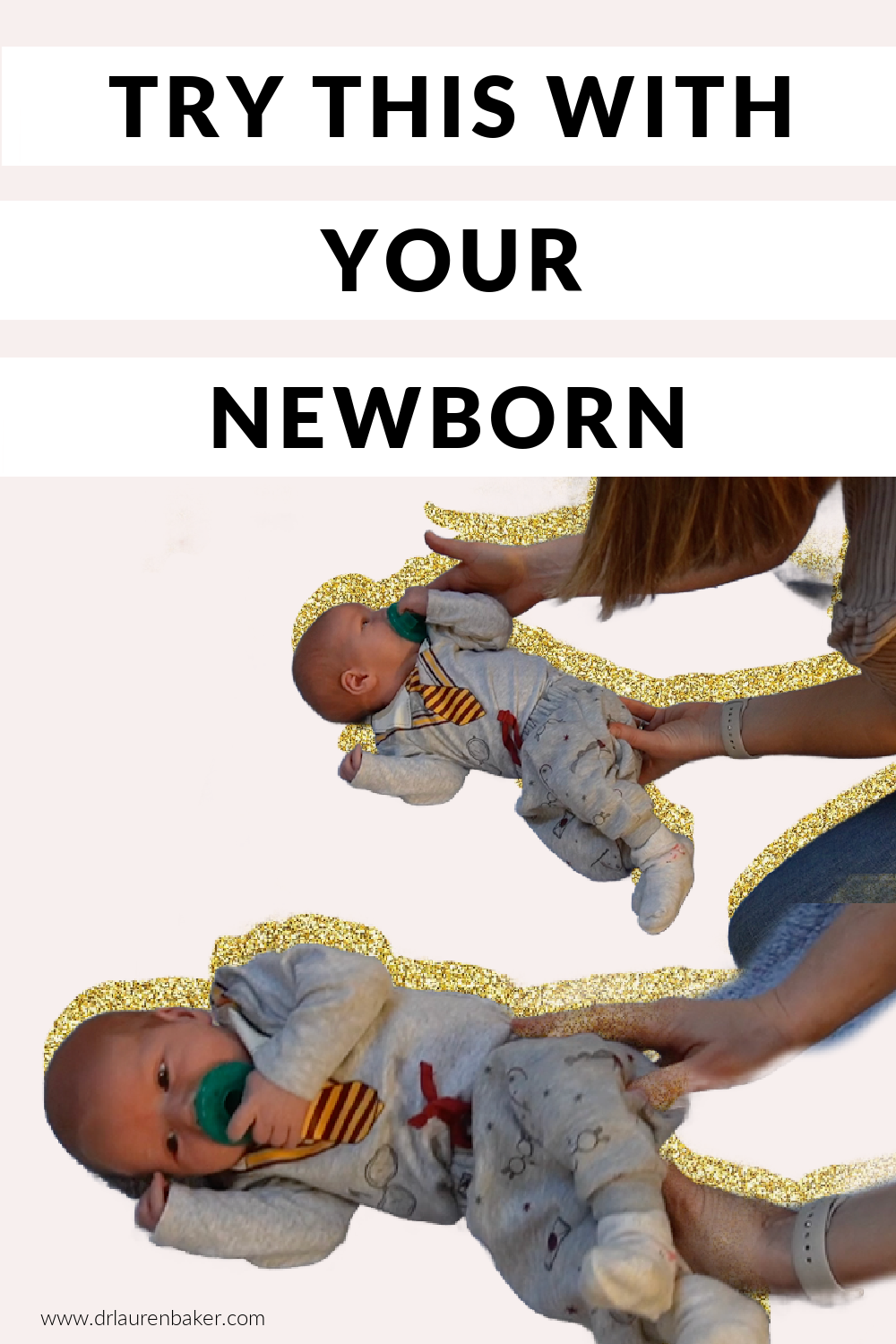
One of the first abilities a baby needs for rolling is the ability to turn their head from side to side while on their back. This movement is often motivated by visual or auditory stimuli that encourage the baby to reach or turn towards something of interest. Limited mobility in the neck can impede this, sometimes indicating conditions like torticollis, where a baby has a preferred side that they rotate to and often an opposite side head tilt.Neck and Upper Body Strength
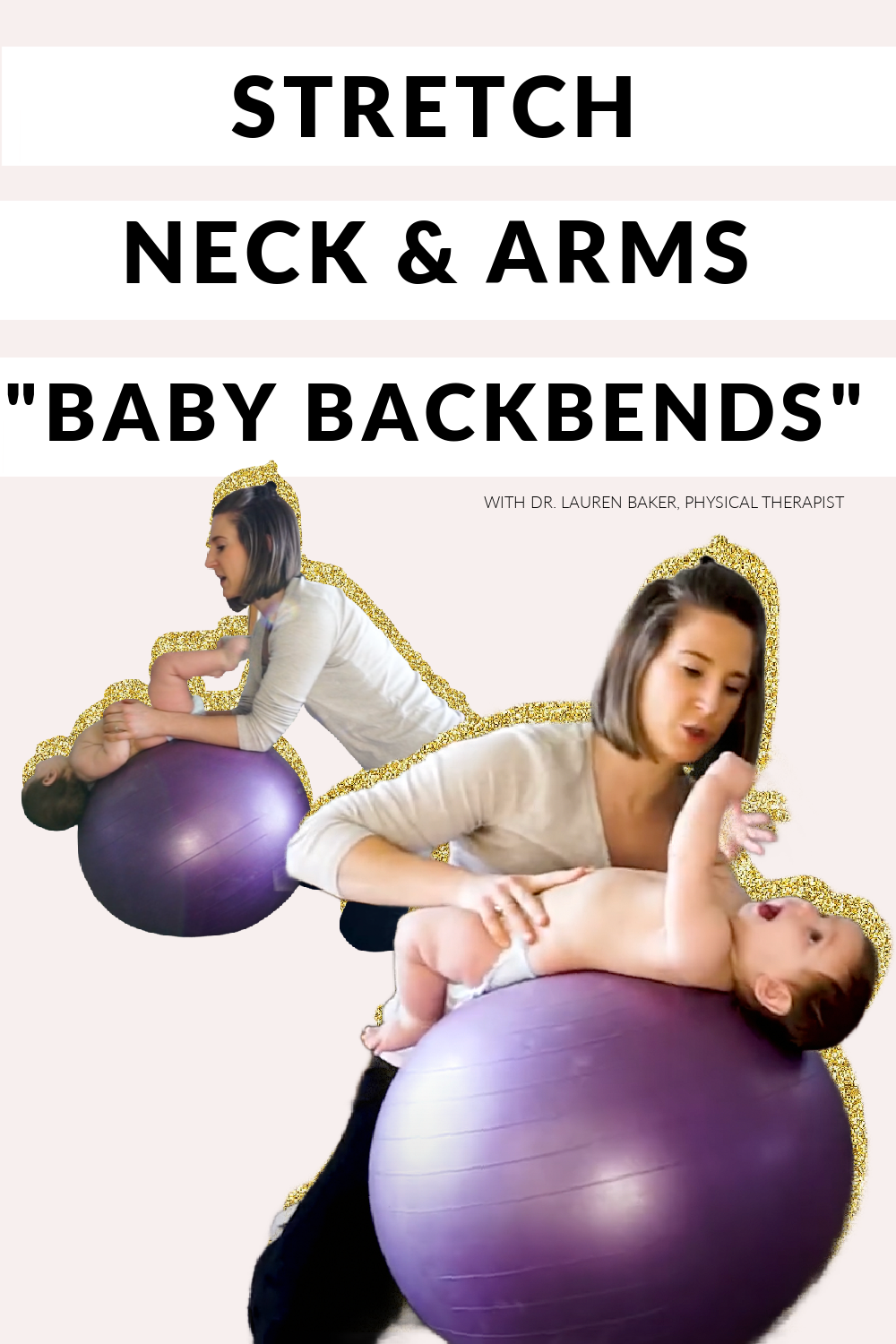
For a successful roll, babies must have sufficient strength in their neck and upper body to lift and tilt their head and chest (think moving your body in an “I’m a little teapot” motion, but while lying on the floor on your side).
This strength is crucial for transitioning from laying flat to rolling over onto their belly. Weakness in these areas can significantly hinder their ability to roll, because babies have to fight gravity in order to lift their shoulders off the ground to initiate going from back to their side then onto their belly.Crossing the Midline and Arm Coordination
The ability to move arms across the body's midline is essential for rolling and further developmental skills. This action requires coordination and strength, allowing the baby to use their arms to aid in the rolling motion. Delays in this ability can slow down the rolling process.
This motion is really tough, because as babies try to lift their arms to shoulder level, gravity is always pushing their arms back down to the ground. If they haven’t been able to develop enough strength in their arms (usually through spending 5-10 minutes pushing through their elbows in tummy time), they may not be able to start the motion of rolling back to belly.
Another way that babies can begin to use their arms to roll from back to belly, is by grabbing their feet with both hands and then rolling to the side. This requires a lot of strength from their lower bellies and is often seen by the time a baby is 5 months. This is a beginner form of rolling because the babies do not have to lift their arms as high as they do when completing the more advanced version of rolling back to belly (reaching up to shoulder level and then crossing the midline of the body and reaching toward their opposite shoulder).Core Strength and Mobility
Strong core muscles are vital for rolling over, as they enable the baby to both lift their pelvis (grabbing their feet with their hands) and twist their body (to complete the roll from lying on their side to belly or for the more advanced version of rolling by reaching toward their opposite shoulder).
Core strength supports the entire rolling motion, from initiating the turn to successfully completing the roll onto the belly. Rolling helps develop core strength in multiple directions, which support future milestones.
Rolling supports core develop in the following ways:
The lower core: baby grabs feet with hands and lifts their bum off the floor
The side core: baby has to bend their trunk when on their side against gravity to finish rolling from their side to their belly (this also helps bring their bottom arm out from under their belly)
The rotational core: Baby has to be able to twist their body in order to roll back to belly, this is a combination of strength in the core and mobility in the core to be able to complete. This is often the struggle if a baby can roll back to belly on one side but not the other
Supporting Your Baby's Rolling Development
Encouraging your baby's rolling ability involves a combination of tummy time, playful interaction, and targeted exercises. Tummy time strengthens neck, shoulder, and core muscles, which helps with rolling both back to belly and rolling belly to back. Back play helps babies engage with toys and objects that can motivate your baby to reach, turn, and eventually roll. Sidelying play is essential for building strength in the arms and core to assist with babies lifting their arms to shoulder level against gravity.
For babies showing a preference for rolling over one arm or struggling with certain aspects of rolling, tailored exercises and activities can promote symmetry and strength. The book: Tummy Time and Learning to Roll: A Baby Development Book for Ambitious Parents and Pediatric Healthcare Providers to Help Babies Roll Independently has 240+ color photos of these exercises and also includes a free online video course to walk you through all the proactive play ideas that can your baby roll back to belly.
For the most comprehensive information on how to help babies roll back to belly, see the video below.
Curious About Learning More on Tummy Time, Rolling, or Both?
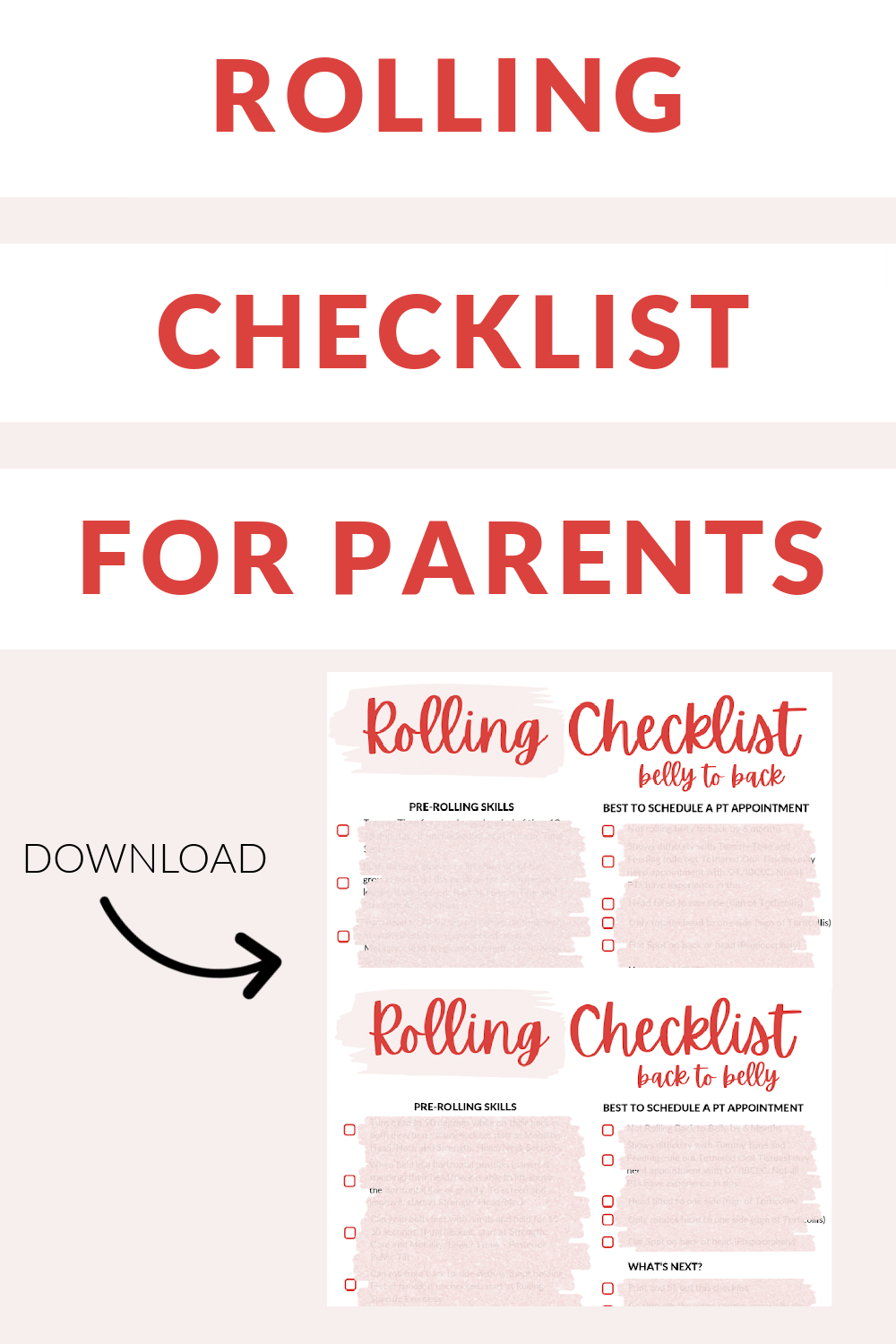
The absolute best book for parents on tummy time and rolling is: Tummy Time and Learning to Roll: A Baby Development Book for Ambitious Parents and Pediatric Healthcare Providers to Help Babies Learn to Roll Independently. The book comes with a free online video course to help parents fully understand how to complete the different exercises, printable checklists to know exactly where your baby is at, and when to reach out for additional help.
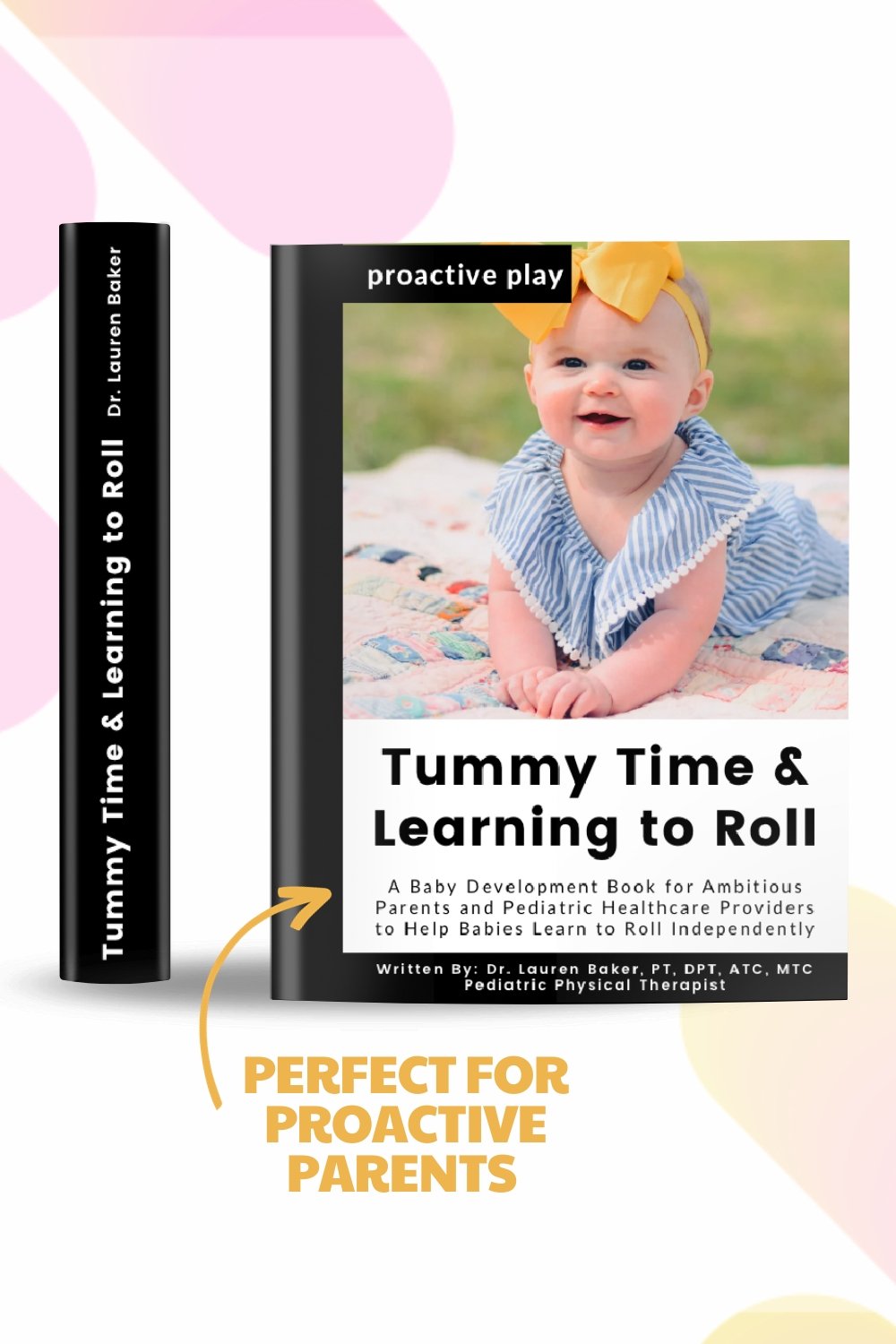
This book was written by Dr. Lauren Baker, PT, DPT, ATC, MTC, who is a Pediatric Physical Therapist in Boise, Idaho, trained in helping parents learn how to help their babies move and master their milestones. She loves teaching parents how to see how their babies are moving as well as how to influence those movements though play positions and exercises to help babies move with confidence and ease.
Tummy Time and Learning to Roll is the first book in the Proactive Play series written by Pediatric Physical Therapist Dr. Lauren Baker in order to help Ambitious Parents and Pediatric Healthcare Providers learn how to help babies master tummy time and learn to roll. It is meant to help ambitious parents understand baby development from birth to six months (tummy time to rolling).
This book is a mix of easy-to-follow and more in-depth information than is typically found in baby development books because Dr. Baker believes parents deserve to have all the information at their fingertips.
This book breaks down each piece of movement in checklists so that parents know what their babies need for tummy time and rolling. It also covers what areas might limit a child with rolling, why it is so important, and when to seek help from a pediatric PT.
This book comes with colored photos and easy-to-follow demonstration videos that can help parents implement safe, strategic play-based exercises with their babies in 20 minutes per day.

A Great Resource For:
Parents and Pediatric Healthcare Providers of babies 0-6 months
Parents of babies who are struggling with tummy time, rolling back to belly, belly to back, or only to one side
Access to simple, easy-to-follow videos of play positions and exercises
Learning the four pillars of movement needed in order to master rolling
240+ Color Photo Examples of:
Tummy Time, Sidelying, and Back Play
Developmental Toys and Equipment
Hand Placement and Strategic Play Positions
Common Areas of Restriction or Weakness
When To Reach Out For Help
What If You Want Extra Help?
If you have concerns about their movement, remember, you can always reach out to a pediatric physical therapist. It's your right as a parent to advocate for your child's development.
Sometimes, a few tips and tricks are all you need to get your baby moving better. We're here to support you and release those mama worries. If you are looking for in home pediatric physical therapy, check our listing of therapists.
For those eager to learn more or seeking personalized guidance, I offer online video parent consultations internationally which can be scheduled by clicking here. I am dedicated to answering questions and providing tailored play activities for each unique developmental journey.
When Should Babies Receive Pediatric Physical Therapy?
Parents can call and schedule with a Pediatric Physical Therapist at any time, for any concern in all fifty states without a referral from their Pediatrician.
Pediatric Physical Therapy is medically indicated in all babies who are not rolling in all four directions by six months (back to belly over their right arm AND left arm + belly to back over their right arm AND left arm).
Pediatric Physical Therapy is medically indicated if you notice a flat spot on the back of an infants head (possible plagiocephaly), a tilt of their head consistently to one side (ear to shoulder - possible torticollis), or a rotation preference of their neck (consistently look only to the right or left - possible torticollis).
Many Pediatric Physical Therapists including Dr. Baker, can successfully treat flat spots (Plagiocephaly) without a helmet with a combination of therapy and positioning strategies if seen prior to 4 months (0-3 months is ideal). Dr. Baker uses the Baby Begin Method of repositioning.
Flat spots can be due to in-utero positioning, rotational preference (right sided flatness most common) and babies are at an increased risk for flatness if they are male, were breech, multiple birth, premature, have difficulty with tummy time, or are in containers > 2 hr/day.
Final Thoughts
Every baby develops at their own pace, but understanding and supporting their journey can make a significant difference. As a parent, it's natural to worry about your baby's development, but understanding the complexity of physical milestones like rolling can ease your concerns. By recognizing the factors that influence rolling and how to support your baby's development, you can actively participate in their growth journey.
If you're concerned about your baby's ability to roll from back to belly or have noticed delays in other developmental milestones, don't hesitate to seek advice and support.
For personalized guidance tailored to your baby's needs, consider booking an online parent consultation with a pediatric physical therapist. Together, we can ensure your baby's development is on the right track, laying the foundation for a lifetime of movement and exploration.
In navigating the path of your baby's development, remember, you're not alone. With the right support and strategies, your baby can overcome the challenges of rolling and continue to achieve new milestones, one roll at a time.


Is Your Baby Sitting But Not Rolling Over? Here’s Why
this blog contains affiliate links
Hello, proactive parents! I'm Dr. Lauren Baker, a pediatric physical therapist, and I'm here to share some wisdom on a common question I receive: "Why is my baby sitting but not rolling over?"
If you've found yourself wondering this, you're in the right place. I've dedicated my career to assisting proactive parents like you in supporting your baby’s movement milestones with ease and confidence.
The journey from tummy time to sitting up is an exciting adventure, filled with significant milestones that each play a crucial role in your baby's growth. But what happens when your baby masters sitting up before conquering the art of rolling over?
Let's dive in together and try to figure out a few reasons why this might be.
The Significance of Rolling Over
Rolling over is a milestone that typically occurs between 3 to 6 months, most commonly between 4 to 6 months.
It's not just about moving from back to belly or vice versa; it's a complex coordination of muscles, balance, and movement across different planes. This skill is foundational, setting the stage for future movements and milestones, including crawling (in my opinion, the hardest of them all!).
If babies do not have all of the things they need in order to roll over, such as struggling with tummy time, not being introduced to sidelying play (don’t worry almost no one tells parents about it unless they have a pediatric PT as a friend or family member!), or they have tension in their body — they could be at risk of not rolling over OR not rolling over in all four directions.
The Transition to Sitting Up
Sitting up, usually achieved between 6-9 months, signifies a new level of independence and strength for your baby. Often babies enjoy being upright, so they are highly motivated to master this milestone.
Other things, like babies being in sit me ups or seated containers like bumbos can get babies extra comfortable in the sitting position, which can actually make them less inclined to do the hard work involved with rolling or other movement patterns compared to their peers who spent more time on the floor.
It’s recommended that babies only spend up to 15 minutes in a seated device or any container that does not allow a baby to move freely on the floor (pack n plays or baby gated areas don’t count since babies can roll or move freely).
Sitting, especially in the beginning involves a different set of skills and muscle groups than rolling. Babies are primarily focusing on stability and balance, trying to simply stay upright against gravity and their legs in ring sit act as kickstands to assist in keeping them up.
Since babies tend to enjoy being in an upright position, most of the time babies struggle more with rolling than they do learning to sit. Especially because rolling is a much more dynamic motion that requires flexibility, strength, and coordination.
The Milestone Mix-Up: Sitting Without Rolling
Many parents notice their babies hitting the sitting milestone without mastering rolling over, which typically precedes it. When this happens, parents might wonder if it’s okay that their babies skipped or did not fully master rolling. The truth is, babies who skip rolling are often struggling with an underlying blockage to their movement patterns.
Rolling is much harder than sitting 99% of the time for babies. It requires mobility, strength, coordination, and is honestly a beautiful symphony of movement when they can do it well. But because it requires them to master a lot of moving pieces and building blocks, instead of just staying upright, they tend to go toward the path of least resistance: sitting.
The Role of Movement Planes in Rolling
Rolling is not just about moving from point A to point B; it involves a sophisticated dance across multiple planes of movement. This complexity makes rolling a challenging milestone for some babies, especially if their movement in one or multiple planes is restricted.
Human movement, including your baby's developmental milestones, occurs across three primary planes:
Sagittal Plane: Involves forward and backward movements, like walking or going up/down stairs
Frontal/Coronal Plane: Encompasses side-to-side movements or the I’m a little teapot motion
Transverse Plane: This is where rotation happens and usually it requires one half of the body to move on another half of the body, which makes it even more complex
Rolling is unique because it predominantly occurs in the rotational (transverse) plane, making it more complex and challenging for some babies. Sitting for example, is in the sagittal plane mostly as babies often either go forward or backwards when they are first learning to sit.
As sitting evolves, it can incorporate all three planes, but if rolling was skipped or a struggle you might find that more advanced sitting skills can become impacted like going from sitting into all fours (which requires rotation like rolling!).
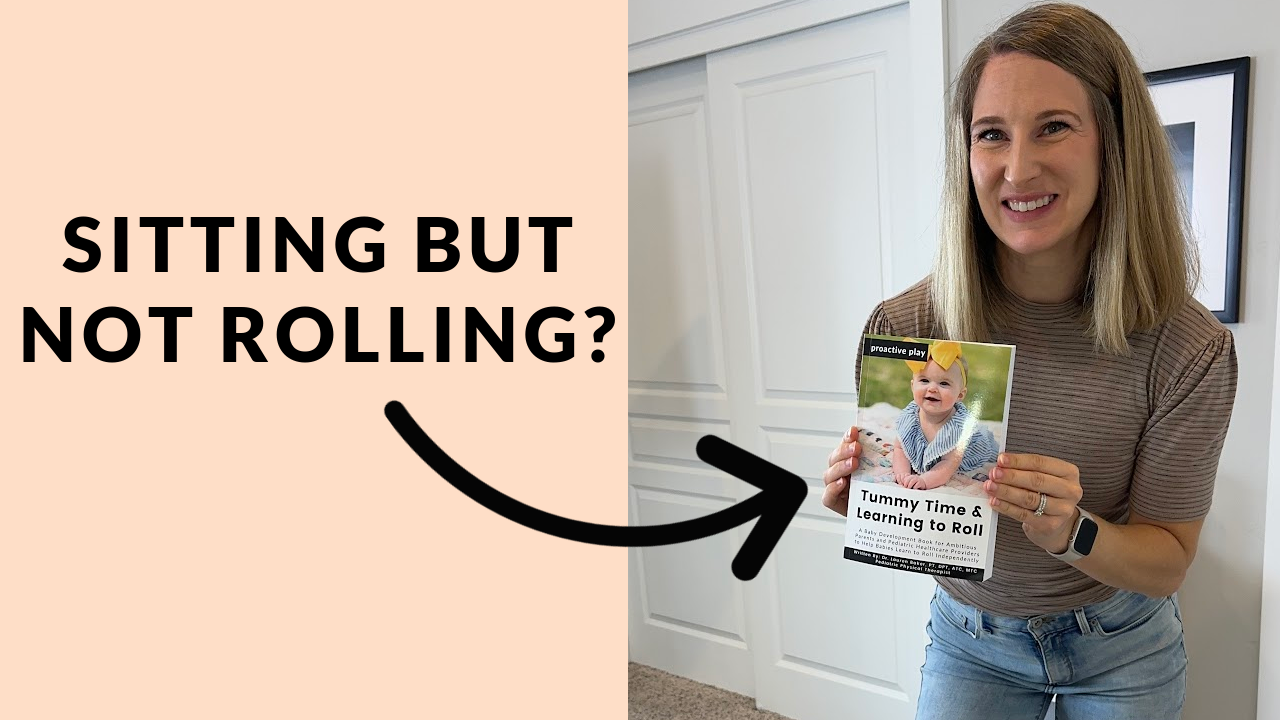
For the most comprehensive information on this topic, please watch the video below as it includes picture examples and walks you through how you would use the book Tummy Time and Learning to Roll as a resource to help babies struggling with rolling.
TIMESTAMPS:
1:30 what ages babies roll over
2:40 what plane of movement rolling occurs in (this is important to understand why babies would skip rolling)
3:50 why rotation is the hardest plane of movement
4:30 why sitting is easier than rolling
6:43 does the baby have a mobility block in the rotational plane? and how to use Tummy Time and Learning to Roll book to figure this out
9:45 Neck mobility screens and exercises
10:40 upper trunk mobility screen and exercises
11:40 weakness in upper trunk, chest, and arm/shoulders and why tummy time is important regardless of age
13:20 most important aspect if a baby is sitting but not rolling
15:00 why having the right amount of flexibility and strength is important for everyone including babies
17:33 container use considerations, what not to use, and what to do instead
19:23 happy sitters and future consequences and how rolling helps crawling
23:40 jump ahead past break
25:21 top four things you want to focus on if a baby is sitting but not rolling
ALTERNATIVE CONTAINER IDEAS:
Upseat
Ingenuity Seat
PT Approved Equipment/Containers for Babies
TOY IDEAS:
Best Toys for Babies Learning to Roll
Best Toys for Babies
Tummy Time Toys
Identifying the Challenge: Mobility or Strength?
When a baby sits without rolling, it prompts us to investigate whether the challenge lies in mobility or strength.
Mobility First
Mobility issues often hinder the ability to roll over. A tight muscle or restricted movement in one direction can be enough to make rolling a challenge. I recommend starting with mobility screens to ensure your baby can move freely in all directions and if not, figure out which directions are more difficult and might be limiting their movement.
The mobility screens to look at include:
Neck flexibility
Arm flexibility
Upper Trunk flexibility
Lower Trunk flexibility
Upper and Lower Trunk combined flexibility
All mobility exercises recommended for rolling are linked in the mobility screen sections of the Tummy Time and Learning to Roll book, included in 240 color photographs and a free online video course that comes with the book.
Building Strength
After addressing mobility, the next step is building the strength necessary for rolling. This includes strengthening the neck, shoulders, back, and core muscles to support the complex movements involved in rolling over. Ensuring your baby has the muscular support to perform rolling movements is crucial. The book outlines exercises that target the necessary muscles for rolling, including the neck, shoulders, and core.
Typical exercises for babies to improve rolling include focusing on:
Core strength
Neck strength
Ability to tolerate Tummy Time
Sidelying Play
Arm strength
All strength exercises recommended for rolling are linked in the exercise sections of the book, included in 240 color photographs and a free online video course that comes with the book.
Practical Tips for Encouraging Rolling and Sitting
Let's put theory into practice with some actionable steps to support your baby's journey to rolling over:
1. Limit Container Use
Avoid over-reliance on devices that restrict movement, such as bouncers or seats. These can hinder the natural exploration and strengthening needed for rolling. Limit container use for maximum 15 minutes at a time up to 2 hours per day.
Floor play or “yes space,” play such as a baby gated area or pack n play can help babies explore safely. Floor play helps babies develop muscles more than containers, in fact, most containers restrict movement or promote non-optimal movement patterns.
2. Engage in Targeted Play
Incorporate exercises and play that encourage rotation and lateral movement. The strategies in my book, Tummy Time and Learning to Roll: A Baby Development Book for Ambitious Parents and Pediatric Healthcare Providers to Help Babies Learn to Roll Independently are designed to be fun and engaging, making tummy time a more fun experience for both you and your baby.
3. Seek Professional Insight
If rolling remains elusive by six months, a consultation with a pediatric physical therapist can provide personalized guidance tailored to your baby's unique needs.
4. Embrace the Journey
Remember, every baby's developmental path is unique. Celebrating small victories and maintaining a positive, proactive approach will make the journey more rewarding.
Why Does It Matter?
Understanding and addressing the reasons behind a baby sitting but not rolling is more than just about hitting milestones.
It's about ensuring a well-rounded development that lays the groundwork for future skills like crawling, walking, and beyond. Moreover, it highlights the importance of movement diversity from an early age, encouraging a range of motions that promote strength, coordination, and balance.
If a baby does not roll in all four directions, they are limited by something and typically it can be easily solved with some strategic exercises.
If babies are blocked in rotation and skip rolling they are at risk of skipping crawling as getting in and out of sitting and into all fours requires rotation and side bending both motions that are utilized in rolling (and often the reasons why rolling is not occurring).
Babies who skip crawling are at risk for having difficulty with pre-academic skills such as reading and writing as the foundational movement patterns needed for those skills are first developed in the all fours position.
Curious About Learning More on Tummy Time, Rolling, or Both?
The absolute best book for parents on tummy time and rolling is: Tummy Time and Learning to Roll: A Baby Development Book for Ambitious Parents and Pediatric Healthcare Providers to Help Babies Learn to Roll Independently.
The book comes with a free online video course to help parents fully understand how to complete the different exercises, printable checklists to know exactly where your baby is at, and when to reach out for additional help.
This book was written by Dr. Lauren Baker, PT, DPT, ATC, MTC, who is a Pediatric Physical Therapist in Boise, Idaho, trained in helping parents learn how to help their babies move and master their milestones.
She loves teaching parents how to see how their babies are moving as well as how to influence those movements though play positions and exercises to help babies move with confidence and ease.
Tummy Time and Learning to Roll is the first book in the Proactive Play series written by Pediatric Physical Therapist Dr. Lauren Baker in order to help Ambitious Parents and Pediatric Healthcare Providers learn how to help babies master tummy time and learn to roll. It is meant to help ambitious parents understand baby development from birth to six months (tummy time to rolling).
This book is a mix of easy-to-follow and more in-depth information than is typically found in baby development books because Dr. Baker believes parents deserve to have all the information at their fingertips.
This book breaks down each piece of movement in checklists so that parents know what their babies need for tummy time and rolling. It also covers what areas might limit a child with rolling, why it is so important, and when to seek help from a pediatric PT.
This book comes with colored photos and easy-to-follow demonstration videos that can help parents implement safe, strategic play-based exercises with their babies in 20 minutes per day.
A Great Resource For:
Parents and Pediatric Healthcare Providers of babies 0-6 months
Parents of babies who are struggling with tummy time, rolling back to belly, belly to back, or only to one side
Access to simple, easy-to-follow videos of play positions and exercises
Learning the four pillars of movement needed in order to master rolling
240+ Color Photo Examples of:
Tummy Time, Sidelying, and Back Play
Developmental Toys and Equipment
Hand Placement and Strategic Play Positions
Common Areas of Restriction or Weakness
When To Reach Out For Help
What If You Want Extra Help?
If you have concerns about their movement, remember, you can always reach out to a pediatric physical therapist. It's your right as a parent to advocate for your child's development.
Sometimes, a few tips and tricks are all you need to get your baby moving better. We're here to support you and release those mama worries. If you are looking for in home pediatric physical therapy, check our listing of therapists.
For those eager to learn more or seeking personalized guidance, I offer online video parent consultations internationally which can be scheduled by clicking here. I am dedicated to answering questions and providing tailored play activities for each unique developmental journey.
When Should Babies Receive Pediatric Physical Therapy?
Parents can call and schedule with a Pediatric Physical Therapist at any time, for any concern in all fifty states without a referral from their Pediatrician.
Pediatric Physical Therapy is medically indicated in all babies who are not rolling in all four directions by six months (back to belly over their right arm AND left arm + belly to back over their right arm AND left arm).
Pediatric Physical Therapy is medically indicated if you notice a flat spot on the back of an infants head (possible plagiocephaly), a tilt of their head consistently to one side (ear to shoulder - possible torticollis), or a rotation preference of their neck (consistently look only to the right or left - possible torticollis).
Many Pediatric Physical Therapists including Dr. Baker, can successfully treat flat spots (Plagiocephaly) without a helmet with a combination of therapy and positioning strategies if seen prior to 4 months (0-3 months is ideal). Dr. Baker uses the Baby Begin Method of repositioning.
Flat spots can be due to in-utero positioning, rotational preference (right sided flatness most common) and babies are at an increased risk for flatness if they are male, were breech, multiple birth, premature, have difficulty with tummy time, or are in containers > 2 hr/day.
Final Thoughts
As we've explored, sitting without rolling is a common scenario that, with the right strategies, can be addressed effectively. By understanding the intricacies of baby movement, focusing on mobility and strength, and applying targeted exercises, you can support your baby in mastering both sitting and rolling.
If you're navigating this developmental puzzle, know that you're not alone. I'm here to support you every step of the way, because I believe parents can influence how their children move when they are armed with knowledge, strategies, and a whole lot of heart.
Together, we can ensure your little one achieves their milestones with confidence and joy.
Thank you for joining me in this exploration of baby movement. Your dedication to your baby's development inspires me every day. Here's to many more milestones achieved and happy, healthy development for all our little ones!
Note: Always consult with a healthcare professional before starting any new exercise regimen with your baby. This information is meant to inform and support, not replace, professional medical advice.
Why Is My Baby Not Crawling or Rolling? Parents Need To Test Their Baby’s Lower Trunk Side Bend
this blog contains affiliate links
Hey There Proactive Parents! I'm Dr. Lauren Baker, your go-to pediatric physical therapy bestie, and I'm thrilled to share some invaluable insights on helping your babies move with confidence, especially in rolling and crawling!
Today, we're diving into the magical world of helping your little ones learn to roll over (or crawl!) focusing on enhancing trunk mobility in a gentle, effective way.
Grab a cozy spot, and your favorite warm beverage (my current favorite is chocolate paleovalley bone broth hot chocolate with some almond milk!) and let's embark on this journey together.
Understanding Trunk Mobility
If this is your first blog post that you’ve read on my website, you might not know this but trunk mobility is BY FAR one of my most favorite topics to explain to parents.
The reason is because it's crucial to baby development, especially as a baby learns to roll over belly to back and back to belly. It’s the first time that as a parent, you might notice that there is a struggle, if they are lacking trunk mobility.
But often, parents are not educated that their babies even need trunk mobility, let alone that it’s essential for them to have in order to roll or crawl or heck even get from sitting into all fours to attempt crawling!
If your baby tends to favor one side such as only rolling over their left arm but not their right, or struggles with pivoting on their belly to the left or right, they might have a tight muscle preventing full range of motion.
With crawling, it can limit crawling all together or it often shows up as hitch crawling or booty scooting, both of which are not ideal ways for babies to crawl (we want hands and knees on the floor, and if they’re not moving in that way, then we want to know why!).
Hitch Crawling or Janky Crawling is when a baby is crawling with both hands on the floor, but only one knee. Typically the other knee is up near their trunk and their foot is on the ground. Typically THAT side of their trunk (the side of the foot on the ground) is tight.
Booty Scooting is when babies scoot forward/backwards on their bottom. This is typically due to multiple underlying reasons, one often being trunk tightness.
But don't worry, today we’re here to learn one option for helping babies resolve this tightness!
Total Motion Release (TMR)
Total Motion Release (TMR) is a gentle, innovative approach to improving mobility without the traditional stretching methods that might cause damage to the muscles. Traditional stretching pulls on muscles to lengthen them, which can cause micro damage to the muscle fibers, often resulting in soreness.
The TMR technique focuses on utilizing your baby's easier side of movement to encourage relaxation and increased mobility on the tighter side. It's a game-changer, especially for babies, as it's non-invasive, pretty relaxing, and highly effective.
Key Points of TMR:
Focuses on the "easy" side: TMR targets the side where movement is more effortless, enhancing mobility without strain.
Gentle and effective: Unlike traditional stretching, TMR avoids potential muscle damage, making it ideal for babies.
Recommended professional evaluation: It's best to have your child evaluated by a trained provider before attempting TMR techniques at home see this list of tmr trained therapists to see if there is one in your area.
How to Test and Apply TMR
Testing Side Bending Range of Motion:
Lie your baby on their back
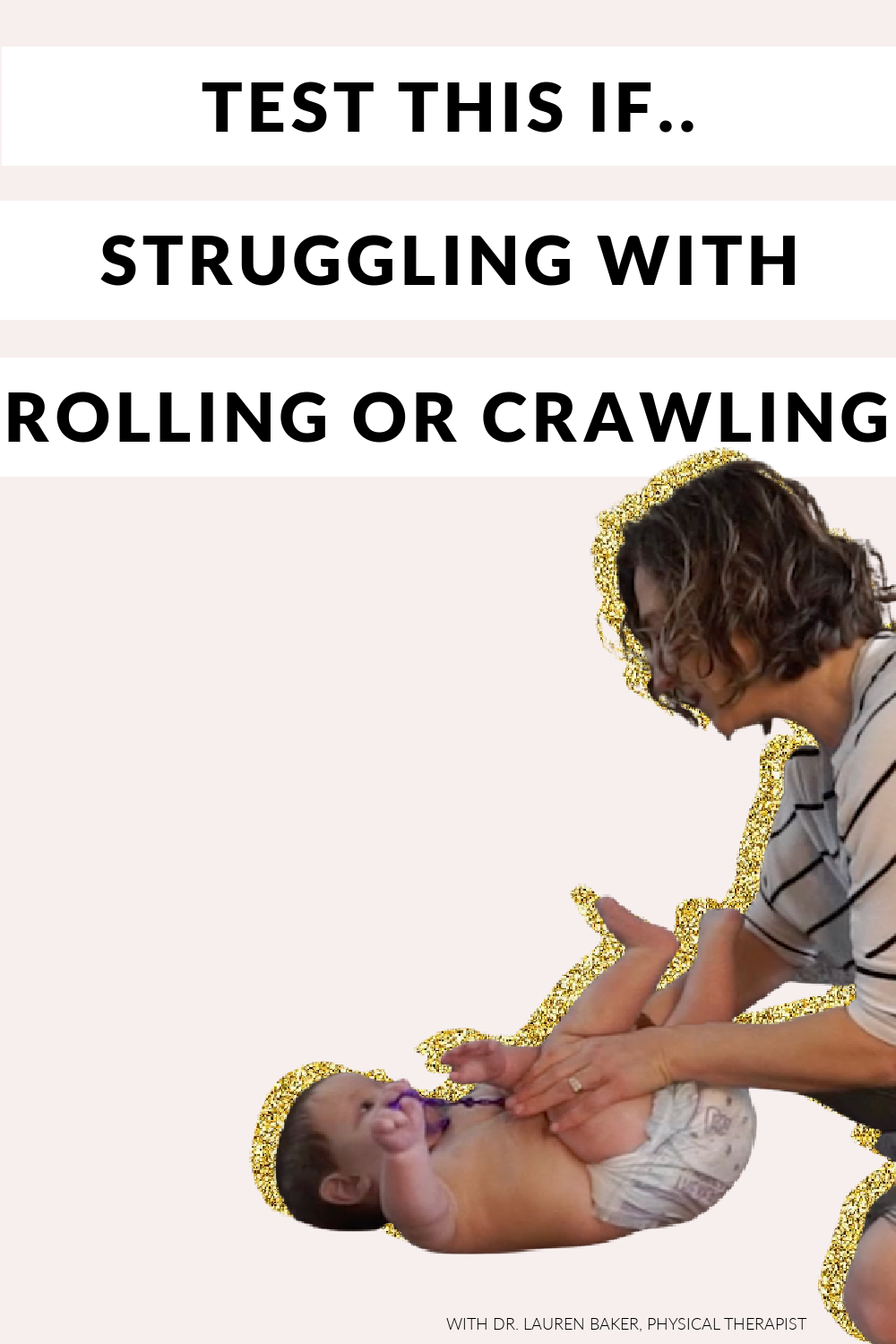
Use the "C" hand shape (watch video for full explanation) by placing your fingers and palm on your baby’s buttocks with your thumbs between their legs
Gently guide your baby's pelvis towards one side like you are sliding along the floor (do not lift at all, keep full body in contact with the floor) until their trunk makes a “C” or backwards “C” shape. If the baby’s trunk does not easily make a C shape, stop at the level of resistance.
You may need to place your foot between their armpit and trunk on the opposite side if their upper trunk is trying to move away.
Identify the easier side: Observe which side your baby bends towards more comfortably, this is the easy side. If both sides go easily and make a full C shape at the trunk, the baby likely does not have any tightness in this direction. See our other directions of TMR here: category TMR link.
TIMESTAMPS:
0:46 ways to increase range of motion
2:36 how TMR is different than stretching
4:00 testing side bending range of motion in babies
6:15 using TMR lower trunk sidebend to improve mobility
10:23 figuring out which side to do on your child
12:56 UT / LT rotation TMR release
TOY IDEAS:
Similar Teething Toy
Teething pacifier
Tummy Time Toys
Best Toys for Babies Learning to Roll
Best Toys for Babies Learning to Crawl
Best Toys for Babies
PT Approved Equipment/Containers for Babies
Applying TMR for Lower Trunk Side Bend:
Choose the easy side: Start with the side your baby naturally bends towards more easily.
Hold the position: Gently create a backward "C" shape with your baby's trunk on the easy side and hold for about two minutes, ensuring comfort and no resistance from your baby. If they kick out of it, allow them to move out of the position, distract them, and attempt again. Focus on 2 total minutes not counting the amount of time a baby needs for a short break.
Entertain and comfort: Offer your baby a toy or engage with funny faces and sounds to keep them calm and distracted during the hold. Teethers or small toys they can hold in their hands are great.
Incorporate vestibular motions: Following the TMR session, gently bounce your baby for 30 seconds to a minute to help regulate their central nervous system and cement the newly gained range of motion.
Practice what’s difficult: directly after bouncing, practice a play position or milestone that is difficult such as tummy time, sidelying play, back play, rolling, all fours, getting in/out of sitting, or crawling with support.
Retest mobility: After the hold, gently test both sides again to observe any improvements in mobility.
Repeat if necessary: If the sides still aren't equal, you may repeat the hold, always ensuring your baby's comfort. Often I encourage families to complete this 2-3x/day if possible only on the easy side and always following up with 30 seconds to 1 minute of bouncing.
Curious About Learning More on Tummy Time, Rolling, or Both?
The absolute best book for parents on tummy time and rolling is: Tummy Time and Learning to Roll: A Baby Development Book for Ambitious Parents and Pediatric Healthcare Providers to Help Babies Learn to Roll Independently. The book comes with a free online video course to help parents fully understand how to complete the different exercises, printable checklists to know exactly where your baby is at, and when to reach out for additional help.
This book was written by Dr. Lauren Baker, PT, DPT, ATC, MTC, who is a Pediatric Physical Therapist in Boise, Idaho, trained in helping parents learn how to help their babies move and master their milestones. She loves teaching parents how to see how their babies are moving as well as how to influence those movements though play positions and exercises to help babies move with confidence and ease.
Tummy Time and Learning to Roll is the first book in the Proactive Play series written by Pediatric Physical Therapist Dr. Lauren Baker in order to help Ambitious Parents and Pediatric Healthcare Providers learn how to help babies master tummy time and learn to roll. It is meant to help ambitious parents understand baby development from birth to six months (tummy time to rolling).
This book is a mix of easy-to-follow and more in-depth information than is typically found in baby development books because Dr. Baker believes parents deserve to have all the information at their fingertips.
This book breaks down each piece of movement in checklists so that parents know what their babies need for tummy time and rolling. It also covers what areas might limit a child with rolling, why it is so important, and when to seek help from a pediatric PT.
This book comes with colored photos and easy-to-follow demonstration videos that can help parents implement safe, strategic play-based exercises with their babies in 20 minutes per day.
A Great Resource For:
Parents and Pediatric Healthcare Providers of babies 0-6 months
Parents of babies who are struggling with tummy time, rolling back to belly, belly to back, or only to one side
Access to simple, easy-to-follow videos of play positions and exercises
Learning the four pillars of movement needed in order to master rolling
240+ Color Photo Examples of:
Tummy Time, Sidelying, and Back Play
Developmental Toys and Equipment
Hand Placement and Strategic Play Positions
Common Areas of Restriction or Weakness
When To Reach Out For Help
What If You Want Extra Help?
If you have concerns about their movement, remember, you can always reach out to a pediatric physical therapist. It's your right as a parent to advocate for your child's development.
Sometimes, a few tips and tricks are all you need to get your baby moving better. We're here to support you and release those mama worries. If you are looking for in home pediatric physical therapy, check our listing of therapists.
For those eager to learn more or seeking personalized guidance, I offer online video parent consultations internationally which can be scheduled by clicking here. I am dedicated to answering questions and providing tailored play activities for each unique developmental journey.
When Should Babies Receive Pediatric Physical Therapy?
Parents can call and schedule with a Pediatric Physical Therapist at any time, for any concern in all fifty states without a referral from their Pediatrician.
Pediatric Physical Therapy is medically indicated in all babies who are not rolling in all four directions by six months (back to belly over their right arm AND left arm + belly to back over their right arm AND left arm).
Pediatric Physical Therapy is medically indicated if you notice a flat spot on the back of an infants head (possible plagiocephaly), a tilt of their head consistently to one side (ear to shoulder - possible torticollis), or a rotation preference of their neck (consistently look only to the right or left - possible torticollis).
Many Pediatric Physical Therapists including Dr. Baker, can successfully treat flat spots (Plagiocephaly) without a helmet with a combination of therapy and positioning strategies if seen prior to 4 months (0-3 months is ideal). Dr. Baker uses the Baby Begin Method of repositioning.
Flat spots can be due to in-utero positioning, rotational preference (right sided flatness most common) and babies are at an increased risk for flatness if they are male, were breech, multiple birth, premature, have difficulty with tummy time, or are in containers > 2 hr/day.
Final Thoughts
Congratulations on taking this step towards enhancing your baby's mobility! Remember, every baby is unique, so observing and understanding their specific needs is key. If you're eager to learn more or need personalized advice, don't hesitate to reach out for a one-on-one online parent consultation. Together, we can ensure your little one moves confidently and joyously.
Remember, you're doing an amazing job, and by seeking out ways to support your baby's development, you're setting the stage for a lifetime of healthy, happy movement. Let's keep learning and growing together! If you haven’t yet, consider subscribing to the youtube channel for more support on milestones for infants to toddlers.
Thank you for joining me on this journey. Here's to many more milestones and joyful moments with your little ones!





Trunk Stretching Exercises For Babies To Help Them With Rolling or Crawling
this blog contains affiliate links
Hi there, proactive parents! I'm Dr. Lauren Baker, your pediatric physical therapy bestie, dedicated to helping proactive parents like you support their babies in moving with confidence and ease.
Today, we're diving into an essential aspect of your baby's development: trunk rotation. Understanding and fostering this ability can significantly enhance your baby's progress towards milestones such as rolling, transitioning in and out of sitting, and even future activities like walking, running, and hopping.
Let's explore why trunk rotation is crucial and share two easy exercises you can do to improve it.
Why Trunk Rotation Matters
Trunk rotation refers to the ability of the top half of your child's body to move separately from the bottom half.
This skill is vital for:
Complex Movements: It enables actions like rolling, which require the upper body to rotate in one direction while the lower body rotates in the opposite direction.
Developmental Milestones: Trunk rotation is foundational for rolling over (both ways!), sitting independently, crawling, and the more complex motions your child will eventually tackle, like jumping and hopping.
Often we need flexibility before we are able to fully utilize the muscles that allow our bodies to move in the ways we want (or need) them to.
The Importance of Stretching in Trunk Rotation
A baby's trunk can move in three main planes:
Side to side — like the “I'm a little teapot” dance
Front and back — how we walk or go up stairs
Rotation — think of sitting in a chair and looking behind you
For functional movements, especially rolling, your baby needs to twist one part of their trunk in one direction while the other part remains in the opposite direction.
Ensuring your baby can move equally well in both directions is crucial for their overall mobility and the development of symmetrical movement patterns aka we need babies to move equally in both directions and the same on each side.
Before we go into the exercise, we need to talk about two methods that can get us to the same destination. Before filming this video I ONLY had heard about traditional stretching, where we bring a body part to feel the stretch, hold it for at least 30 seconds, and then do the opposite side so we’re balanced.
Since this video has been published, I have been additional trained in Total Motion Release Tots or TMR Tots.
TMR uses a different approach to increase motion. It shortens the muscle to relax it, then increases body awareness through bouncing or another option. This ONLY happens on the easy side.
So going forward, you can use either of these exercises by using Traditional Stretching by doing both sides OR TMR approach where you ONLY use one side, the easy side holding for 1-2 minutes, and follow up with 30 seconds to 1 minute of bouncing.
I personally prefer the TMR approach because it feels a little like magic, babies fight it less, relax into it more, and overall I get the best results when using this option.
That being said, traditional stretching is not WRONG – it’s simply a different route to get to the same destination, I just happen to find that the TMR approach has less traffic lights :)
Ideally, regardless of which option you use, you follow up with some tummy time, sidelying play, back play, or rolling/crawling/sitting practice.
For the most comprehensive information, it’s recommended to watch the full video below.
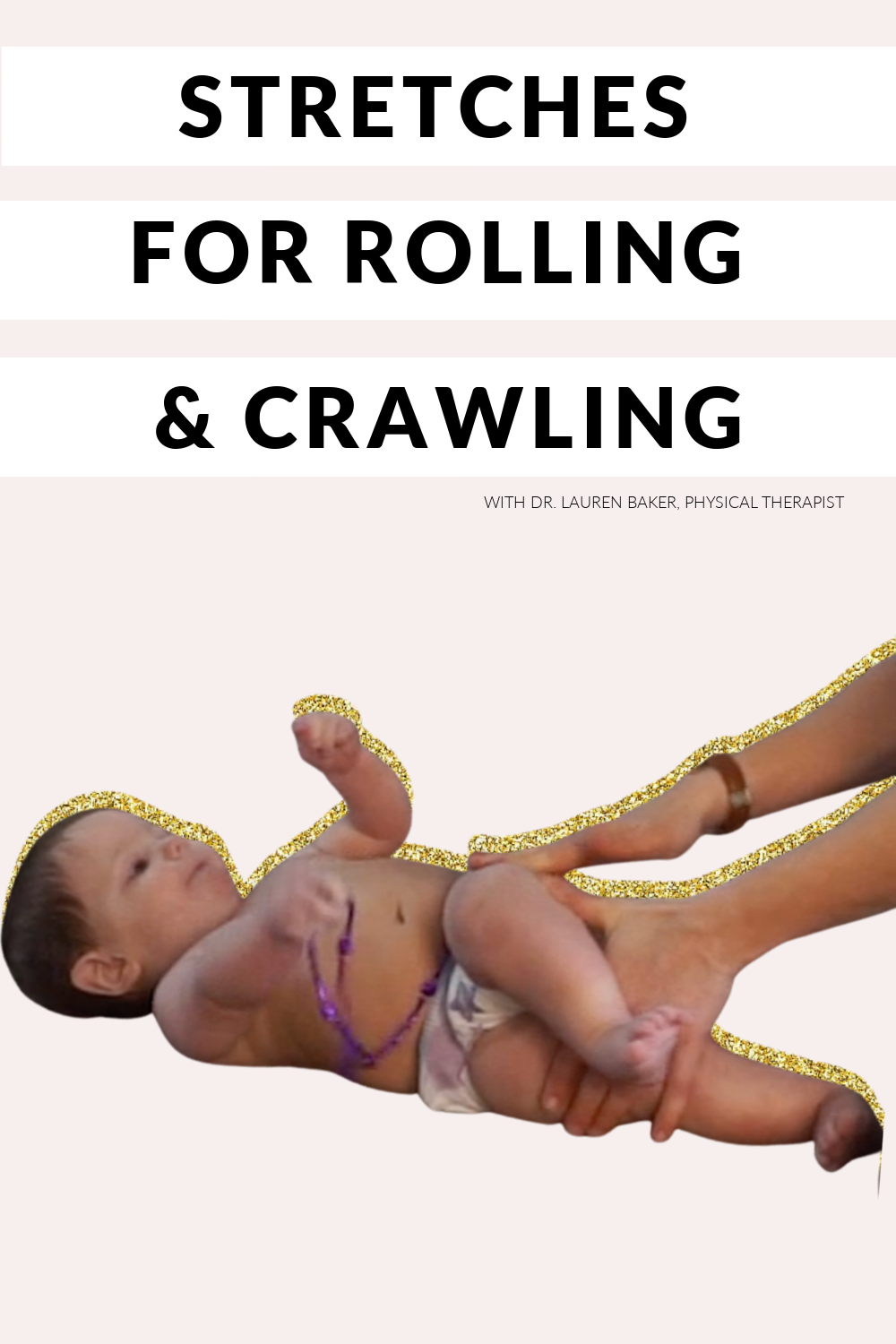
Exercise 1: Stretching Baby's Trunk Rotation on Their Back
This first exercise is designed to improve your baby's trunk rotation while they're lying on their back. It's a gentle way to stretch and promote flexibility.
How to Do It:
Lay your baby on their back.
Gently hold under one of your baby's knees and bring it across their body towards the opposite elbow. Keep your hand resting on their same side shoulder to note when it start to lift off the ground, this shows you when you have taken up all the available range. The baby is now in trunk in rotation.
Repeat on the other side, noting if one side feels tighter or more challenging to stretch than the other. Only go to the baby’s available range and not past.
You can use this position to increase range of motion in the following ways if a baby shows tightness in both directions (both shoulders are off the ground) or one (just one shoulder is off the ground more than the other).
Traditional Stretching: Like it says in the video, you can hold both of these positions for 30 seconds to 2 minutes based on the baby’s attention span and tolerance. This is going to increase range of motion by pulling on the shortened tissue and you might find that the baby resists the “tight” or difficult side. This can be frustrating for parents if a baby kicks out of a position while they are trying to improve their mobility. Always allow babies to move out of positions if they are uncomfortable and never push past the level of resistance present.
TMR Tots Approach: ONLY hold the baby in the easy direction for 1-2 minutes and follow up with 30 seconds to a minute of bouncing. This often gets quicker results (you can always check both directions before/after for a quick bit but only HOLD the EASY side) because the baby is able to easily relax into the easy direction thus allowing the muscles to relax and improves in overall flexibility on both sides.
It often feels a little bit odd when I teach it to parents, but I do really like this approach and use it almost exclusively.
Exercise 2: Holding Position for Trunk Rotation
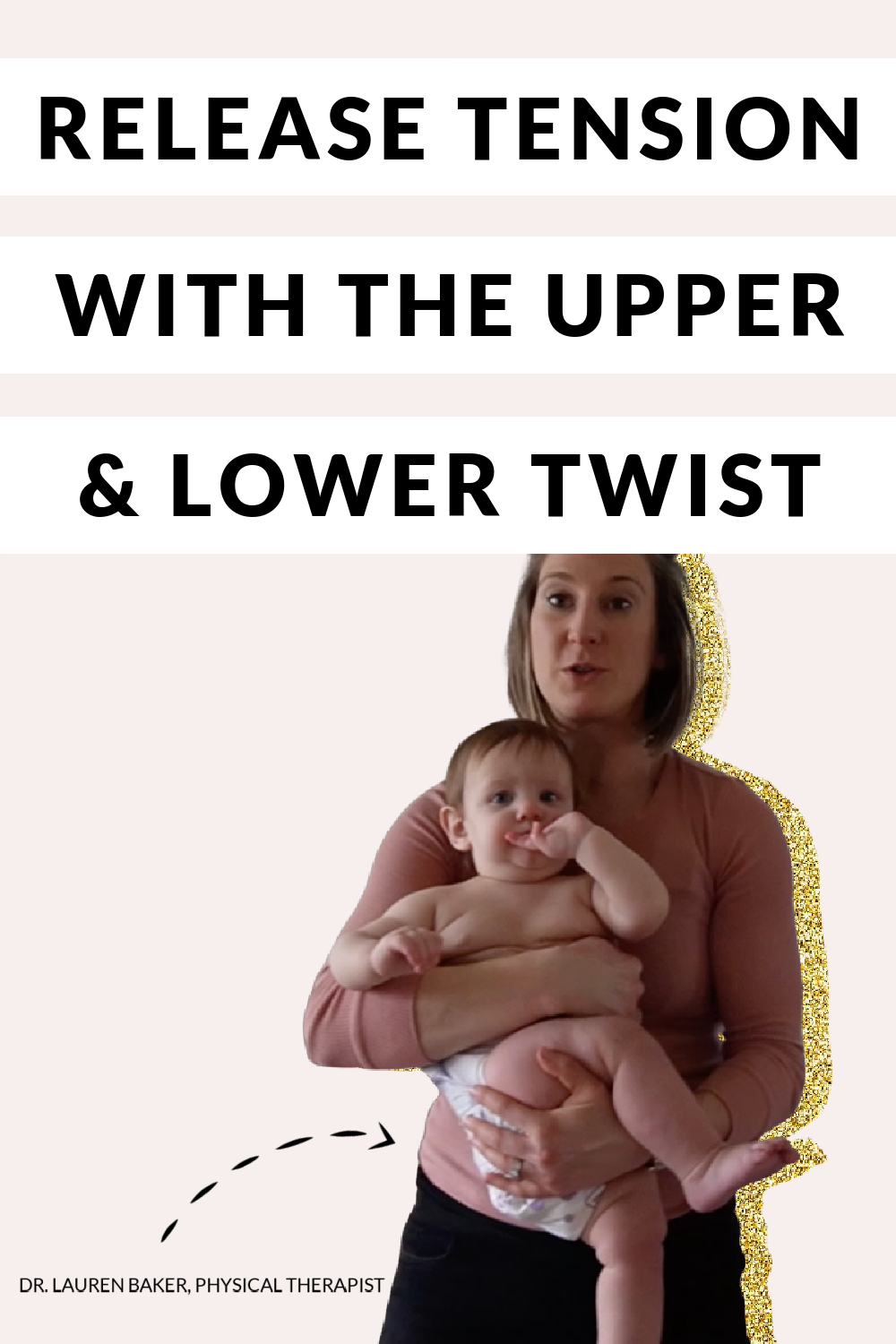
My favorite exercise doesn't require dedicated time out of your day because it can be incorporated into how you hold your baby as you go about your routine. It's a fantastic way to stretch your baby's trunk rotation while engaging with them.
How to Perform:
Hold your baby with their back against your chest, keeping their trunk steady against your body.
Slide one hand between the FRONT of your baby's legs and then rest your hand on their bottom cheek that is the same side as your arm – if your left arm is holding the baby, your other hand is going to go through the front of their legs and rest your hand on their left buttock or vice versa.
Gently rotate your baby's pelvis by bringing your bottom elbow backwards/behind you to the level of their available range (as far as they easily go and not past). Make sure to keep their shoulders aligned with yours (their chest does not move and they should stay vertical).
The motion at your elbow creates a gentle twist in their trunk by moving their pelvis (think of like how you would twist out a wet wash cloth but instead of horizontal, it’s vertical).Walk around, allowing your baby to see the world from this new perspective. This not only helps with trunk rotation but also provides sensory stimulation.
Traditional Stretching: Like it says in the video, you can hold both of these positions for 30 seconds to 2 minutes based on the baby’s attention span and tolerance. This is going to increase range of motion by pulling on the shortened tissue and you might find that the baby resists the “tight” or difficult side. This can be frustrating for parents if a baby kicks out of a position while they are trying to improve their mobility. Always allow babies to move out of positions if they are uncomfortable and never push past the level of resistance present.
TMR Tots Approach: ONLY hold the baby in the easy direction for 1-2 minutes and follow up with 30 seconds to a minute of bouncing. This often gets quicker results (you can always check both directions before/after for a quick bit but only HOLD the EASY side) because the baby is able to easily relax into the easy direction thus allowing the muscles to relax and improves in overall flexibility on both sides.
**to determine the easy side, use the floor exercise (exercise #1) to determine which shoulder is closest to the ground.
Right shoulder closest to ground = Right Upper Trunk Rotation is Easy = YOUR RIGHT ARM goes around their chest.
Left shoulder closest to ground = LEFT Upper Trunk Rotation is Easy = YOUR LEFT ARM goes around their chest.
TIMESTAMPS:
0:48 what trunk rotation is needed for
1:07 why trunk rotation in babies is important and why they need to stretch in trunk rotation
3:00 exercise 1: how to stretch a baby in trunk rotation on their back
3:53 the easier way to stretch a baby in trunk rotation
4:43 exercise 2 holding position that helps stretch a baby in trunk rotation
6:00 this philosophy is different than traditional stretching and is called TMR (total motion release) for this type of release please see video here: Total Motion Release Technique for more explanations
TOY IDEAS:
Tummy Time Toys
Best Toys for Babies Learning to Roll
Best Toys for Learning to Crawl
Best Toys for Babies
PT Approved Equipment/Containers for Babies
Understanding Trunk Rotation
Why It's Effective: These exercises stretch the upper and lower parts of the trunk in opposite directions, mirroring the essential movement patterns needed for rolling and other developmental milestones.
Why This Matters
Investing a few minutes daily in these simple exercises can make a significant difference in your baby's physical development. Trunk rotation is a cornerstone of movement, and by fostering this skill early on, you're paving the way for your baby to achieve milestones with greater ease and confidence.
Working Together for Your Baby's Best Start
If you've tried these exercises and have questions or if you're seeking more personalized guidance, I'm here for you. Check the pinned comment for a link to book a one-on-one consultation with me or schedule right here. We can dive deeper into your baby's developmental journey, ensuring you have all the tools and knowledge to support their growth every step of the way.
Curious About Learning More on Tummy Time, Rolling, or Both?
The absolute best book for parents on tummy time and rolling is: Tummy Time and Learning to Roll: A Baby Development Book for Ambitious Parents and Pediatric Healthcare Providers to Help Babies Learn to Roll Independently. The book comes with a free online video course to help parents fully understand how to complete the different exercises, printable checklists to know exactly where your baby is at, and when to reach out for additional help.
This book was written by Dr. Lauren Baker, PT, DPT, ATC, MTC, who is a Pediatric Physical Therapist in Boise, Idaho, trained in helping parents learn how to help their babies move and master their milestones. She loves teaching parents how to see how their babies are moving as well as how to influence those movements though play positions and exercises to help babies move with confidence and ease.
Tummy Time and Learning to Roll is the first book in the Proactive Play series written by Pediatric Physical Therapist Dr. Lauren Baker in order to help Ambitious Parents and Pediatric Healthcare Providers learn how to help babies master tummy time and learn to roll. It is meant to help ambitious parents understand baby development from birth to six months (tummy time to rolling).
This book is a mix of easy-to-follow and more in-depth information than is typically found in baby development books because Dr. Baker believes parents deserve to have all the information at their fingertips.
This book breaks down each piece of movement in checklists so that parents know what their babies need for tummy time and rolling. It also covers what areas might limit a child with rolling, why it is so important, and when to seek help from a pediatric PT.
This book comes with colored photos and easy-to-follow demonstration videos that can help parents implement safe, strategic play-based exercises with their babies in 20 minutes per day.
A Great Resource For:
Parents and Pediatric Healthcare Providers of babies 0-6 months
Parents of babies who are struggling with tummy time, rolling back to belly, belly to back, or only to one side
Access to simple, easy-to-follow videos of play positions and exercises
Learning the four pillars of movement needed in order to master rolling
240+ Color Photo Examples of:
Tummy Time, Sidelying, and Back Play
Developmental Toys and Equipment
Hand Placement and Strategic Play Positions
Common Areas of Restriction or Weakness
When To Reach Out For Help
What If You Want Extra Help?
If you have concerns about their movement, remember, you can always reach out to a pediatric physical therapist. It's your right as a parent to advocate for your child's development.
Sometimes, a few tips and tricks are all you need to get your baby moving better. We're here to support you and release those mama worries. If you are looking for in home pediatric physical therapy, check our listing of therapists.
For those eager to learn more or seeking personalized guidance, I offer online video parent consultations internationally which can be scheduled by clicking here. I am dedicated to answering questions and providing tailored play activities for each unique developmental journey.
When Should Babies Receive Pediatric Physical Therapy?
Parents can call and schedule with a Pediatric Physical Therapist at any time, for any concern in all fifty states without a referral from their Pediatrician.
Pediatric Physical Therapy is medically indicated in all babies who are not rolling in all four directions by six months (back to belly over their right arm AND left arm + belly to back over their right arm AND left arm).
Pediatric Physical Therapy is medically indicated if you notice a flat spot on the back of an infants head (possible plagiocephaly), a tilt of their head consistently to one side (ear to shoulder - possible torticollis), or a rotation preference of their neck (consistently look only to the right or left - possible torticollis).
Many Pediatric Physical Therapists including Dr. Baker, can successfully treat flat spots (Plagiocephaly) without a helmet with a combination of therapy and positioning strategies if seen prior to 4 months (0-3 months is ideal). Dr. Baker uses the Baby Begin Method of repositioning.
Flat spots can be due to in-utero positioning, rotational preference (right sided flatness most common) and babies are at an increased risk for flatness if they are male, were breech, multiple birth, premature, have difficulty with tummy time, or are in containers > 2 hr/day.
Final Thoughts
As parents, taking the time to understand and support your baby's development is one of the greatest gifts you can give. Trunk rotation is just one piece of the developmental puzzle, but it's a critical one. By incorporating these simple exercises into your daily routine, you're not only bonding with your baby but also actively contributing to their future success in rolling, crawling, and beyond.
Thank you for joining me on this journey to support your baby's development. Remember, you're doing an incredible job, and I'm here to support you. Stay tuned for more tips and insights to help your baby move with confidence and ease! If you haven’t yet, consider subscribing to the youtube channel for more videos for baby to toddler development.
How to Test A Baby’s Trunk Flexibility With This Rolling and Crawling Exercise
this blog contains affiliate links
Hello there, proactive parents! I'm Dr. Lauren Baker, a pediatric physical therapist, here to share some valuable insights into your baby's development.
Think of me as your pediatric PT bestie for all things related to helping your little ones move with confidence and ease. Today, we're diving into a topic that's both fascinating and crucial for your baby's growth: trunk mobility.
To be honest, it sounds kind of boring, but let me tell you – once you know about it, you will be able to unlock secret, hidden blocks that your baby might be experiencing if rolling or crawling is a struggle.
So, let's get started on this journey together!
Introduction to Trunk Mobility in Babies
You might not realize it, but trunk mobility is a big deal for babies. It's the foundation upon which many gross motor milestones like rolling, sitting, crawling, and walking are built.
However, many parents aren't aware that babies can have restrictions in their trunk, leading to a preference for moving in one direction or not being able to access the motion necessary in both directions, causing them to stay in one position like sitting or lying on their back.
This can cause muscle imbalances and make those milestones especially rolling and crawling more challenging than necessary.
Why It Matters to Test A Baby’s Trunk Flexibility
Muscle Imbalances: Tightness in the trunk can lead to asymmetrical movement patterns (this means that one side moves well, while the other doesn’t), potentially impacting your baby's ability to reach milestones smoothly. This can also occur globally if babies are tight in both directions.
Gross Motor Milestones: Proper trunk mobility is essential for rolling back to belly and belly to back, sitting independently, crawling, and eventually walking.
Quick Trunk Mobility Test: Elbow to Knee
For the most comprehensive information and examples on a baby please watch the youtube video below.
I'm excited to share a simple mobility test that you can do at home to check for trunk tightness or decreased mobility in your infant. This test can reveal if there's a significant difference in mobility from one side to the other.
How to Perform the Infant Trunk Mobility Test
Positioning: Gently place your baby on their back, then grasp under their left knee with one hand and behind their elbow with your other.
Movement: Gently hold beneath your baby's elbow and try to touch it to the opposite knee, only going as far as their resistance allows (never pushing past their resistance and always stopping when there is no more slack available).
Notice the motion of the knee coming to the elbow occurs at your baby's pelvis not their actual hip joint. The bottom of the baby should lift up into flexion (baby’s back and bottom are rounded).
Observation: Notice if one side seems easier or more difficult for your baby compared to the other. If one side the elbow and knee easily come together, touching or almost touching but the opposite is 3-4 inches a part, note the side that is difficult and approximately how far away the knee is from the elbow.
TIMESTAMPS:
2:32 Test for Babys Trunk Flexibility
3:14 indepth breakdown of how to complete the test
4:27 what this means and how it could impact crawling or rolling
TOY IDEAS:
Tummy Time Toys
Best Toys for Babies Learning to Roll
Best Toys for Learning to Crawl
Best Toys for Babies
PT Approved Equipment/Containers for Babies
Understanding the Infant Trunk Mobility Test Results
If you find that there's a noticeable difference between the two sides, it might indicate trunk restrictions. This doesn't mean your baby won't hit their milestones, but they might face more difficulties.
It is important to note trunk restrictions, especially if a baby if struggling with a functional task, in their cases movement milestones like rolling, sitting, crawling, or walking.
What Differences Mean and How to Break Them Down
Every child is different, so the follow is a typical understanding of movement limitations; however, not every single child will present this way and it’s important to note how your child is moving and if there is any tightness present AND difficulty with milestones, to reach out to a pediatric PT to further assist in resolving.
Right Elbow – Left Knee is difficult or not as close: This is likely due to decreased range of motion or mobility in the right rotation of the upper trunk and/or left side bend of the lateral trunk (upper and/or lower trunk).
Babies may experience difficulty with:
Back to belly over the left arm
Belly to back over the right arm
Pivoting on their belly to the left
Sit to all fours to the right
Crawling on all fours
They may also present with Hitch crawling with R foot on the ground and L knee on the ground
Left Elbow – Right Knee is difficult or not as close: This likely is due to decreased range of motion or mobility in the left rotation of the upper trunk and/or right sidebend of the lateral trunk (upper and/or lower trunk).
Babies may experience difficulty with:
Back to belly over the left arm
Belly to back over the right arm
Pivoting on their belly to the right
Sit to all fours to the left
Crawling on all fours
They may also present with Hitch crawling with L foot on the ground and R knee on the ground
Both are difficult or pretty far apart > 1 inch: Babies may show difficulty in back to belly / belly to back / crawling / or transitioning in/out of all fours. They may also be okay with one direction but not all directions ie back to belly or belly to back over one arm but not in all four directions (belly to back over R arm, belly to back over L arm, back to belly over R arm, back to belly over L arm).
They may also present with booty scooting or prolonged army crawling, because these positions do not require side to side (side bend) or rotation directions.
If You Notice Asymmetries
Seek Professional Help: A pediatric physical therapist can provide hands-on assessment and personalized strategies for babies or speaking to a pediatric physical therapist through an online parent consultation can help you understand the movement that your child is presenting with and assist in finding either proactive play strategies or providers in your area.
Don't Panic: Consider any limitations as a data point to be proactive rather than a cause for alarm. Often, these “tests” are orthopedic in nature indicating that the baby is struggling with muscle tightness, not necessarily difficulty in coordinating the movement together.
Pediatric physical therapists can help you figure out any red flags for development if you do have more global concerns.
The Impact of Infant Trunk Mobility on Development
Restrictions in trunk mobility can influence various developmental milestones because these activities require multi-plane movements, such as rotating the trunk while also bending at the trunk, while fighting gravity.
Rolling is the most specific milestone in which trunk rotation and side bending can significantly limit a baby’s experience and achievement of movement milestones. See the Learning to Roll book, that I released in October 2023 for a comprehensive guide to improve trunk mobility and master tummy time and rolling in all four directions.
When a baby is beginning to sit independently they need trunk mobility is key to maintaining balance and posture, trunk mobility allows the muscles to turn on and off in sequence during different demands of gravity such as reaching to the front or side.
When babies move from their back to sitting and sitting to all fours, they need both side bending and rotation in order to do it. Most babies who struggle with rotation, begin to choose alternative, disadvantageous movement patterns such as booty scooting instead of crawling on all fours.
This is often due to them not having the available movement and with focused intention and support, they can often achieve crawling on hands and knees.
If you're concerned about your baby's trunk mobility or just want to ensure they're on the right track, remember, I'm here to help, you can schedule an online parent consultation at any time.
Curious About Learning More on Tummy Time, Rolling, or Both?
The absolute best book for parents on tummy time and rolling is: Tummy Time and Learning to Roll: A Baby Development Book for Ambitious Parents and Pediatric Healthcare Providers to Help Babies Learn to Roll Independently. The book comes with a free online video course to help parents fully understand how to complete the different exercises, printable checklists to know exactly where your baby is at, and when to reach out for additional help.
This book was written by Dr. Lauren Baker, PT, DPT, ATC, MTC, who is a Pediatric Physical Therapist in Boise, Idaho, trained in helping parents learn how to help their babies move and master their milestones. She loves teaching parents how to see how their babies are moving as well as how to influence those movements though play positions and exercises to help babies move with confidence and ease.
Tummy Time and Learning to Roll is the first book in the Proactive Play series written by Pediatric Physical Therapist Dr. Lauren Baker in order to help Ambitious Parents and Pediatric Healthcare Providers learn how to help babies master tummy time and learn to roll. It is meant to help ambitious parents understand baby development from birth to six months (tummy time to rolling).
This book is a mix of easy-to-follow and more in-depth information than is typically found in baby development books because Dr. Baker believes parents deserve to have all the information at their fingertips.
This book breaks down each piece of movement in checklists so that parents know what their babies need for tummy time and rolling. It also covers what areas might limit a child with rolling, why it is so important, and when to seek help from a pediatric PT.
This book comes with colored photos and easy-to-follow demonstration videos that can help parents implement safe, strategic play-based exercises with their babies in 20 minutes per day.
A Great Resource For:
Parents and Pediatric Healthcare Providers of babies 0-6 months
Parents of babies who are struggling with tummy time, rolling back to belly, belly to back, or only to one side
Access to simple, easy-to-follow videos of play positions and exercises
Learning the four pillars of movement needed in order to master rolling
240+ Color Photo Examples of:
Tummy Time, Sidelying, and Back Play
Developmental Toys and Equipment
Hand Placement and Strategic Play Positions
Common Areas of Restriction or Weakness
When To Reach Out For Help
What If You Want Extra Help?
If you have concerns about their movement, remember, you can always reach out to a pediatric physical therapist. It's your right as a parent to advocate for your child's development.
Sometimes, a few tips and tricks are all you need to get your baby moving better. We're here to support you and release those mama worries. If you are looking for in home pediatric physical therapy, check our listing of therapists.
For those eager to learn more or seeking personalized guidance, I offer online video parent consultations internationally which can be scheduled by clicking here. I am dedicated to answering questions and providing tailored play activities for each unique developmental journey.
When Should Babies Receive Pediatric Physical Therapy?
Parents can call and schedule with a Pediatric Physical Therapist at any time, for any concern in all fifty states without a referral from their Pediatrician.
Pediatric Physical Therapy is medically indicated in all babies who are not rolling in all four directions by six months (back to belly over their right arm AND left arm + belly to back over their right arm AND left arm).
Pediatric Physical Therapy is medically indicated if you notice a flat spot on the back of an infants head (possible plagiocephaly), a tilt of their head consistently to one side (ear to shoulder - possible torticollis), or a rotation preference of their neck (consistently look only to the right or left - possible torticollis).
Many Pediatric Physical Therapists including Dr. Baker, can successfully treat flat spots (Plagiocephaly) without a helmet with a combination of therapy and positioning strategies if seen prior to 4 months (0-3 months is ideal). Dr. Baker uses the Baby Begin Method of repositioning.
Flat spots can be due to in-utero positioning, rotational preference (right sided flatness most common) and babies are at an increased risk for flatness if they are male, were breech, multiple birth, premature, have difficulty with tummy time, or are in containers > 2 hr/day.
Final Thoughts
Your role in your baby's developmental journey is monumental, and by being proactive, you're setting the stage for their future success. If you have any questions or need guidance, feel free to reach out. If you haven’t yet, please consider subscribing to the youtube channel or share it with a parent friend.
Together, we can ensure your baby moves with confidence and joy!
Thank you for joining me today, and remember, you're doing an incredible job as a parent. Stay tuned for more tips and insights to support your baby's growth and development!



How to Improve Head Control in Babies with the Pull To Sit Exercise
this blog contains affiliate links
Hey there, proactive parents! I'm Dr. Lauren Baker, a pediatric physical therapist, author, and your guide to learn how to help your babies move with confidence and ease.
Today, I'm thrilled to share with you a fun exercise known as the "pull to sit" – that's not just a game-changer for your baby's core strength but also a milestone checker used by pediatricians worldwide.
Why is the Pull to Sit Exercise a Milestone Checker?
Because it is a good gauge to see if a child is able to tuck their chin and hold it in that position against gravity when their body is going up and going down.
This shows that the neck muscles on the front (deep neck flexors) are working both in their ability to activate AND in their ability to hold that position for a prolonged period of time (long enough to not give up half way through the motion).
Babies three months and older have appropriate neck strength if they can complete a chin tuck while being brought into a sitting position and back into a lying position without letting their head fall backwards, what healthcare providers call a “head lag.”
Head lags mean that babies lack the neck strength to hold their heads in the chin tucked position throughout that movement, either because the muscles are weak or tight.
This position can also be used as an exercise to help build that neck strength in babies who are typically developing or who have developmental delays.
This exercise is truly all about empowering your little one to build the muscles needed for rolling, sitting independently, crawling, and beyond. Let's dive into making your baby's movement milestones memorable and fun!
Why the Pull to Sit Exercise is a Must-Try and Must Master Movement
Pull to sit is fundamentally a test that checks for your baby's ability to activate their deep neck flexors, tuck their chin, and use their shoulder girdle and abdomen to sit up from a lying position.
Typically Pediatricians check this motion by placing their fingers in both of a baby’s hands and the baby pulls themselves into a sitting position.
Not all Pediatricians will check both the “up” and “down,” component of the movement and traditionally if a baby is able to do the “up” portion, they are deemed appropriate in age development.
This milestone typically emerges around three months, signaling that your baby is on the right track with their head control and is ready to tackle the world—one sit-up at a time.
Observing Your Baby's Response to the Pull to Sit Exercise
Normal Response: A baby tucks their neck and uses their arms and abdomen to pull into a sitting position. The baby uses their arms to PULL themselves into sitting, meaning they bend their elbows and bring their chest forward the full way.
If a baby does not bend their elbows to pull themselves into the sit position and both of their arms stay straight DO NOT pull them into a sitting position with their arms straight. This automatically demonstrates difficulty with this movement and go into the exercise portion with your hands supporting behind their shoulders.
Weakness/Not Mastered:
Head Lag: If your baby’s head goes backward (into extension) and they are not able to keep their chin tucked during ANY part of this test (going up or going down).
This can happen if a baby hasn't had ample tummy time, hasn’t practiced this motion before, struggles to grab their feet, has tightness in their neck or chest, or hasn’t been introduced to sidelying play.
Head lag can be at the beginning, in the middle where a baby seems to “give up” and their head falls backward, or a forceful “no longer interested” by flinging their head/body backwards.
Most times, going down is going to be more difficult than going up and keeping your fingers available to support the head so it doesn’t go backwards if a baby stops maintaining the chin tuck is always encouraged.
Not using the arms to pull and keeping the elbows straight: Sometimes parents pull their babies into a sitting position with the baby’s arms straight, this can cause damage to their arm and shoulder muscles because the baby is not engaging their shoulders and bringing themselves into sitting.
When testings at the arms/hands, parents should encourage the baby to do all the work, going as slowly as needed. If the baby is not bending their arms to pull themselves into sitting, immediately provide support behind the shoulder blades and complete the screen that way.
When completing as an exercise I always continue to provide support behind the shoulder blades when doing 5-10 repetitions. I will “test” 1-2 at the hands to make sure they can do it, but prefer to always support at the shoulders to focus more on the trunk and neck strength vs arm strength.
How to Practice the Pull to Sit Exercise Safely and Effectively
For the most comprehensive information and examples using babies, please watch the youtube video below
For Babies Not Yet Pulling Actively: Modification
If your baby isn't engaging their muscles during pull to sit, don't fret! We'll start with modifications to build up their strength gently.
Elevate: Start with your baby elevated where their shoulders are above the level of the hips. I do this usually by placing their shoulders and upper back lying backwards on a boppy, but parents can do this using a wedge, cushion, or throw pillow.
Elevating the baby pulls out the toughest first 25% of the motion as gravity is the meanest between 0-25 degrees when going from lying on your back to sitting (either on your own or with help). By elevating, we simply remove that difficult portion to build strength in the easier range.
Once we master the modified version by completing x10 repetitions, moving onto harder version will be easier.
Support and Slow Motion: Support your baby under their shoulders, moving slowly to encourage them to tuck their chin and engage their core. You can add into toys in their lap when coming into sitting or using a pacifier to keep them engaged and calm.
Calming Techniques Between Reps: Offering gentle bounces or a snuggle between reps can soothe your baby, making the exercise more enjoyable.
For Babies Ready for More Challenge
Go Flat: Using an incline, like a boppy pillow, reduces the challenge by focusing on the upper 50% of the movement, making it easier for your baby to practice the pull to sit. Once they can complete x10 in a row on a boppy with chin tucked in both going up and going down, move them to flat on the floor and build up to x10 there.
Bonus for Parents & Babies: For older babies, encourage them to use their hands to pull up from the ground or from your lap. When parents place the baby on their lap they even get a core workout too.
TIMESTAMPS:
0:41 introduction to pull to sit and what it is and why doctors test pull to sit
1:43 what happens if a baby has a head lag in pull to sit
1:58 what to do if your baby is not using their arms in pull to sit
2:38 pull to sit 3-6 month olds
3:03 how many pull to sits should you do with your baby
3:15 calming techniques for babies why cry during exercises
3:30 how to support the head and neck with supine to sit
4:00 how babies tend to compensate if they have weak neck muscles
4:36 vibrating oral toy to increase the effectiveness of pull to sit
5:15 how to build the most strength for head control
5:35 what to do if your baby is struggling with pull to sit
8:07 modified pull to sit on an elevated surface
9:16 advanced pull to sit on parents legs using arms
10:03 pull to sit with hands from the ground (older baby)
TOY IDEAS:
Z Vibe Teether
Z Vibe Tips
Vibrating pull toy (similar)
Small Tummy Time Boppy
Prop a pillar
Wedge
Best Toys for Babies Learning to Roll
Best Toys for Babies
PT Approved Equipment/Containers for Babies
Tummy Time Toys
Key Takeaways for Successful Pull to Sit Exercise Sessions
Watch for Compensations: If your baby tries to use upper trunk extension instead of tucking their chin, support them under their shoulders to encourage core engagement.
Use Props: A small, vibrating oral motor toy can encourage your baby to grasp with both hands, promoting a tucked position and engagement of the right muscles.
Praise and Encouragement: Celebrate every effort, no matter how small, with lots of praises and cuddles.
Understanding Your Baby's Strength and Tolerance
Babies have varying levels of tolerance for exercises. If your baby can only handle a few repetitions before needing a break, that's perfectly okay. The goal is to encourage movement without pushing too hard, respecting your baby's limits and celebrating their progress.
Every single repetition will build on itself, if a baby has to start with x3 from an elevated surface done 5x/day, that is fine. Add them into diaper changes.
Once x3 are consistently tolerated (and may even enjoyed!) start adding repetitions until you can successful get to x10 in a row. THEN make it more challenging by going flat on the floor or decreasing the height of the incline (wedge to boppy to small throw pillow to floor).
Why Gravity Matters
Gravity is the invisible force that your baby battles with every pull to sit. Initially, gravity pushes babies harder because it is stronger in a perpendicular direction than it is at an angle, making the first part of the movement from floor to 25 degrees incline more challenging.
As your baby pulls up, gravity then goes from pushing them down to being less intense to even at times assisting them.
Curious About Learning More on Tummy Time, Rolling, or Both?
The absolute best book for parents on tummy time and rolling is: Tummy Time and Learning to Roll: A Baby Development Book for Ambitious Parents and Pediatric Healthcare Providers to Help Babies Learn to Roll Independently. The book comes with a free online video course to help parents fully understand how to complete the different exercises, printable checklists to know exactly where your baby is at, and when to reach out for additional help.
This book was written by Dr. Lauren Baker, PT, DPT, ATC, MTC, who is a Pediatric Physical Therapist in Boise, Idaho, trained in helping parents learn how to help their babies move and master their milestones. She loves teaching parents how to see how their babies are moving as well as how to influence those movements though play positions and exercises to help babies move with confidence and ease.
Tummy Time and Learning to Roll is the first book in the Proactive Play series written by Pediatric Physical Therapist Dr. Lauren Baker in order to help Ambitious Parents and Pediatric Healthcare Providers learn how to help babies master tummy time and learn to roll. It is meant to help ambitious parents understand baby development from birth to six months (tummy time to rolling).
This book is a mix of easy-to-follow and more in-depth information than is typically found in baby development books because Dr. Baker believes parents deserve to have all the information at their fingertips.
This book breaks down each piece of movement in checklists so that parents know what their babies need for tummy time and rolling. It also covers what areas might limit a child with rolling, why it is so important, and when to seek help from a pediatric PT.
This book comes with colored photos and easy-to-follow demonstration videos that can help parents implement safe, strategic play-based exercises with their babies in 20 minutes per day.
A Great Resource For:
Parents and Pediatric Healthcare Providers of babies 0-6 months
Parents of babies who are struggling with tummy time, rolling back to belly, belly to back, or only to one side
Access to simple, easy-to-follow videos of play positions and exercises
Learning the four pillars of movement needed in order to master rolling
240+ Color Photo Examples of:
Tummy Time, Sidelying, and Back Play
Developmental Toys and Equipment
Hand Placement and Strategic Play Positions
Common Areas of Restriction or Weakness
When To Reach Out For Help
What If You Want Extra Help?
If you have concerns about their movement, remember, you can always reach out to a pediatric physical therapist. It's your right as a parent to advocate for your child's development.
Sometimes, a few tips and tricks are all you need to get your baby moving better. We're here to support you and release those mama worries. If you are looking for in home pediatric physical therapy, check our listing of therapists.
For those eager to learn more or seeking personalized guidance, I offer online video parent consultations internationally which can be scheduled by clicking here. I am dedicated to answering questions and providing tailored play activities for each unique developmental journey.
When Should Babies Receive Pediatric Physical Therapy?
Parents can call and schedule with a Pediatric Physical Therapist at any time, for any concern in all fifty states without a referral from their Pediatrician.
Pediatric Physical Therapy is medically indicated in all babies who are not rolling in all four directions by six months (back to belly over their right arm AND left arm + belly to back over their right arm AND left arm).
Pediatric Physical Therapy is medically indicated if you notice a flat spot on the back of an infants head (possible plagiocephaly), a tilt of their head consistently to one side (ear to shoulder - possible torticollis), or a rotation preference of their neck (consistently look only to the right or left - possible torticollis).
Many Pediatric Physical Therapists including Dr. Baker, can successfully treat flat spots (Plagiocephaly) without a helmet with a combination of therapy and positioning strategies if seen prior to 4 months (0-3 months is ideal). Dr. Baker uses the Baby Begin Method of repositioning.
Flat spots can be due to in-utero positioning, rotational preference (right sided flatness most common) and babies are at an increased risk for flatness if they are male, were breech, multiple birth, premature, have difficulty with tummy time, or are in containers > 2 hr/day.
Final Thoughts
Thank you for joining me on this journey to strengthen your baby's core muscles through the pull to sit exercise.
Remember, every baby develops at their own pace, and the goal is to support them with love, patience, and encouragement. If you have any questions, don't hesitate to reach out for an online parent consultation.
Together, we can ensure your baby builds the strength they need to explore the world around them with confidence.
Stay tuned for more tips and tricks on helping your little one move better, and don't forget to share this post with other parents in your circle. If you haven’t yet, make sure to subscribe to the youtube channel and share it with other parents looking for proactive play ideas for their babies.
Here's to happy, healthy development for all our littles!
How To Stretch A Baby’s Neck and Arm Muscles With Baby Backbends
this blog contains affiliate links
Hello, proactive parents! I'm Dr. Lauren Baker, a pediatric physical therapist with a passion for helping active parents and their little ones move better. Today, I’m super excited to share with you a playful and effective exercise to stretch your baby’s abdomen, neck, and arms.
This routine is not just fun but crucial for developing flexibility, supporting milestones like rolling, sitting, crawling, walking, and addressing conditions like torticollis. Our goal is to make movement a magical experience, for both parents and babies.
As a bonus, this exercise also incorporates the vestibular system, an important sensory system that helps your baby begin to understand where they are in space and help them balance.
Stretching the Neck, Arms, and Belly: Baby Backbends on a Stability Ball
This exercise is often a baby favorite, don’t be surprised if you find them giggling and loving this exercise because it is new and novel.
This exercise uses a stability or exercise ball to help your baby ensure they have the flexibility they need in the front part of their body. Often babies can have tightness in the front of their necks, sides of their trunks/under their arms, and the front of their bellies.
The stability ball provides a gentle and supported way to help babies relax in this position, while incorporated gentle backward/forward motion in order to help facilitate the stretches.
How to Do It
for the best and most comprehensive information, make sure to watch the youtube video down below
Type of Ball: The first thing you’re going to need for this exercise is a stability ball or exercise ball. Often families have one in the home already, but if not one can be purchased off amazon, at target, or walmart, second hand or even borrowed from a family member or friend.
The best size is between 45-65 centimeters and can depend on the size of the baby. Babies that are small and 3-4 months I often recommend small stability balls closer to 45cm but most babies do well on a 55cm stability ball.
Sometimes, 65cm balls can be tough for smaller parents get close to their baby, so I don’t often recommend that big of a ball, but if that is what you have at home, just deflate it a little bit so it isn’t too tall.
When you are on your knees, you want to be able to have your baby lying back on the ball at approximately your hip/lower chest level. You want to make sure you can comfortably bring your chest over the top of the ball to bring them back into a supported sitting or held position.
Position: Keep your body close to your baby and gently lay your baby on their back on the top of the stability ball, with their feet near your body, face up, and the top of their head pointing away from you.
Support: Place your hands securely on their pelvis, I prefer to keep both hands on the top of the pelvis, you want to make sure the baby’s legs lay straight and don’t curl up toward their bellies. You want the baby to be in a gentle backbend.
Action: Gently roll the ball forward and backward, allowing your baby’s head to relax and stretch out the belly. The baby’s neck should be open with their head resting on the ball.
Benefits: This movement stretches the abdomen, neck, and arm muscles and provides vestibular input, which is calming and helps with sensory integration.
TIMESTAMPS:
0:50 stretch for babys neck and belly exercise #1 backbends on stability ball
1:21 stretch for babys neck exercise #2 both hands down backbends on stability ball
2:25 using bounces to calm baby down and increase vestibular regulation
3:07 stretch for babys neck exercise #3 one arm down backbends on stability ball
6:03 how to use exercises to a baby's tolerance
45-75cm stability balls [multiple colors and all sizes]
TOY IDEAS:
Best Toys for Babies Learning to Roll
Best Toys for Babies
PT Approved Equipment/Containers for Babies
Tummy Time Toys
There are two options for where the arms go:
Arms at the sides to emphasize stretching the neck
Arms above the head to emphasize stretching the neck and arms
If a child has a history of torticollis, sometimes holding the arms at the sides will assist in focusing on the neck, but the truth is that sometimes it feels harder to hold the child in the right position when holding their arms down.
These days, I personally prefer allowing the child’s arms to be free, ideally overhead. A lot of children have tightness in the front of their chest and when they are lying backwards over the stability ball, their upper trunks are in extension, this makes bringing their hands overhead even hards, putting more of a stretch on the sides of their trunk.
To help encourage the relaxation of these muscles, I love when another family member or sibling is standing or kneeling by the baby’s head and gently touches the arms encouraging them to go straight.
You do not want to push the baby’s arms toward the ball, you only want to gently stroke the childs arms or tickle the arms or try to get them to reach for your hands. The goal is for the baby to relax their arms overhead over time, not the first time.
Tips for Helping Babies Relax & Stretch Their Arms & Necks
Gentle Guidance: Use your hand to gently guide the top of their chest and stretch the fascia.
Come Up With Ease:
2-5 months: To help your baby come up, bring your chest close to their body and bring your arms behind the baby to support their body and head. Bring them to your chest and lift off the ball.
6 months+: To help your baby come up, gently roll them to the side and encourage pushing up with their arm, going into a sit to sidelying to sit “sit up,” fostering a mix of strength and flexibility.
Use Bounces: Between repetitions, if your baby has head control, you can bring them into sitting and gently bounce on the ball. This can be soothing and is great for vestibular input.
How Many Times or How Long? Babies do really well with this exercise when completing 10-30 times or for 2-5 minutes total (with seated or holding breaks).
If a baby struggles with this exercise, it might be due to tightness in the front of their neck or chest. This is still a great exercise for babies with tightness in those areas to do, but parents may need to go slower to their specific baby’s tolerance.
If a baby only tolerates 5 forward/backward motions, then stop there and build 1-2 more if tolerated. It may take a few days or week to slowly build up to 10-30x.
Making It a Soothing Routine
These activities are perfect for winding down and getting ready for bed. The combination of stretching and vestibular input from bouncing can be incredibly soothing for your baby, making this routine a fantastic prelude to nighttime calmness.
This obviously should not be done before bedtime, if a baby struggles with this exercise, doing it during wake periods would be more appropriate in those cases.
Why This Matters: Babies Who Struggle With Tummy Time
This isn’t just about stretching; it’s about nurturing your baby’s development in a holistic way. These exercises promote flexibility, enhance sensory integration, and build a foundation for future milestones.
When baby’s have tightness in the front of their bodies including their arms, chest, or neck they are at risk for struggling with rolling and tummy time.
In order for babies to lift their heads in tummy time, they need both the strength in the back of their neck muscles to lift their head against gravity AND they need to have the flexibility in the muscles in the front of their neck and chest to ALLOW the head go into extension.
Additionally, babies need to be able to bring their elbows to the side and slightly in front of their shoulders in order to be able to push through the ground and lift their chest and head up.
If babies have tightness in the side of their trunks and arms, one or both arms might not be able to come forward, because the tight muscles are pulling the elbow back.
This makes it inefficient, so babies are not able to have their elbow in the appropriate position and they’re not able to push through the ground to lift their chest and head/neck as they would if they had the flexibility in the side of their trunk, their chest, and arms.
These same muscles, if they are tight, can also impact rolling both back to belly and belly to back. For more information on how tight muscles impact rolling, see the Tummy Time and Learning to Roll: A Baby Development Book for Ambitious Parents and Pediatric Healthcare Providers to Help Babies Learn to Roll Independently
Curious About Learning More on Tummy Time, Rolling, or Both?
The absolute best book for parents on tummy time and rolling is: Tummy Time and Learning to Roll: A Baby Development Book for Ambitious Parents and Pediatric Healthcare Providers to Help Babies Learn to Roll Independently. The book comes with a free online video course to help parents fully understand how to complete the different exercises, printable checklists to know exactly where your baby is at, and when to reach out for additional help.
This book was written by Dr. Lauren Baker, PT, DPT, ATC, MTC, who is a Pediatric Physical Therapist in Boise, Idaho, trained in helping parents learn how to help their babies move and master their milestones. She loves teaching parents how to see how their babies are moving as well as how to influence those movements though play positions and exercises to help babies move with confidence and ease.
Tummy Time and Learning to Roll is the first book in the Proactive Play series written by Pediatric Physical Therapist Dr. Lauren Baker in order to help Ambitious Parents and Pediatric Healthcare Providers learn how to help babies master tummy time and learn to roll. It is meant to help ambitious parents understand baby development from birth to six months (tummy time to rolling).
This book is a mix of easy-to-follow and more in-depth information than is typically found in baby development books because Dr. Baker believes parents deserve to have all the information at their fingertips.
This book breaks down each piece of movement in checklists so that parents know what their babies need for tummy time and rolling. It also covers what areas might limit a child with rolling, why it is so important, and when to seek help from a pediatric PT.
This book comes with colored photos and easy-to-follow demonstration videos that can help parents implement safe, strategic play-based exercises with their babies in 20 minutes per day.
A Great Resource For:
Parents and Pediatric Healthcare Providers of babies 0-6 months
Parents of babies who are struggling with tummy time, rolling back to belly, belly to back, or only to one side
Access to simple, easy-to-follow videos of play positions and exercises
Learning the four pillars of movement needed in order to master rolling
240+ Color Photo Examples of:
Tummy Time, Sidelying, and Back Play
Developmental Toys and Equipment
Hand Placement and Strategic Play Positions
Common Areas of Restriction or Weakness
When To Reach Out For Help
What If You Want Extra Help?
If you have concerns about their movement, remember, you can always reach out to a pediatric physical therapist. It's your right as a parent to advocate for your child's development.
Sometimes, a few tips and tricks are all you need to get your baby moving better. We're here to support you and release those mama worries. If you are looking for in home pediatric physical therapy, check our listing of therapists.
For those eager to learn more or seeking personalized guidance, I offer online video parent consultations internationally which can be scheduled by clicking here. I am dedicated to answering questions and providing tailored play activities for each unique developmental journey.
When Should Babies Receive Pediatric Physical Therapy?
Parents can call and schedule with a Pediatric Physical Therapist at any time, for any concern in all fifty states without a referral from their Pediatrician.
Pediatric Physical Therapy is medically indicated in all babies who are not rolling in all four directions by six months (back to belly over their right arm AND left arm + belly to back over their right arm AND left arm).
Pediatric Physical Therapy is medically indicated if you notice a flat spot on the back of an infants head (possible plagiocephaly), a tilt of their head consistently to one side (ear to shoulder - possible torticollis), or a rotation preference of their neck (consistently look only to the right or left - possible torticollis).
Many Pediatric Physical Therapists including Dr. Baker, can successfully treat flat spots (Plagiocephaly) without a helmet with a combination of therapy and positioning strategies if seen prior to 4 months (0-3 months is ideal). Dr. Baker uses the Baby Begin Method of repositioning.
Flat spots can be due to in-utero positioning, rotational preference (right sided flatness most common) and babies are at an increased risk for flatness if they are male, were breech, multiple birth, premature, have difficulty with tummy time, or are in containers > 2 hr/day.
Final Thoughts
Embracing Baby’s Tolerance and Celebrating Effort
Every baby is unique, with their own preferences and tolerance levels. It's crucial to follow their lead, celebrating each attempt and giving plenty of cuddles and praise. Remember, it’s not about pushing; it’s about encouraging and supporting your baby’s journey so that they learn to love and feel safe during movement.
If You Have Questions:
Never hesitate to reach out to a local pediatric physical therapist. They're the experts who can guide you through understanding and enhancing your baby’s movement. And, of course, I’m here too! I offer international parent consultations to dive deep into education and exercises for specific milestones. You can also ask any questions you have on baby development or what you’re seeing in how your child is moving.
Let’s Keep the Conversation Going
Your experiences, questions, and insights are invaluable. Drop a comment below the video, share your stories, and let’s create a community where all of us, together, can empower our little ones to move with joy and confidence.
Subscribe for More Videos & Tips
By subscribing to the channel, you’re not just gaining access to a wealth of knowledge; you’re also helping other parents find these resources. Together, let’s spread the word and make a difference in the lives of babies everywhere.
Thank you for joining me in this delightful journey of movement and growth. Remember, every little stretch, every giggle, and every moment spent together builds a foundation for a lifetime of healthy movement. Here’s to happy, healthy babies!
How To Help An Infant Learn To Roll Over Using The Simple Open Book Exercise
this blog contains affiliate links
Hi there! I’m Dr. Lauren Baker, a Pediatric Physical Therapist, and I’m here to be your guide on this exciting journey of helping your baby learn to roll over with confidence and ease.
Today, we’re diving into one of my favorite exercises designed to increase upper trunk rotation, a crucial skill for babies learning to roll from belly to back.
This exercise is especially helpful for babies who are learning or struggling to roll over from their belly to their backs, but can also be used for general rolling development.
The Key: Upper Trunk Rotation
For a baby to roll smoothly and repeatedly in both directions, they need to master rotating the top half of their body independently from the bottom half.
The best way to think about this is to imagine sitting and rotating your upper body while keeping your lower body still; like sitting in a chair with your legs pointing forward and rotating your shoulders to look behind you.
This is also what we aim for our little ones to achieve, because without this motion, they will likely get stuck. Sometimes, babies do have this motion but only in one direction. That’s why I love this exercise because it can be done on both sides.
Sometimes we forget that babies need a handful of things in order to be able to do one simple action like rolling. They need strength, coordination, AND mobility of their body and not just ONE part of their body, but multiple parts: their head/neck, arms, eyes, upper trunk, lower trunk, and legs.
This exercise is also great for babies who roll belly to back on their own, but smash their sweet, soft little heads on the ground. They basically are catapulting themselves from belly to back, often because they have good arm strength (yay!) but are lacking trunk mobility.
So because they do not yet have the flexibility they need to do it smoothly and softly, they end up throwing themselves over their arms/shoulders and landing kind of hard on their backs because gravity is always trying to push them to the ground.
When they catapult themselves over their shoulders, gravity takes that force they generated and increases their speed, which then results in a hard “bounce” on their back and potentially their heads!
The Exercise That Will Help You Learn How To Teach Baby To Roll From Tummy To Back
For the most comprehensive information, please watch the youtube video here. It will go through exactly how to do this on a real baby :)
Positioning: Start with your baby in a belly (prone/tummy time) position.
The Roll: Gently roll your baby over to their side, ensuring their elbow is tucked in front of their body. Hold them into a side lying position, stabilizing their pelvis on the top by gently holding your hand on the top part of their pelvis. This may require a little more, but still gentle force as babies will likely be confused and try to roll onto their back.
The Rotation: Bring a toy behind them so that they reach for the toy with their top hand/arm, in an “open book,” type position. This is similar to an adult stretching position where you lie on your side and bring your top arm behind you to “open and close” your chest. This is meant to encourage upper trunk rotation.
Keep Them Motivated: Babies often will engage in this position for a short period of time 15 seconds to 1 minute (closer to 1 minute is ideal) and then you will need to allow them a break to play or place the toy in their mouth. By doing this in “repetitions” to the babies tolerance you will keep them motivated and decrease their frustration, while still getting the motion you want.
Engagement: Use toys or visual cues to engage your baby, if they are disinterested or struggling, make sure that their eyes are looking at the toy as they turn. This will help encourage them to reach and explore, enhancing hand eye coordination and strengthening their muscles.
TIMESTAMPS:
3:55 trunk rotation exercise to help infant learn to roll over
TOY IDEAS:
Squigz with Rings
Orange Squigz with Rings
Squigz Bundle
Moose Toy
Bumpy Ball
Best Toys for Babies Learning to Roll
Best Toys for Babies
PT Approved Equipment/Containers for Babies
Tummy Time Toys
Key Points to Remember
Repetition: Perform this exercise in repetitions, focusing on both sides equally. Babies often have a preferred side for rotation; your goal is to encourage balance and ease in both directions.
Engagement and Breaks: Keep your baby engaged with toys and take breaks as needed. It’s essential to make the exercise enjoyable and not overwhelming.
Observation: Pay attention to your baby’s ease of movement on each side. If one side is more challenging than the other, that might be due to a mobility restriction. Use this information to tailor your approach, focusing more on the difficult side while still maintaining a balanced routine.
It is also important if there is a difference side to side to try to resolve it as much as possible, look into TMR positional releases, which are my favorite ways to assist babies in improving their mobility and being able to move equally side to side in the easiest, least stressful way possible.
Why This Exercise Matters
This exercise is not just about rolling; it's about building the foundation for future movement skills. By focusing on upper trunk rotation, you're helping your baby develop the coordination, strength, and flexibility needed for crawling, sitting, and eventually walking.
Rolling is one of the most important milestones, if rolling is mastered in all four directions (belly to back over left / belly to back over right / back to belly over left / back to belly over right) babies are at a much less risk of developing non-optimal crawling patterns or difficulty with crawling.
Crawling is one of the key movement patterns needed for pre-academic skills including reading and writing.
Additional Tips
Variety: Mix up the exercises. If you notice your baby prefers rolling to one side, incorporate activities that encourage rotation to the less preferred side.
Duration: Spend about two to five minutes on each exercise (it’s okay if it takes multiple repetitions to add up to 2-5 minutes). Start with the easier side to build confidence before moving to the more challenging side.
Integration: Combine this exercise with other activities from the rolling playlist or check the bottom of the blog post to see all our rolling content to ensure a well rounded development.
Curious About Learning More on Tummy Time, Rolling, or Both?
The absolute best book for parents on tummy time and rolling is: Tummy Time and Learning to Roll: A Baby Development Book for Ambitious Parents and Pediatric Healthcare Providers to Help Babies Learn to Roll Independently. The book comes with a free online video course to help parents fully understand how to complete the different exercises, printable checklists to know exactly where your baby is at, and when to reach out for additional help.
This book was written by Dr. Lauren Baker, PT, DPT, ATC, MTC, who is a Pediatric Physical Therapist in Boise, Idaho, trained in helping parents learn how to help their babies move and master their milestones. She loves teaching parents how to see how their babies are moving as well as how to influence those movements though play positions and exercises to help babies move with confidence and ease.
Tummy Time and Learning to Roll is the first book in the Proactive Play series written by Pediatric Physical Therapist Dr. Lauren Baker in order to help Ambitious Parents and Pediatric Healthcare Providers learn how to help babies master tummy time and learn to roll. It is meant to help ambitious parents understand baby development from birth to six months (tummy time to rolling).
This book is a mix of easy-to-follow and more in-depth information than is typically found in baby development books because Dr. Baker believes parents deserve to have all the information at their fingertips.
This book breaks down each piece of movement in checklists so that parents know what their babies need for tummy time and rolling. It also covers what areas might limit a child with rolling, why it is so important, and when to seek help from a pediatric PT.
This book comes with colored photos and easy-to-follow demonstration videos that can help parents implement safe, strategic play-based exercises with their babies in 20 minutes per day.
A Great Resource For:
Parents and Pediatric Healthcare Providers of babies 0-6 months
Parents of babies who are struggling with tummy time, rolling back to belly, belly to back, or only to one side
Access to simple, easy-to-follow videos of play positions and exercises
Learning the four pillars of movement needed in order to master rolling
240+ Color Photo Examples of:
Tummy Time, Sidelying, and Back Play
Developmental Toys and Equipment
Hand Placement and Strategic Play Positions
Common Areas of Restriction or Weakness
When To Reach Out For Help
What If You Want Extra Help?
If you have concerns about their movement, remember, you can always reach out to a pediatric physical therapist. It's your right as a parent to advocate for your child's development.
Sometimes, a few tips and tricks are all you need to get your baby moving better. We're here to support you and release those mama worries. If you are looking for in home pediatric physical therapy, check our listing of therapists.
For those eager to learn more or seeking personalized guidance, I offer online video parent consultations internationally which can be scheduled by clicking here. I am dedicated to answering questions and providing tailored play activities for each unique developmental journey.
When Should Babies Receive Pediatric Physical Therapy?
Parents can call and schedule with a Pediatric Physical Therapist at any time, for any concern in all fifty states without a referral from their Pediatrician.
Pediatric Physical Therapy is medically indicated in all babies who are not rolling in all four directions by six months (back to belly over their right arm AND left arm + belly to back over their right arm AND left arm).
Pediatric Physical Therapy is medically indicated if you notice a flat spot on the back of an infants head (possible plagiocephaly), a tilt of their head consistently to one side (ear to shoulder - possible torticollis), or a rotation preference of their neck (consistently look only to the right or left - possible torticollis).
Many Pediatric Physical Therapists including Dr. Baker, can successfully treat flat spots (Plagiocephaly) without a helmet with a combination of therapy and positioning strategies if seen prior to 4 months (0-3 months is ideal). Dr. Baker uses the Baby Begin Method of repositioning.
Flat spots can be due to in-utero positioning, rotational preference (right sided flatness most common) and babies are at an increased risk for flatness if they are male, were breech, multiple birth, premature, have difficulty with tummy time, or are in containers > 2 hr/day.
Final Thoughts
Thank you for joining me in learning how to support your baby’s journey to mastering rolling belly to back. Remember, every baby is unique, and progress will vary. The key is patience, consistency, and celebrating every little victory along the way.
If you have any questions or need personalized advice, feel free to reach out for an online parent consultation. Together, we can ensure your baby develops the skills they need to move confidently and with ease. Until next time, keep nurturing your baby’s movement adventures with love and encouragement. Here’s to happy rolling!
26 Videos to Help Answer “How Can I Encourage My Baby to Roll?”
this blog contains affiliate links
This blog post is a combination of videos that can help you learn how to encourage your baby to roll over. A lot of parents find helping their babies roll over to be really frustrating and often it is because they aren’t taught the building blocks necessary for babies to do it on their own.
Some babies learn all the building blocks without help but a lot of babies don’t, which is why educating parents is so important to me. If we can help babies master rolling, we can decrease the risk they will skip crawling, and improve the ease of learning academic skills in the process.
Here is a list of all 26 videos that can help you solve, “how do I encourage my baby to roll.”
General Rolling Information
Is Your Infant Not Rolling Over? How To Help Your Baby Learn To Roll Over
Tummy Time Parent Resource | Tummy Time & Learning to Roll Q&A + Book Launch
Toy Ideas for Rolling: 13 Exercises For Baby Using Bells From The Dollar Store
Book on How to Do Tummy Time | Tummy Time and Learning to Roll Unboxing
When Should A Baby Roll Over? | Tummy Time & Learning To Roll Live
Is Your Baby Sitting But Not Rolling Over? | Best Book on Baby Development
Rolling Belly to Back AND Back to BellyHow To Stretch Babys Neck Muscles | Backbends on a Stability Ball
How to Improve Head Control in Babies with Pull To Sit Exercise
Total Motion Release Technique for Babies: Upper Trunk and Lower Trunk
Learn How To Stretch a Baby in Trunk Rotation For Crawling or Rolling (traditional stretching not TMR)
Why My Baby Is Not Crawling or Rolling: Test Lower Trunk Side Bend [TMR]
How To Stretch Baby Trunk Rotation In Sitting: Upper Trunk Rotation [great for older babies 5 months+]
How To Test A Babys Trunk Flexibility - Do This For Crawling and Rolling
How to Check Neck Strength in Infants | Torticollis Explained
Simple Tips to Make Baby Side Lying Play Easier | Must Do Activity
How to Check Baby Neck Motion for Signs of Torticollis in Your Baby
Rolling Belly to Back
How To Help Infant Learn To Roll Over Using A Trunk Rotation Exercise [belly to back especially]
How To Teach Baby To Roll Over Back To Belly With TMR Release
Why a 5 Month Old Baby Cant Roll From Tummy to Back | Learning to Roll Book for Parents
Rolling Back to BellyPhysical Therapy Exercises For 3 Month Old: Posterior Pelvic Tilt
Why Cant My Baby Roll Back to Belly | Rolling Baby Development Book
Exercises for Newborn Babies and Other Ways to Strengthen a Babys Neck
For the most updated information and all the videos (including ones that are posted after the creation of this blog post), click the video below or go straight to the playlist here.

Curious About Learning More on Tummy Time, Rolling, or Both?
The absolute best book for parents on tummy time and rolling is: Tummy Time and Learning to Roll: A Baby Development Book for Ambitious Parents and Pediatric Healthcare Providers to Help Babies Learn to Roll Independently. The book comes with a free online video course to help parents fully understand how to complete the different exercises, printable checklists to know exactly where your baby is at, and when to reach out for additional help.
This book was written by Dr. Lauren Baker, PT, DPT, ATC, MTC, who is a Pediatric Physical Therapist in Boise, Idaho, trained in helping parents learn how to help their babies move and master their milestones. She loves teaching parents how to see how their babies are moving as well as how to influence those movements though play positions and exercises to help babies move with confidence and ease.
Tummy Time and Learning to Roll is the first book in the Proactive Play series written by Pediatric Physical Therapist Dr. Lauren Baker in order to help Ambitious Parents and Pediatric Healthcare Providers learn how to help babies master tummy time and learn to roll. It is meant to help ambitious parents understand baby development from birth to six months (tummy time to rolling).
This book is a mix of easy-to-follow and more in-depth information than is typically found in baby development books because Dr. Baker believes parents deserve to have all the information at their fingertips.
This book breaks down each piece of movement in checklists so that parents know what their babies need for tummy time and rolling. It also covers what areas might limit a child with rolling, why it is so important, and when to seek help from a pediatric PT.
This book comes with colored photos and easy-to-follow demonstration videos that can help parents implement safe, strategic play-based exercises with their babies in 20 minutes per day.
A Great Resource For:
Parents and Pediatric Healthcare Providers of babies 0-6 months
Parents of babies who are struggling with tummy time, rolling back to belly, belly to back, or only to one side
Access to simple, easy-to-follow videos of play positions and exercises
Learning the four pillars of movement needed in order to master rolling
240+ Color Photo Examples of:
Tummy Time, Sidelying, and Back Play
Developmental Toys and Equipment
Hand Placement and Strategic Play Positions
Common Areas of Restriction or Weakness
When To Reach Out For Help
What If You Want Extra Help?
If you have concerns about their movement, remember, you can always reach out to a pediatric physical therapist. It's your right as a parent to advocate for your child's development.
Sometimes, a few tips and tricks are all you need to get your baby moving better. We're here to support you and release those mama worries. If you are looking for in home pediatric physical therapy, check our listing of therapists.
For those eager to learn more or seeking personalized guidance, I offer online video parent consultations internationally which can be scheduled by clicking here. I am dedicated to answering questions and providing tailored play activities for each unique developmental journey.
When Should Babies Receive Pediatric Physical Therapy?
Parents can call and schedule with a Pediatric Physical Therapist at any time, for any concern in all fifty states without a referral from their Pediatrician.
Pediatric Physical Therapy is medically indicated in all babies who are not rolling in all four directions by six months (back to belly over their right arm AND left arm + belly to back over their right arm AND left arm).
Pediatric Physical Therapy is medically indicated if you notice a flat spot on the back of an infants head (possible plagiocephaly), a tilt of their head consistently to one side (ear to shoulder - possible torticollis), or a rotation preference of their neck (consistently look only to the right or left - possible torticollis).
Many Pediatric Physical Therapists including Dr. Baker, can successfully treat flat spots (Plagiocephaly) without a helmet with a combination of therapy and positioning strategies if seen prior to 4 months (0-3 months is ideal). Dr. Baker uses the Baby Begin Method of repositioning.
Flat spots can be due to in-utero positioning, rotational preference (right sided flatness most common) and babies are at an increased risk for flatness if they are male, were breech, multiple birth, premature, have difficulty with tummy time, or are in containers > 2 hr/day.
Is Your Infant Not Rolling Over?
this blog contains affiliate links
Hello, proactive parents! I'm Dr. Lauren Baker, a pediatric physical therapist, and today I'm thrilled to share with you some valuable insights into helping your little one master the art of rolling both back to belly AND belly to back. This fundamental skill is not only exciting to witness but also crucial for your baby's physical development. Let's dive into how you can support your baby in learning to roll, breaking down this complex movement into manageable, understandable parts. For the most comprehensive information, make sure to watch the youtube video linked below!
Understanding the Basics of Rolling
Rolling is a significant milestone in your baby's development. It's the first real movement that shows your baby is starting to interact with their environment in a new and dynamic way.
Rolling involves being able to move the upper part of the body separately from the lower part, a skill necessary for many future movements, including walking.
Think of it like when you are lying on the ground and you bring your knees to one side, while keeping both your shoulders on the ground – you are moving your bottom half of your body BUT NOT the top half of the body.
If there is tightness anywhere along the way, you may not be able to bring your knees all the way to the ground while simultaneously keep your shoulders on the ground. It could also be different side to side. This is the same in babies and can keep them from being able to roll in all four directions.
Why Rolling Matters
Rolling is not just about moving from back to belly and vice versa; it's about ensuring your baby can do so in all four directions:
Back to belly to the right
Back to belly to the left
Belly to back to the right
Belly to back to the left
This symmetry in movement is crucial for developing balanced muscle strength and coordination. Asymmetries in rolling could lead to challenges with more complex skills down the line, such as crawling and walking.
Often babies who struggle with rolling or only do so in one direction (back to belly to left / belly to back to right and vice versa), are more at risk for developing non-optimal crawling patterns:
Belly crawling > 2 months
Booty scooting
Hitch crawling
Breaking Down the Roll
To understand how to help your baby roll, let's break it down into simpler components. Remember, this movement involves coordinating the upper and lower halves of the body, each playing a distinct role in the process. The video linked below will give you the most comprehensive understanding of how to help your baby roll in all four directions.
TIMESTAMPS:
0:30 Breaking Down Rolling
2:04 Rolling using your own body to learn
6:24 Rolling with your baby using model “baby eric”
10:43 How rolling affects walking
TOY IDEAS:
Best Toys for Babies Learning to Roll
Best Toys for Babies
PT Approved Equipment/Containers for Babies
Tummy Time Toys
Step-by-Step Guide to Rolling
Start on the Ground: Begin by lying on the ground to mimic the movements yourself. This will give you a firsthand understanding of the mechanics involved. It will also help you better understand what part of the process your baby might be getting stuck at.
Position the Arms: Ensure one arm is up and out of the way to prevent it from getting trapped underneath the body during the roll.
Initiate the Roll: Bend the opposite knee (to the side you're rolling towards) and bring it across your body. This movement starts the rotation of the pelvis, a key component in rolling.
Upper Body Coordination: As the lower body initiates the roll, the upper body needs to follow. This involves rotating the trunk and using the arms to assist in completing the roll. The arm opposite of the direction you’re rolling needs to come across the body toward the raised arm.
Repeat in Both Directions: Practice rolling to both the right and left sides to promote balanced muscle development.
Practical Tips for Helping Your Baby Roll
When working with your baby on rolling, the goal is to facilitate movement without forcing it. Here are some strategies to encourage rolling:
Pre-Positioning: Gently position your baby's arms and legs to prepare them for rolling.
Encourage Movement: Use toys or visual cues to encourage your baby to turn their head and follow with their body. Bringing toys toward the hand or making the toy make noise so that they are looking toward the direction of the roll can help them stay engaged.
Guide Gently: Provide gentle guidance at the pelvis or shoulders to help initiate the roll.
Promote Symmetry: Work on rolling in both directions to ensure balanced development.
The Connection Between Rolling and Walking
You might wonder how rolling is related to walking. The ability to disassociate the upper and lower parts of the body, as practiced in rolling, is foundational for walking. The pelvis's rotation during rolling mirrors the pelvic motion needed for walking.
When we are standing still, our pelvis is able to be still as well. When we go to walk forward, as our leg moves forward our pelvis tilts backwards as well as forward to a small degree.
The best way to visualize this is to place both of your hands on your pelvis and notice if one hand moves forward as your leg moves forward, then as you bring the other leg to pass that side of the pelvis will move forward, kind of like a forward/backward teeter totter.
The same happens when babies are rolling, except instead of being upright they are lying on their sides. If a baby struggles with rotating their pelvis while lying on the ground (easier) they will be at risk of struggling to complete against gravity in standing (harder).
Ensuring your baby masters rolling on both sides can facilitate the development of walking skills by promoting mobility, strength, and coordination.
Curious About Learning More on Tummy Time, Rolling, or Both?
The absolute best book for parents on tummy time and rolling is: Tummy Time and Learning to Roll: A Baby Development Book for Ambitious Parents and Pediatric Healthcare Providers to Help Babies Learn to Roll Independently. The book comes with a free online video course to help parents fully understand how to complete the different exercises, printable checklists to know exactly where your baby is at, and when to reach out for additional help.
This book was written by Dr. Lauren Baker, PT, DPT, ATC, MTC, who is a Pediatric Physical Therapist in Boise, Idaho, trained in helping parents learn how to help their babies move and master their milestones. She loves teaching parents how to see how their babies are moving as well as how to influence those movements though play positions and exercises to help babies move with confidence and ease.
Tummy Time and Learning to Roll is the first book in the Proactive Play series written by Pediatric Physical Therapist Dr. Lauren Baker in order to help Ambitious Parents and Pediatric Healthcare Providers learn how to help babies master tummy time and learn to roll. It is meant to help ambitious parents understand baby development from birth to six months (tummy time to rolling).
This book is a mix of easy-to-follow and more in-depth information than is typically found in baby development books because Dr. Baker believes parents deserve to have all the information at their fingertips.
This book breaks down each piece of movement in checklists so that parents know what their babies need for tummy time and rolling. It also covers what areas might limit a child with rolling, why it is so important, and when to seek help from a pediatric PT.
This book comes with colored photos and easy-to-follow demonstration videos that can help parents implement safe, strategic play-based exercises with their babies in 20 minutes per day.
A Great Resource For:
Parents and Pediatric Healthcare Providers of babies 0-6 months
Parents of babies who are struggling with tummy time, rolling back to belly, belly to back, or only to one side
Access to simple, easy-to-follow videos of play positions and exercises
Learning the four pillars of movement needed in order to master rolling
240+ Color Photo Examples of:
Tummy Time, Sidelying, and Back Play
Developmental Toys and Equipment
Hand Placement and Strategic Play Positions
Common Areas of Restriction or Weakness
When To Reach Out For Help
What If You Want Extra Help?
If you have concerns about their movement, remember, you can always reach out to a pediatric physical therapist. It's your right as a parent to advocate for your child's development.
Sometimes, a few tips and tricks are all you need to get your baby moving better. We're here to support you and release those mama worries. If you are looking for in home pediatric physical therapy, check our listing of therapists.
For those eager to learn more or seeking personalized guidance, I offer online video parent consultations internationally which can be scheduled by clicking here. I am dedicated to answering questions and providing tailored play activities for each unique developmental journey.
When Should Babies Receive Pediatric Physical Therapy?
Parents can call and schedule with a Pediatric Physical Therapist at any time, for any concern in all fifty states without a referral from their Pediatrician.
Pediatric Physical Therapy is medically indicated in all babies who are not rolling in all four directions by six months (back to belly over their right arm AND left arm + belly to back over their right arm AND left arm).
Pediatric Physical Therapy is medically indicated if you notice a flat spot on the back of an infants head (possible plagiocephaly), a tilt of their head consistently to one side (ear to shoulder - possible torticollis), or a rotation preference of their neck (consistently look only to the right or left - possible torticollis).
Many Pediatric Physical Therapists including Dr. Baker, can successfully treat flat spots (Plagiocephaly) without a helmet with a combination of therapy and positioning strategies if seen prior to 4 months (0-3 months is ideal). Dr. Baker uses the Baby Begin Method of repositioning.
Flat spots can be due to in-utero positioning, rotational preference (right sided flatness most common) and babies are at an increased risk for flatness if they are male, were breech, multiple birth, premature, have difficulty with tummy time, or are in containers > 2 hr/day.
Final Thoughts
As a pediatric physical therapist, I cannot stress enough the importance of early motor skills development. Rolling is a fundamental milestone that sets the stage for future movements.
By understanding the mechanics of rolling and actively supporting your baby through this phase, you're not only fostering physical development but also nurturing their confidence in exploring the world around them.
Thank you for joining me on this journey to help your baby master the art of rolling. Remember, every baby is unique, and they will reach milestones at their own pace. Celebrate the small victories, and enjoy this special time with your little one.
If you found this guide helpful, please consider subscribing to my channel for more insights into your baby's development. Let's help our little ones grow strong, balanced, and ready for their next big adventure!
Total Motion Release for Babies: Relieve Infant Tension to Improve Motor Milestones
this blog contains affiliate links
Hello there! I'm Dr. Lauren Baker, a pediatric physical therapist. Through this blog, I'm excited to share with you an effective technique known as Total Motion Release (TMR) that I've found incredibly beneficial for babies. My aim is to guide proactive parents like you in helping your little ones release tension and move with ease. Consider me your physical therapy bestie helping you help your babies move well.
What is Total Motion Release (TMR)?
Total Motion Release is a concept that is based in osteopathic medicine called the modified strain counterstrain principle. In simpler terms, it's about shortening a muscle to help it relax, thereby gaining range of motion in the opposite direction.
This technique is gentler than traditional stretching methods, which involve lengthening the muscle, creating that resistance you feel in your muscles when you stretch. In TMR, we do the opposite - we shorten the muscle, which is especially effective for babies due to its gentle nature.
Traditional stretching sometimes is less effective in infants, because when they feel the resistance of a tight muscles being “stretched” or “lengthened,” they may interpret that as dangerous and instead of relaxing, they can tense up.
Modified strain counterstain principles such as total motion release, use a positional release construct where you ONLY shorten the muscle, going into the easy direction or side, which allows the babies to continue to say calm and relaxed, since they are not feeling that resistance.
It sounds counter-intuitive but truthfully, it often achieves amazing and often quick results.
Why TMR for Babies?
Gentleness: It's far gentler compared to stretching, making it ideal for infants.
Effectiveness: It achieves the same goal of increased range of motion but in a more comfortable way for the baby.
Upper and Lower Trunk Rotation in TMR
In today's post, we'll focus on the upper and lower trunk rotation aspects of TMR. Babies bodies need to be able to twist in opposite directions equally. Their upper half of their body needs to go to the right, while their lower half of their body goes to the left easily as well as the opposite of those directions.
Think of wringing out a wet towel, you twist your right hand and left hand in opposite directions to squeeze out the water. Babies' bodies need to be able to twist like that in order to achieve their milestones such as rolling over (both directions) and getting into all fours to crawl.
Before You Start
Professional Evaluation: Ensure your baby is evaluated by a licensed therapist (physiotherapist or physical therapist) trained in TMR before trying these techniques. Total Motion Release for babies taught by Susan Blum, utilizes multiple principles. This video covers one simple positional release technique and should not be confused with Total Motion Release as a treatment option. To find a therapist trained in total motion release, please search here.
Direction of Ease: Your therapist will guide you on the correct direction of rotation for your baby. For positional release techniques using the TMR principles, you will ONLY hold the direction of ease.
The Techniques: watch the video down below to ensure that you are doing it correctly and to learn even more in detailed why this technique works well for infants.
Upper Trunk / Lower Trunk TMR Technique
Positioning: One hand supports under the baby's arms around their chest, and the other hand goes through the baby's legs with your hand being placed on their buttocks that is the same side as the arm you are using (if your right arm is around their chest, you will rest your hand on their right buttocks/pelvis and vice versa) .
Rotation: Gently rotate the baby's upper and lower trunk in the direction of ease by bringing the elbow of the arm that is through the legs backwards and holding their trunk steady against your chest. Only complete to the level of resistance and not past.
Duration: Spend 1-3 minutes in this position, depending on the baby’s tolerance and then follow up with 30 seconds to 1 minute of bouncing to “lock in” the newly gained motion.
TIMESTAMPS:
1:03 what is total motion release (TMR)
2:53 why the total motion release technique for babies is ideal for increasing range of motion
4:29 what not to do when using total motion release techniques for babies
5:09 what to do if a baby switches directions
5:37 RR upper trunk / LR lower trunk total motion release technique
7:13 LR upper trunk / RR lower trunk total motion release technique
8:17 safety tips and explanation of tmr upper twist lower twist technique
10:03 additional tips for upper twist lower twist TMR tots release technique
TOY IDEAS:
What Not to Do
Avoid Both Sides: Don’t work on both sides as you would in stretching. Stick to the direction of ease as advised by your therapist. If you do both sides, it isn’t as effective and instead of completing a positional release using TMR principles, you would be completing traditional stretching.
Handling: Always handle the baby gently, focusing on the pelvis and lower back, not the hip joints.
Additional Tips
Movement: Feel free to gently bounce or move around during the technique. I often bring them toward a window or walk around with them in my arms throughout the house.
Observation: Watch for the baby's cues. If they show discomfort, ease off. Never hold a baby in a position if they are trying to kick out of it, always allow them to move out of the position and then once they are calm, re-attempt.
Frequency: Aim for a 2-minute session followed by 30 seconds of gentle bouncing.
Curious About Learning More on Tummy Time, Rolling, or Both?
The absolute best book for parents on tummy time and rolling is: Tummy Time and Learning to Roll: A Baby Development Book for Ambitious Parents and Pediatric Healthcare Providers to Help Babies Learn to Roll Independently. The book comes with a free online video course to help parents fully understand how to complete the different exercises, printable checklists to know exactly where your baby is at, and when to reach out for additional help.
This book was written by Dr. Lauren Baker, PT, DPT, ATC, MTC, who is a Pediatric Physical Therapist in Boise, Idaho, trained in helping parents learn how to help their babies move and master their milestones. She loves teaching parents how to see how their babies are moving as well as how to influence those movements though play positions and exercises to help babies move with confidence and ease.
Tummy Time and Learning to Roll is the first book in the Proactive Play series written by Pediatric Physical Therapist Dr. Lauren Baker in order to help Ambitious Parents and Pediatric Healthcare Providers learn how to help babies master tummy time and learn to roll. It is meant to help ambitious parents understand baby development from birth to six months (tummy time to rolling).
This book is a mix of easy-to-follow and more in-depth information than is typically found in baby development books because Dr. Baker believes parents deserve to have all the information at their fingertips.
This book breaks down each piece of movement in checklists so that parents know what their babies need for tummy time and rolling. It also covers what areas might limit a child with rolling, why it is so important, and when to seek help from a pediatric PT.
This book comes with colored photos and easy-to-follow demonstration videos that can help parents implement safe, strategic play-based exercises with their babies in 20 minutes per day.
A Great Resource For:
Parents and Pediatric Healthcare Providers of babies 0-6 months
Parents of babies who are struggling with tummy time, rolling back to belly, belly to back, or only to one side
Access to simple, easy-to-follow videos of play positions and exercises
Learning the four pillars of movement needed in order to master rolling
240+ Color Photo Examples of:
Tummy Time, Sidelying, and Back Play
Developmental Toys and Equipment
Hand Placement and Strategic Play Positions
Common Areas of Restriction or Weakness
When To Reach Out For Help
What If You Want Extra Help?
If you have concerns about their movement, remember, you can always reach out to a pediatric physical therapist. It's your right as a parent to advocate for your child's development.
Sometimes, a few tips and tricks are all you need to get your baby moving better. We're here to support you and release those mama worries. If you are looking for in home pediatric physical therapy, check our listing of therapists.
For those eager to learn more or seeking personalized guidance, I offer online video parent consultations internationally which can be scheduled by clicking here. I am dedicated to answering questions and providing tailored play activities for each unique developmental journey.
When Should Babies Receive Pediatric Physical Therapy?
Parents can call and schedule with a Pediatric Physical Therapist at any time, for any concern in all fifty states without a referral from their Pediatrician.
Pediatric Physical Therapy is medically indicated in all babies who are not rolling in all four directions by six months (back to belly over their right arm AND left arm + belly to back over their right arm AND left arm).
Pediatric Physical Therapy is medically indicated if you notice a flat spot on the back of an infants head (possible plagiocephaly), a tilt of their head consistently to one side (ear to shoulder - possible torticollis), or a rotation preference of their neck (consistently look only to the right or left - possible torticollis).
Many Pediatric Physical Therapists including Dr. Baker, can successfully treat flat spots (Plagiocephaly) without a helmet with a combination of therapy and positioning strategies if seen prior to 4 months (0-3 months is ideal). Dr. Baker uses the Baby Begin Method of repositioning.
Flat spots can be due to in-utero positioning, rotational preference (right sided flatness most common) and babies are at an increased risk for flatness if they are male, were breech, multiple birth, premature, have difficulty with tummy time, show signs of Torticollis (tilt/rotation preference) or are in containers > 2 hr/day.
Final Thoughts
I hope this guide helps you understand and apply the Total Motion Release technique for your little one. It's essential to always prioritize gentleness and follow the guidance of a trained professional. If you have questions or want to learn more about pediatric mobility, feel free to reach out or schedule a consultation with me.
Remember, every baby's journey is unique, and your proactive approach in understanding and aiding their movement is invaluable. Stay tuned for more insights and tips on various stages of your baby's movement development – crawling, walking, rolling, and more!
Look down below for more resources on rolling or click on the blog post page if your baby is working on a different milestone such as crawling.
And that's it, friends! If you find this helpful, let me know in the comments of the youtube video. I love interacting with parents committed to their children's well-being. Here's to a journey of gentle, effective proactive play for your little ones! 🌟
Walking

this page contains affiliate links
Curious About Learning More on How To Teach Babies To Walk Without Support?
The absolute best resource for parents on helping their babies learn to walk with and without support is the free online course: Learning to Walk by Dr. Baker.
To gain immediate access to the online course, click the link above, submit your information, and the online course instructions will be emailed to you directly.
The free online video course is designed to help parents fully understand how to help their children walk with and without support and trouble shoot what building block of walking the child might not have mastered yet.
It comes with video examples of exercises, printable checklists to know exactly where your baby is at, and information on when to reach out for additional help.

This online course was created by Dr. Lauren Baker, PT, DPT, ATC, MTC, who is a Pediatric Physical Therapist in Boise, Idaho, trained in helping parents learn how to help their babies move and master their milestones.
She loves teaching parents how to see how their babies are moving as well as how to influence those movements though play positions and exercises to help babies move with confidence and ease.
It is meant to help ambitious parents understand baby development from 9-18 months (getting in/out of standing, cruising/walking with support to independent walking).
This online course breaks down each piece of movement in checklists so that parents know what their babies need for walking and it also covers a checklist to make sure babies have mastered crawling (otherwise, this could be a reason why walking is still a struggle!)
It also covers what areas might limit a child with walking, how to get in/out of standing, how to walk with and without support, and when to seek help from a pediatric PT.
This online course can help parents implement safe, strategic play-based exercises with their babies in 20 minutes per day.

A Great Resource For:
Parents and Pediatric Healthcare Providers of babies 9-18 months
Parents of babies who are struggling with getting in/out of standing or walking with/without support
Access to simple, easy-to-follow videos of play positions and exercises
Learning the four pillars of movement needed in order to master walking independently
8 Online Course Modules
Building Blocks of Walking
Walking Checklists + Shoe Guides
Getting Into Standing
Cruising and Walking With/Without Support
Strength Exercises
Mobility Exercises
Walking Specific Play Exercises
Next Steps: How to Prep for Jumping & Climbing
What If You Want Extra Help?
If you have concerns about your baby’s ability to pull into standing, cruise (walking while holding onto furniture), or walking independently without support, remember, you can always reach out to a pediatric physical therapist.
It's your right as a parent to advocate for your child's development. Sometimes, a few tips and tricks are all you need to get your baby moving better.
I’m here to support you and release those worries.
For those eager to learn more or seeking personalized guidance, I offer online video parent consultations internationally and Pediatric Physical Therapy in Boise, ID and the Treasure Valley – which you can learn more about by scheduling a free 20 minute chat with me (Idaho only) or an online parent consultation by clicking here.
I am dedicated to answering questions and providing tailored play activities for each unique developmental journey.
When Should A Child Receive Pediatric Physical Therapy?
Parents can call and schedule with a Pediatric Physical Therapist at any time, for any concern in all fifty states without a referral from their Pediatrician.
Pediatric Physical Therapy is medically indicated in all babies who are not walking on their own without support by 18 months. Proactive Pediatric Physical Therapy recommend if a child is not walking on their own by 16 months.
Pediatric Physical Therapy is medically indicated if you notice a flat spot on the back of an infants head (possible plagiocephaly), a tilt of their head consistently to one side (ear to shoulder - possible torticollis), or a rotation preference of their neck (consistently look only to the right or left - possible torticollis).
Flat spots can be due to in-utero positioning, rotational preference (right sided flatness most common) and babies are at an increased risk for flatness if they are male, were breech, multiple birth, premature, have difficulty with tummy time, or are in containers > 2 hr/day. Flat spots can only be treated up until 18 months and success decreases after the age of 12 months.
Jumping

Approximately 6 months after walking independently, children will begin showing signs of attempting to jump on their own.
Once a child is 2-2.5 years old, they are typically able to jump forward 4-23 inches.
If a child is 2.5 years old and have been walking for > 6 months and they are not yet showing signs of jumping (up, down, and forward), there may be strength, power, or coordination skills that they need help acquiring.
One of my favorite ways to work on building lower leg strength and endurance is the toddler squat which can be done supported or having them do it on their own.
What If You Want Extra Help?
If you have concerns about your child’s ability to jump up, down, or forward with/without support, remember, you can always reach out to a pediatric physical therapist.
It's your right as a parent to advocate for your child's development. Sometimes, a few tips and tricks are all you need to get your child moving and more confident in their coordination.
I’m here to support you and release those worries.
For those eager to learn more or seeking personalized guidance, I offer online video parent consultations internationally and Pediatric Physical Therapy in Boise, ID and the Treasure Valley – which you can learn more about by scheduling a free 20 minute chat with me (Idaho only) or an online parent consultation by clicking here.
When Should A Child Receive Pediatric Physical Therapy?
Parents can call and schedule with a Pediatric Physical Therapist at any time, for any concern in all fifty states without a referral from their Pediatrician.
Pediatric Physical Therapy is medically indicated in children who are showing significant signs of struggle with jumping at 2.5 years, are not jumping forward 4 inches by 3 years, not jumping down from a 12 inch height and landing with both feet at the same time by 3 years, or not jumping 1-2 inches off the ground by 3 years.
Stairs

Climbing skills begin as babies, when they crawl over objects on the floor and get on/off of elevated surfaces such as play equipment or a couch/chair.
Babies who skip crawling are at risk for having difficulty with climbing up and down stairs as they did not have the hip, leg, and core strengthening opportunities of their crawling peers.
Children who always lead with one foot when going up the stairs and with the other foot when going down stairs are potentially showing signs that one side of their body is stronger or more balanced than the other.
For example, if a child uses their right leg when going up the stairs and their left leg going down the stairs, their right leg is potentially stronger than their left leg. If they can do the opposite direction when prompted, there is less concern, but if they refuse or cannot without assistance, the left leg may be weaker than the right.
Children should be able to walk up stairs without holding on by 2.5 years (either with one foot or two feet on a step).
Typically, children should be able to walk up with either leg when prompted using one foot on each step by 3-3.75 years of age.
If a child is struggling with stepping up with one leg but not the other, try this activity to increase strength and confidence in the leg they tend to avoid using.
What If You Want Extra Help?
If you have concerns about your child’s ability to climb up or down stairs with/without support, remember, you can always reach out to a pediatric physical therapist.
It's your right as a parent to advocate for your child's development. Sometimes, a few tips and tricks are all you need to get your child moving and more confident in their coordination.
I’m here to support you and release those worries.
For those eager to learn more or seeking personalized guidance, I offer online video parent consultations internationally and Pediatric Physical Therapy in Boise, ID and the Treasure Valley – which you can learn more about by scheduling a free 20 minute chat with me (Idaho only) or an online parent consultation by clicking here.
When Should A Child Receive Pediatric Physical Therapy?
Parents can call and schedule with a Pediatric Physical Therapist at any time, for any concern in all fifty states without a referral from their Pediatrician.
Pediatric Physical Therapy is medically indicated in children who are showing significant signs of struggle with stairs at 2 years, are not going up/down stairs with support using both legs by 2.5 years (either with one foot or two feet on a step), not walking up stairs with one foot on each step without support by 3 years, or not walking down stairs with one foot on each step without support by 4 years of age.
Throwing & Catching

If a child is having difficulty with throwing/catching, it could be due to difficulty with coordinating their eyeballs!
When a ball comes toward a child, their eyeballs need to come together in order for them to accurately catch a ball.
If you notice a child closing their eyes as the ball comes toward them, they do not yet have the coordination of their eyeballs coming together, so they close their eyes instead.
This decreases their accuracy and often the ball will bounce off their chest or arms instead of them catching it.
try this activity with your child to train their eyeballs (kids love it! and you can even have them do it to you too!).
What If You Want Extra Help?
If you have concerns about your child’s ability to throw a ball overhand, underhand, or catch a ball, remember, you can always reach out to a pediatric physical therapist.
It's your right as a parent to advocate for your child's development. Sometimes, a few tips and tricks are all you need to get your child moving and more confident in their coordination.
I’m here to support you and release those worries.
For those eager to learn more or seeking personalized guidance, I offer online video parent consultations internationally and Pediatric Physical Therapy in Boise, ID and the Treasure Valley – which you can learn more about by scheduling a free 20 minute chat with me (Idaho only) or an online parent consultation by clicking here.
I am dedicated to answering questions and providing tailored play activities for each unique developmental journey.
When Should A Child Receive Pediatric Physical Therapy?
Parents can call and schedule with a Pediatric Physical Therapist at any time, for any concern in all fifty states without a referral from their Pediatrician.
Pediatric Physical Therapy is medically indicated in children who are not throwing/catching by 3-4 years old.







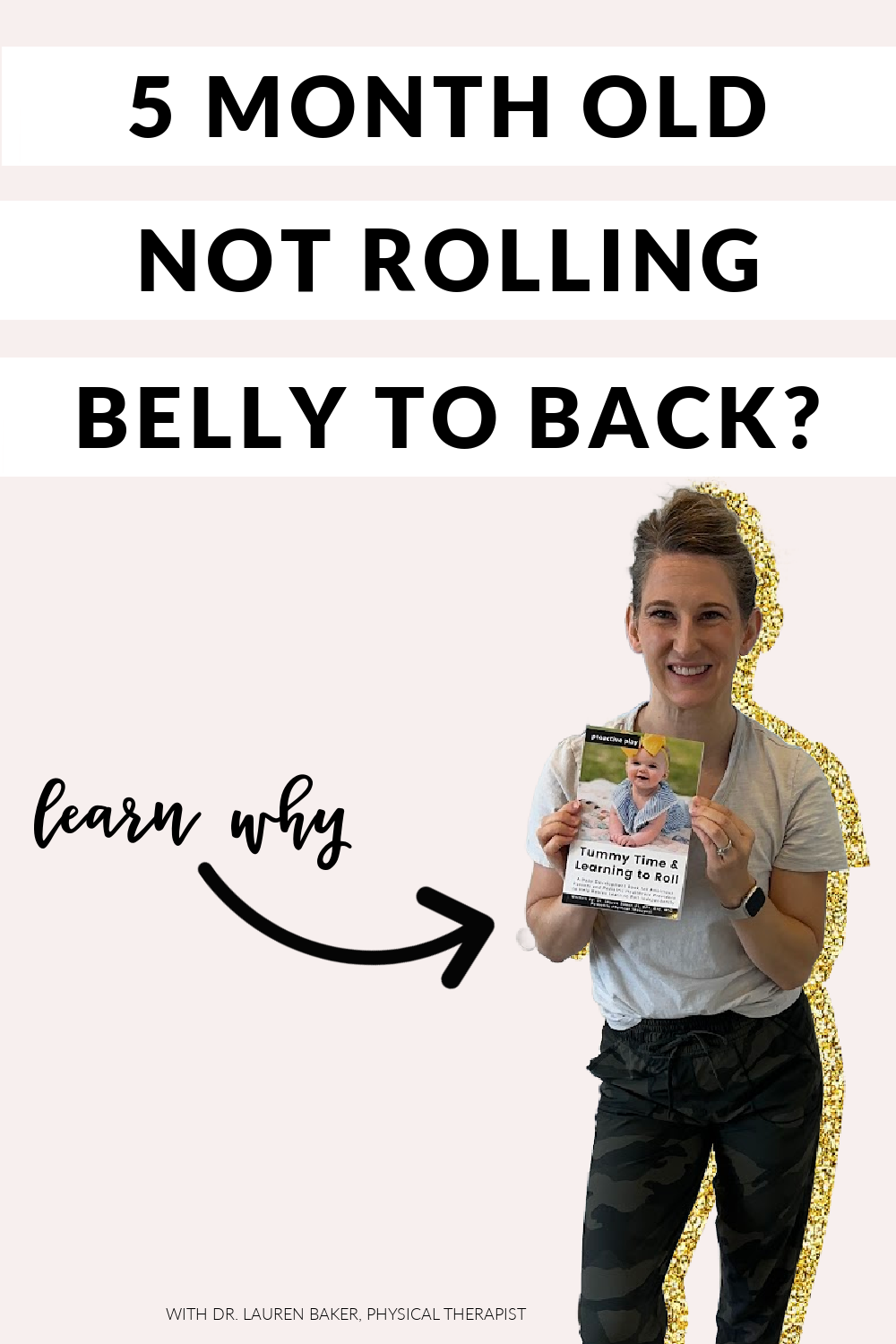


Crawling
this page contains affiliate links
Curious About Learning More on How To Teach Babies Crawl?
The absolute best resource for parents on helping their babies learn to crawl is the free online course: Learning to Crawl by Dr. Baker.
To gain immediate access to the online course, click the link above, submit your information, and the online course instructions will be emailed to you directly.
The free online video course is designed to help parents fully understand how to help their children crawl on hands and knees and trouble shoot what building block of crawling the child might not have mastered yet.
It comes with video examples of exercises, printable checklists to know exactly where your baby is at, and information on when to reach out for additional help.

This online course was created by Dr. Lauren Baker, PT, DPT, ATC, MTC, who is a Pediatric Physical Therapist in Boise, Idaho, trained in helping parents learn how to help their babies move and master their milestones.
She loves teaching parents how to see how their babies are moving as well as how to influence those movements though play positions and exercises to help babies move with confidence and ease.
It is meant to help ambitious parents understand baby development from 9-11 months (getting in/out of all fours to independent crawling).
This online course breaks down each piece of movement in checklists so that parents know what their babies need for crawling and it also covers a checklist to make sure babies have mastered rolling and sitting (otherwise, this could be a reason why sitting is still a struggle!)
It also covers what areas might limit a child with crawling, examples of disadvantageous ways babies might crawl, why hands/knees crawling is best, and when to seek help from a pediatric PT.
This online course can help parents implement safe, strategic play-based exercises with their babies in 20 minutes per day.
A Great Resource For:
Parents and Pediatric Healthcare Providers of babies 7-11 months
Parents of babies who are struggling with getting in/out of all fours or hands/knees crawling
Access to simple, easy-to-follow videos of play positions and exercises
Learning the four pillars of movement needed in order to master crawling
8 Online Course Modules
Building Blocks of Crawling
Crawling Checklists
Getting Into All Fours
Asymmetrical Crawling Patterns
Strength Exercises
Mobility Exercises
Crawling Specific Play Exercises
Next Steps: How to Prep for Walking
What If You Want Extra Help?
If you have concerns about your baby’s ability to tolerate an all fours position, have what they need to master crawling on hands/knees, or if they are not getting into all fours by themselves and are over 11 months, remember, you can always reach out to a pediatric physical therapist.
It's your right as a parent to advocate for your child's development. Sometimes, a few tips and tricks are all you need to get your baby moving better.
I’m here to support you and release those worries.
For those eager to learn more or seeking personalized guidance, I offer online video parent consultations internationally and Pediatric Physical Therapy in Boise, ID and the Treasure Valley – which you can learn more about by scheduling a free 20 minute chat with me (Idaho only) or an online parent consultation by clicking here.
I am dedicated to answering questions and providing tailored play activities for each unique developmental journey.
When Should Babies Receive Pediatric Physical Therapy?
Parents can call and schedule with a Pediatric Physical Therapist at any time, for any concern in all fifty states without a referral from their Pediatrician.
Pediatric Physical Therapy is medically indicated in all babies who are not crawling on hands/knees on their own by 11 months. Proactive Pediatric Physical Therapy recommend if a child is not crawling on their own by 10 months.
Pediatric Physical Therapy is medically indicated if you notice a flat spot on the back of an infants head (possible plagiocephaly), a tilt of their head consistently to one side (ear to shoulder - possible torticollis), or a rotation preference of their neck (consistently look only to the right or left - possible torticollis).
Flat spots can be due to in-utero positioning, rotational preference (right sided flatness most common) and babies are at an increased risk for flatness if they are male, were breech, multiple birth, premature, have difficulty with tummy time, or are in containers > 2 hr/day.
Sitting: with & without support
this page contains affiliate links
Curious About Learning More on How To Teach Babies To Sit On Their Own?
The absolute best resource for parents on helping their babies learn to sit is the free online course: Learning to Sit by Dr. Baker.
To gain immediate access to the online course, click the link above, submit your information, and the online course instructions will be emailed to you directly.
The free online video course is designed to help parents fully understand how to help their children sit independently and trouble shoot what building block of sitting the child might not have mastered yet.
It comes with video examples of exercises, printable checklists to know exactly where your baby is at, and information on when to reach out for additional help.

This online course was created by Dr. Lauren Baker, PT, DPT, ATC, MTC, who is a Pediatric Physical Therapist in Boise, Idaho, trained in helping parents learn how to help their babies move and master their milestones.
She loves teaching parents how to see how their babies are moving as well as how to influence those movements though play positions and exercises to help babies move with confidence and ease.
It is meant to help ambitious parents understand baby development from 4-9 months (propped to independent sitting).
This online course breaks down each piece of movement in checklists so that parents know what their babies need for sitting and it also covers a checklist to make sure babies have mastered rolling in all directions (otherwise, this could be a reason why sitting is still a struggle!)
It also covers what areas might limit a child with sitting, why it is so important, and when to seek help from a pediatric PT.
This online course can help parents implement safe, strategic play-based exercises with their babies in 20 minutes per day.

A Great Resource For:
Parents and Pediatric Healthcare Providers of babies 4-9 months
Parents of babies who are struggling with sitting with or without support
Access to simple, easy-to-follow videos of play positions and exercises
Learning the four pillars of movement needed in order to master sitting
8 Online Course Modules
Building Blocks of Sitting
Sitting Checklists
Propped Sitting/Sitting with Support
Independent Sitting
Strength Exercises
Mobility Exercises
Sitting Specific Play Exercises
Next Steps: How to Prep for Crawling
What If You Want Extra Help?
If you have concerns about your baby’s ability to tolerate a sitting position, have what they need to master sitting without support, or if they are not sitting by themselves and are over nine months, remember, you can always reach out to a pediatric physical therapist.
It's your right as a parent to advocate for your child's development. Sometimes, a few tips and tricks are all you need to get your baby moving better.
I’m here to support you and release those worries.
For those eager to learn more or seeking personalized guidance, I offer online video parent consultations internationally and Pediatric Physical Therapy in Boise, ID and the Treasure Valley – which you can learn more about by scheduling a free 20 minute chat with me (Idaho only) or an online parent consultation by clicking here.
I am dedicated to answering questions and providing tailored play activities for each unique developmental journey.
When Should Babies Receive Pediatric Physical Therapy?
Parents can call and schedule with a Pediatric Physical Therapist at any time, for any concern in all fifty states without a referral from their Pediatrician.
Pediatric Physical Therapy is medically indicated in all babies who are not sitting on their own, without support or their hands by nine months. Proactive Pediatric Physical Therapy recommend if a child is not sitting on their own by 8 months.
Pediatric Physical Therapy is medically indicated if you notice a flat spot on the back of an infants head (possible plagiocephaly), a tilt of their head consistently to one side (ear to shoulder - possible torticollis), or a rotation preference of their neck (consistently look only to the right or left - possible torticollis).
Flat spots can be due to in-utero positioning, rotational preference (right sided flatness most common) and babies are at an increased risk for flatness if they are male, were breech, multiple birth, premature, have difficulty with tummy time, or are in containers > 2 hr/day.
Tummy Time & Rolling

this page contains affiliate links
not in the US? click here to be taken to amazon pages for all countries.
Curious About Learning More on Tummy Time, Rolling, or Both?
The absolute best book for parents on tummy time and rolling is: Tummy Time and Learning to Roll: A Baby Development Book for Ambitious Parents and Pediatric Healthcare Providers to Help Babies Learn to Roll Independently.
The book comes with a free online video course to help parents fully understand how to complete the different exercises, printable checklists to know exactly where your baby is at, and when to reach out for additional help.
This book was written by Dr. Lauren Baker, PT, DPT, ATC, MTC, who is a Pediatric Physical Therapist in Boise, Idaho, trained in helping parents learn how to help their babies move and master their milestones.
She loves teaching parents how to see how their babies are moving as well as how to influence those movements though play positions and exercises to help babies move with confidence and ease.
Tummy Time and Learning to Roll is the first book in the Proactive Play series written by Pediatric Physical Therapist Dr. Lauren Baker in order to help Ambitious Parents and Pediatric Healthcare Providers learn how to help babies master tummy time and learn to roll.
It is meant to help ambitious parents understand baby development from birth to six months (tummy time to rolling).
This book is a mix of easy-to-follow and more in-depth information than is typically found in baby development books because Dr. Baker believes parents deserve to have all the information at their fingertips.
This book breaks down each piece of movement in checklists so that parents know what their babies need for tummy time and rolling.
It also covers what areas might limit a child with rolling, why it is so important, and when to seek help from a pediatric PT.
This book comes with colored photos and easy-to-follow demonstration videos that can help parents implement safe, strategic play-based exercises with their babies in 20 minutes per day.
A Great Resource For:
Parents and Pediatric Healthcare Providers of babies 0-6 months
Parents of babies who are struggling with tummy time, rolling back to belly, belly to back, or only to one side
Access to simple, easy-to-follow videos of play positions and exercises
Learning the four pillars of movement needed in order to master rolling
240+ Color Photo Examples of:
Tummy Time, Sidelying, and Back Play
Developmental Toys and Equipment
Hand Placement and Strategic Play Positions
Common Areas of Restriction or Weakness
When To Reach Out For Help
International Book Links
*please note at this time the book is available only in English; however, there are photos located in the book and the free video course allows users to utilize youtube generated captions if your country’s language is available.
Netherlands: paperback / kindle
Poland: paperback only
Sweden: paperback only
Australia: kindle only
Japan: kindle only
Brazil: kindle only
Mexico: kindle only
India: kindle only
What If You Want Extra Help?
If you have concerns about your baby’s ability to tolerate tummy time, have what they need to master rolling, or if they are not rolling and are over six months, remember, you can always reach out to a pediatric physical therapist.
It's your right as a parent to advocate for your child's development. Sometimes, a few tips and tricks are all you need to get your baby moving better.
I’m here to support you and release those worries.
For those eager to learn more or seeking personalized guidance, I offer online video parent consultations internationally and Pediatric Physical Therapy in Boise, ID and the Treasure Valley – which you can learn more about by scheduling a free 20 minute chat with me (Idaho only) or an online parent consultation by clicking here.
I am dedicated to answering questions and providing tailored play activities for each unique developmental journey.
When Should Babies Receive Pediatric Physical Therapy?
Parents can call and schedule with a Pediatric Physical Therapist at any time, for any concern in all fifty states without a referral from their Pediatrician.
Pediatric Physical Therapy is medically indicated in all babies who are not rolling in all four directions by six months (back to belly over their right arm AND left arm + belly to back over their right arm AND left arm).
Pediatric Physical Therapy is medically indicated if you notice a flat spot on the back of an infants head (possible plagiocephaly), a tilt of their head consistently to one side (ear to shoulder - possible torticollis), or a rotation preference of their neck (consistently look only to the right or left - possible torticollis).
Many Pediatric Physical Therapists including Dr. Baker, can successfully treat flat spots (Plagiocephaly) without a helmet with a combination of therapy and positioning strategies if seen prior to 4 months (0-3 months is ideal). Dr. Baker uses the Baby Begin Method of repositioning.
Flat spots can be due to in-utero positioning, rotational preference (right sided flatness most common) and babies are at an increased risk for flatness if they are male, were breech, multiple birth, premature, have difficulty with tummy time, or are in containers > 2 hr/day.
Physical Therapy Exercises For 3 Month Old: Posterior Pelvic Tilt

this blog contains affiliate links
Hello, Proactive Parents! I'm Dr. Lauren Baker, think of me as your pediatric physical therapy bestie, to help you learn tips and tricks to help your littles move with confidence and ease.
Today, I'm excited to share a simple yet powerful strategy to support your baby's early development, particularly focusing on those little ones from birth to about four months old, the exercise/activity is called a “posterior pelvic tilt,” but mainly looks like you propping your little’s bum on your foot or another style of prop.
It sound really simple and it is, but it can have such a large gain and especially helpful for newborns and babies who may struggle with tummy time. You can do this physical therapy exercise on newborns 0-3 months olds, and even some 4 month olds. This exercise is great for general mobility, posture, and preparing for rolling.
Understanding the Importance of Posterior Pelvic Tilt
Let's dive into why helping your baby engage their lower abdominal muscles and work on rounding their back is so crucial. This technique is especially beneficial if you've noticed that your baby tends to arch their back a lot. The posterior pelvic tilt is the direction in which the pelvis or bottom is moving in, when a pelvis tilts “posteriorly,” it rounds the back and flexes the spine.
You can think of this like holding a bowl of water, if you tilt the bowl away from your body, the water flows away from you. If you tilt the bowl toward your body, the water flows toward you. If you tilt your pelvis forward/away from you, your back arches – if you tilt your pelvis backwards/toward you, your back flexes.
Babies need their pelvis to tilt both by themselves as well as by others. Babies who struggle with tolerating a pelvic tilt, specifically a posterior pelvic tilt may be at risk for struggling with milestones such as grabbing their feet, sitting independently, or crawling — all of which require a posterior pelvic tilt.
Why Focus on Babies Zero to Four Months Old?
In this newborn to early infant stage, babies are developing rapidly. Teaching them to flex their spine and tilt their pelvis up is essential. This supports them in tolerating other positions better, including tummy time, because they are engaging their core muscles in a posterior pelvic tilt and that allows for them to have a stronger trunk from which to lift their head, when they switch onto their bellies. It also prepares them for mini milestones like grabbing their feet, which comes around five months old.
The Challenge of Extension Posture in Babies
Some babies, particularly those who have had issues like reflux or certain in-utero positions, may favor extending their backs. This habit can be disadvantageous for their overall physical development. So, if you notice your baby resisting this natural pelvic tilt, it's beneficial to introduce some intentional, beneficial activities or reach out to a Pediatric Physical Therapist if they are struggling. See our list of in home pediatric physical therapists here.
Simple Strategy for Encouraging Posterior Pelvic Tilt
This is an easy activity that requires minimal effort from parents but offers significant benefits for your baby. You can use your foot, leg, a folded-up bath towel, or a pillow to prop up your baby's bottom. This position helps them relax into a gentle posterior pelvic tilt, aiding in belly relaxation.
Important Safety Note:
Always supervise your baby when using any external prop like a towel or pillow. Never leave them unattended in this position.
This position involves the baby lying on their back and then helping them round their back, by placing their pelvis on your foot or another prop. Holding this sustained flexed posture can help them relax into this position as well as increase core strength through isometric (one static position) strengthening, which tends to be an easy way for newborns to four month old babies to strengthen their muscles.
Make sure to watch the video below to see exactly how it is done safely with a baby:
TIMESTAMPS:
1:13 age of baby in video and why this position / exercise is important for 3 month olds and newborns.
3:29 posterior pelvic tilt physical therapy exercises for 3 month old
TOY IDEAS:
Toys for Babies Newborn-Rolling
Integrating Play and Development
While your baby is in this propped position, you can introduce various activities. From batting at toys to a gentle abdominal massage, these interactions not only enhance their physical development but also foster a deeper connection between you and your little one. See the toy idea links listed above for examples of good ideas of toys that can be utilized in this position. Any vertical hanging toys, like from a baby gym, or small, light toys that babies can safely hold in their hands such a teether toys or crinkle toys.
Duration for Maximum Benefit
Aim to keep your baby in this position for one to five minutes, depending on their comfort and tolerance. This duration is sufficient for them to relax into the posture and reap the benefits. If a baby is enjoying this position they can continue to stay in it for longer as long as they are supervised directly. Babies who struggle in this position may need to only stay in it for 10-15 seconds at a time, but be introduced to it more frequently in short bursts throughout the day until they can tolerate a full minute.
Personalized Tips and Tricks
As a pediatric physical therapist, I've worked with many babies and understand that each little one is unique. If you're seeking more tailored advice or have specific questions, I'm here to help through online parent consultations or by leaving comments directly below the youtube video.
Preparing for Future Milestones
Remember, these early exercises are foundational for upcoming milestones like rolling and improved tummy time tolerance. By incorporating these simple strategies into your daily routine, you're setting the stage for your baby's continued growth and development.
Curious About Learning More on Tummy Time, Rolling, or Both?
The absolute best book for parents on tummy time and rolling is: Tummy Time and Learning to Roll: A Baby Development Book for Ambitious Parents and Pediatric Healthcare Providers to Help Babies Learn to Roll Independently. The book comes with a free online video course to help parents fully understand how to complete the different exercises, printable checklists to know exactly where your baby is at, and when to reach out for additional help.
This book was written by Dr. Lauren Baker, PT, DPT, ATC, MTC, who is a Pediatric Physical Therapist in Boise, Idaho, trained in helping parents learn how to help their babies move and master their milestones. She loves teaching parents how to see how their babies are moving as well as how to influence those movements though play positions and exercises to help babies move with confidence and ease.
Tummy Time and Learning to Roll is the first book in the Proactive Play series written by Pediatric Physical Therapist Dr. Lauren Baker in order to help Ambitious Parents and Pediatric Healthcare Providers learn how to help babies master tummy time and learn to roll. It is meant to help ambitious parents understand baby development from birth to six months (tummy time to rolling).
This book is a mix of easy-to-follow and more in-depth information than is typically found in baby development books because Dr. Baker believes parents deserve to have all the information at their fingertips.
This book breaks down each piece of movement in checklists so that parents know what their babies need for tummy time and rolling. It also covers what areas might limit a child with rolling, why it is so important, and when to seek help from a pediatric PT.
This book comes with colored photos and easy-to-follow demonstration videos that can help parents implement safe, strategic play-based exercises with their babies in 20 minutes per day.
A Great Resource For:
Parents and Pediatric Healthcare Providers of babies 0-6 months
Parents of babies who are struggling with tummy time, rolling back to belly, belly to back, or only to one side
Access to simple, easy-to-follow videos of play positions and exercises
Learning the four pillars of movement needed in order to master rolling
240+ Color Photo Examples of:
Tummy Time, Sidelying, and Back Play
Developmental Toys and Equipment
Hand Placement and Strategic Play Positions
Common Areas of Restriction or Weakness
When To Reach Out For Help
What If You Want Extra Help?
If you have concerns about their movement, remember, you can always reach out to a pediatric physical therapist. It's your right as a parent to advocate for your child's development. Sometimes, a few tips and tricks are all you need to get your baby moving better.
We're here to support you and release those parent worries. If you are looking for in home pediatric physical therapy, check our listing of therapists for one in your area.
For those eager to learn more or seeking personalized guidance, I offer online video parent consultations internationally, which can be scheduled by clicking here. I am dedicated to answering questions and providing tailored play activities for each unique developmental journey.
When Should Babies Receive Pediatric Physical Therapy?
Parents can call and schedule with a Pediatric Physical Therapist at any time, for any concern in all fifty states without a referral from their Pediatrician.
Pediatric Physical Therapy is medically indicated in all babies who are not rolling in all four directions by six months (back to belly over their right arm AND left arm + belly to back over their right arm AND left arm).
Pediatric Physical Therapy is medically indicated if you notice a flat spot on the back of an infants head (possible plagiocephaly), a tilt of their head consistently to one side (ear to shoulder - possible torticollis), or a rotation preference of their neck (consistently look only to the right or left - possible torticollis).
Many Pediatric Physical Therapists including Dr. Baker, can successfully treat flat spots (Plagiocephaly) without a helmet with a combination of therapy and positioning strategies if seen prior to 4 months (0-3 months is ideal). Dr. Baker uses the Baby Begin Method of repositioning.
Flat spots can be due to in-utero positioning, rotational preference (right sided flatness most common) and babies are at an increased risk for flatness if they are male, were breech, multiple birth, premature, have difficulty with tummy time, or are in containers > 2 hr/day.
Final Thoughts:Your Role in Your Baby's Development Journey
Your involvement in these early stages of your baby's development is invaluable. By using these strategies, you're not only addressing immediate concerns like a tendency to arch the back but also paving the way for a smoother developmental journey ahead, especially helping your baby develop hand/eye coordination, hand/foot coordination, cross body coordination which involves development of both sides of the brain, and core engagement.
As always, feel free to reach out for more guidance and to become a part of this empowering movement in proactive parenting. Together, we can ensure our little ones move with confidence and ease from the very start! Hopefully, this exercise is a perfect place to start to incorporate proactive play into your time with your baby, providing moments of connection in the early stages as well as building them a solid foundation for rolling.
Prevent Avoidable Motor Delays: How To Test Your Baby's Trunk Mobility
this blog contains affiliate links
Hello! I'm Dr. Lauren Baker, a pediatric physical therapist. Today, I'm thrilled to share insights on one of the most crucial aspects of your baby's development - trunk rotation. This aspect of movement plays a pivotal role in milestones like rolling, sitting, crawling, and walking and it’s one of the least known aspects of movement and baby development in the parent world. Today, we are going to change that!
Why Is Upper Trunk Rotation Important?
Upper trunk rotation is essential for your baby's overall mobility. It's the foundation for many activities, including the ability to roll over, going from lying on the ground to sitting up, going from sitting to crawling, and it is even needed when we walk.
When we talk about trunk rotation, we're referring to the upper half of the body moving independently from the lower half, this of sitting in a chair and twisting your shoulders to look behind you (your upper half is moving but your lower half isn’t). This movement is crucial for maintaining our position against gravity, for getting in and out of positions, and for combining motions which we need for complex movements like walking and crawling.
Assessing Trunk Rotation in Babies
To ensure your baby is developing symmetrically and has mobility equally side to side, it's vital to assess their upper trunk rotation. When doing this, we're looking for equal movement on both sides. A limitation on one side can affect how your baby moves, potentially leading to preferences that might impact their development down the line.
Tightness in one direction can also lead to avoidance of movement in that direction, which is often why you see babies choose to only roll to one side (if we know what is limiting them, we can help them fix it! And then they can roll equally to both sides).
Baby Mobility Exercises: Enhancing Trunk Rotation
To encourage healthy trunk rotation in your baby, first try to see if your baby’s upper trunk can go equally in both directions. While they are sitting between your legs, gently move their upper body from forward to the right, stopping when you feel resistance (this is as far as you should go) and then forward to the left, again stopping when you feel resistance.
Watch the video below start to finish for the most comprehensive explanation and demonstration or click on the hyperlink to go directly to the exercise to watch in order to make sure you do it correctly!
TIMESTAMPS:
1:27 why upper trunk rotation and baby trunk rotation is important
4:52 straddle baby trunk rotation assessment
5:17 ring sit baby trunk rotation assessment
6:23 baby between parent's legs baby trunk rotation assessment
TOY IDEAS:
Trunk Weakness in Babies: Spotting and Addressing It
If you notice that your baby struggles with trunk rotation (typically you will feel resistance or they will express displeasure in that direction) or they seem to favor one side, it might indicate trunk weakness or tightness. Weakness and tightness are often companions, as a tight muscle is also a weak muscle, so sometimes when we increase the range and resolve the tightness, we then have to strengthen those muscles.
However, if you do not notice your baby has tightness when doing the upper trunk screen, but they do still show a preference, they could have weakness in the muscles that are needed to go in the direction they are avoiding. Weakness can be associated with tightness or it can be the only thing affecting the child.
It's important to be aware if your baby is experiencing trunk weakness. Signs of this can include a lack of balance in sitting, difficulty in holding themselves up (normal sitting age is 6-9 months), or favoring one side (if their little body forms a “C” shape in lying down or sitting). If you notice any of these signs, incorporating specific exercises can help strengthen their trunk muscles, see the youtube core strengthening playlist here.
What Is a Baby's Trunk, and Why Is Its Control Vital?
The trunk is the body's core, including the chest and abdomen. Trunk control is essential for stability and forms the basis of all movement. A strong trunk enables your baby to explore the world more confidently. Babies need full mobility of their trunk in order to build or access the full strength of their core, which is why assessing upper trunk rotation in infants is so important.
Regularly assessing your baby's trunk control (strength and mobility) can provide valuable insights into their development. Look for whether they have mastered rolling back to belly (right and left), belly to back (right and left), how well they hold themselves up when sitting, their reactions to gentle movements (do they throw themselves back or collapse forward when sitting), and their ability to engage in playful activities that involve twisting, such as bringing both hands to one side in sitting.
Crossing the Midline: A Cognitive and Physical Milestone
An interesting aspect of trunk rotation is its connection to cognitive development. When babies learn to cross the midline (bringing both hands from one side of the body to the other), they're not only enhancing their physical abilities but also strengthening neural pathways in the brain.
These pathways help with future academic milestones such as reading and writing. When babies have trunk tightness, they might avoid crossing midline in one or both directions, which can decrease their opportunities to develop and strengthen these pathways. This can lead to them being at a disadvantage compared to their same age, non-restricted peers.
Pediatric Physical Therapy Exercises for Babies
Incorporating pediatric physical therapy exercises into your baby's routine can be a game-changer. Simple activities like rolling over exercises and trunk control exercises can boost their development significantly.
Making sure that you resolve any tightness by completing the associated releases/stretches is equally important. If you ever find that the tightness is not resolving or you need assistance, reaching out to a local pediatric physical therapist can be the best, most effective thing for you and your baby. See our list of mobile pediatric physical therapists here.
Trunk Movement in Infants: Encouraging Healthy Development
Encouraging various trunk movements is key to your baby's development. This includes exercises that promote rotating, an easy switch in most families routines is to place toys to the side of the child instead of always in front.
This encourages the child to reach to the side and also bring both hands to the side (rotating at their trunk) in order to manipulate or grab the toy. It’s okay to start with the easy side and then build up to adding in the hard side (or assisting with the hard side and letting them do the easy side). Each of these movements contributes to a well-rounded and robust physical development.
Curious About Learning More on Tummy Time, Rolling, or Both?
The absolute best book for parents on tummy time and rolling is: Tummy Time and Learning to Roll: A Baby Development Book for Ambitious Parents and Pediatric Healthcare Providers to Help Babies Learn to Roll Independently. The book comes with a free online video course to help parents fully understand how to complete the different exercises, printable checklists to know exactly where your baby is at, and when to reach out for additional help.
This book was written by Dr. Lauren Baker, PT, DPT, ATC, MTC, who is a Pediatric Physical Therapist in Boise, Idaho, trained in helping parents learn how to help their babies move and master their milestones. She loves teaching parents how to see how their babies are moving as well as how to influence those movements though play positions and exercises to help babies move with confidence and ease.
Tummy Time and Learning to Roll is the first book in the Proactive Play series written by Pediatric Physical Therapist Dr. Lauren Baker in order to help Ambitious Parents and Pediatric Healthcare Providers learn how to help babies master tummy time and learn to roll. It is meant to help ambitious parents understand baby development from birth to six months (tummy time to rolling).
This book is a mix of easy-to-follow and more in-depth information than is typically found in baby development books because Dr. Baker believes parents deserve to have all the information at their fingertips.
This book breaks down each piece of movement in checklists so that parents know what their babies need for tummy time and rolling. It also covers what areas might limit a child with rolling, why it is so important, and when to seek help from a pediatric PT.
This book comes with colored photos and easy-to-follow demonstration videos that can help parents implement safe, strategic play-based exercises with their babies in 20 minutes per day.
A Great Resource For:
Parents and Pediatric Healthcare Providers of babies 0-6 months
Parents of babies who are struggling with tummy time, rolling back to belly, belly to back, or only to one side
Access to simple, easy-to-follow videos of play positions and exercises
Learning the four pillars of movement needed in order to master rolling
240+ Color Photo Examples of:
Tummy Time, Sidelying, and Back Play
Developmental Toys and Equipment
Hand Placement and Strategic Play Positions
Common Areas of Restriction or Weakness
When To Reach Out For Help
What If You Want Extra Help?
If you have concerns about their movement, remember, you can always reach out to a pediatric physical therapist. It's your right as a parent to advocate for your child's development. Sometimes, a few tips and tricks are all you need to get your baby moving better. We're here to support you and release those mama worries. If you are looking for in home pediatric physical therapy, check our listing of therapists.
For those eager to learn more or seeking personalized guidance, I offer online video parent consultations internationally which you can book by clicking here. I am dedicated to answering questions and providing tailored play activities for each unique developmental journey.
Final Thoughts: Empowering Your Baby’s Journey
Remember, every baby develops at their own pace, and what's important is providing them with opportunities to explore and strengthen their abilities. By incorporating these simple exercises and being mindful of their trunk rotation, you're setting your baby up for a lifetime of confident movement, as well as decreasing the risk of difficulty with crawling on hands and knees.
Total Motion Release Technique: How To Teach Baby To Roll Over Back To Belly

this blog post contains affiliate links
Hello everyone! I'm Dr. Lauren Baker, your pediatric physical therapy bestie, and I'm thrilled to share with you some insights from my world of helping babies move better.
In my recent YouTube video, I dove into a Total Motion Release Technique designed for little ones and in this blog post, I hope to empower you, and all proactive parents, with the knowledge and skills to assist your babies in achieving fluid, confident movements as they begin to master rolling back to belly AND belly to back.
The Importance of Rolling: A Developmental Milestone
Rolling over is more than just a cute trick; it's a crucial developmental milestone for babies. It involves complex coordination and strength, marking a significant step in your child's growth journey.
However, some babies develop a preference for rolling in one direction, often due to tightness in their lower or upper trunk. This is where Total Motion Release (TMR) techniques can help, because sometimes the mobility limitation is the only thing holding a baby back from rolling in all four directions.
TMR: A Different Approach to Mobility
TMR is fascinating because it approaches mobility differently than traditional stretching. Instead of elongating tissues, TMR focuses on shortening them to promote relaxation and improve range of motion.
It is amazing for babies, because often babies don’t understand that their body is safe when they feel that resistance that can occur with traditional stretching.
Often, they will counter-intuitively tighten up when they feel that resistance of a tight muscle and thus limit the mobility that we are able to achieve. One of the more strange things that confuses parents with TMR, is that we interestingly, only work on the 'tight' or 'easy' side, which might seem counterintuitive, but it yields remarkable results.
My Experience with a Special Little Client
In my video, I demonstrated TMR with a baby experiencing right-sided lower trunk tightness, hindering her ability to roll over her right arm from back to belly. Using TMR, we focused on the right side, holding it for a few minutes, followed by vestibular exercises like gentle bouncing (while she was being held).
This combination not only addresses the tightness but also helps the baby's body integrate and understand the new range of motion. Once we finished both of those, we worked on rolling over, which you will be able to notice in the video that is much better directly afterward.
One of the core principles of TMR, is that you not only want to increase range of motion (that both sides of their bodies can go the same distance) but also that you make it functional by working on a skill directly afterward, like in this case: rolling.
In the video, I also demonstrate what it would look like to work on the other side if a baby was experiencing tightness on the left side.
Engaging the Baby: The Art of Distraction
Working with babies means expecting the unexpected! Not all babies are calm during therapy sessions, and that's perfectly normal. The key is to keep them engaged and happy. This might mean playing with their toes, singing songs, or introducing different toys.
The goal is to maintain their comfort while working on the techniques. In the video, you can watch as I use a few of my favorite techniques to keep this little one engaged and calm.
Assessing and Addressing Tightness
Identifying which side to work on is crucial. I often find that if a baby struggles to side bend on one side (think the “I’m a little teapot” motion), the opposite side might be tighter.
In the video, I demonstrated how to assess this on both sides, so that you have everything you need to screen your own baby. The TMR technique I used involved gentle side bending, moving their pelvis toward their elbow, ensuring not to push beyond the baby's natural resistance [make sure to watch the video or check out my book linked below to see exactly what to do!].
The Rewarding Outcome
The transformation post-TMR is always fun to watch. The baby I worked with showed a significant improvement in her ability to roll smoothly from back to belly and vice versa. She became more motivated and engaged in her movements, which is exactly what we aim for.
If I could educate parents on ANY milestone and encourage them to take just ONE seriously that could have the biggest impact on their child’s overall progress toward movement it would be rolling.
Often if a baby does not roll in all four directions, they are at a risk for struggling with crawling, but if they use all four directions of rolling they are at a much lower risk of struggling with future milestones.
TIMESTAMPS:
0:00 introduction
1:09 why babies need to roll in both directions belly to back and back to belly
2:38 how total motion release (TMR Release) is different than traditional stretching to increase mobility for babies to learn how to roll over back to belly
4:37 TMR Release Lower Trunk Sidebend to increase baby's ability to roll over back to belly
6:20 assessing which side to complete in lower trunk sidebend TMR release
8:07 example of TMR Release Lower Trunk Sidebend in Supine to help parents learn how to teach baby to roll over back to belly
12:53 improvement in teaching baby to roll over back to belly
15:17 how to work 1:1 with Dr. Lauren Baker, PT
TOY IDEAS:
Black and White Book - https://amzn.to/3iN5oZX
Black and White Rattles - https://amzn.to/3wnhKuE
Sensory Stick Teether - https://amzn.to/3D26pEn
Teething Rings - https://amzn.to/3HkLOxu
Teething Rings - https://amzn.to/3XJikyz
Teething Ring With Shapes - https://amzn.to/3iTTVru
Teething Ring With Shapes (Girl) - https://amzn.to/3QRVEKv
24 Pack Teething Rings - https://amzn.to/3ku1eqb
Freezer Safe Teething Rings (Fruit) - https://amzn.to/3WsdYuS
Pacifier - https://amzn.to/3WvWmOt
Curious About Learning More on Tummy Time, Rolling, or Both?
The absolute best book for parents on tummy time and rolling is: Tummy Time and Learning to Roll: A Baby Development Book for Ambitious Parents and Pediatric Healthcare Providers to Help Babies Learn to Roll Independently. The book comes with a free online video course to help parents fully understand how to complete the different exercises, printable checklists to know exactly where your baby is at, and when to reach out for additional help.
This book was written by Dr. Lauren Baker, PT, DPT, ATC, MTC, who is a Pediatric Physical Therapist in Boise, Idaho, trained in helping parents learn how to help their babies move and master their milestones. She loves teaching parents how to see how their babies are moving as well as how to influence those movements though play positions and exercises to help babies move with confidence and ease.
Tummy Time and Learning to Roll is the first book in the Proactive Play series written by Pediatric Physical Therapist Dr. Lauren Baker in order to help Ambitious Parents and Pediatric Healthcare Providers learn how to help babies master tummy time and learn to roll. It is meant to help ambitious parents understand baby development from birth to six months (tummy time to rolling).
This book is a mix of easy-to-follow and more in-depth information than is typically found in baby development books because Dr. Baker believes parents deserve to have all the information at their fingertips.
This book breaks down each piece of movement in checklists so that parents know what their babies need for tummy time and rolling. It also covers what areas might limit a child with rolling, why it is so important, and when to seek help from a pediatric PT.
This book comes with colored photos and easy-to-follow demonstration videos that can help parents implement safe, strategic play-based exercises with their babies in 20 minutes per day.
A Great Resource For:
Parents and Pediatric Healthcare Providers of babies 0-6 months
Parents of babies who are struggling with tummy time, rolling back to belly, belly to back, or only to one side
Access to simple, easy-to-follow videos of play positions and exercises
Learning the four pillars of movement needed in order to master rolling
240+ Color Photo Examples of:
Tummy Time, Sidelying, and Back Play
Developmental Toys and Equipment
Hand Placement and Strategic Play Positions
Common Areas of Restriction or Weakness
When To Reach Out For Help
What If You Want Extra Help?
If you have concerns about your baby’s movement, remember, you can always reach out to a pediatric physical therapist. It's your right as a parent to advocate for your child's development.
Sometimes, a few tips and tricks are all you need to get your baby moving better. We're here to support you and release those mama worries. If you are looking for in home pediatric physical therapy, check our listing of therapists.
I am on a mission to educate parents on proactive ways to aid their babies' movement development. If you've found this topic intriguing and wish to learn more about Total Motion Release or other strategies to assist your baby's rolling and other milestones, I encourage you to reach out for a consultation. Together, we can ensure that your little one embarks on their movement journey with confidence and ease.
For those eager to learn more or seeking personalized guidance, I offer online video parent consultations internationally and Pediatric Physical Therapy in Boise, ID and the Treasure Valley – both of which you can book by going to the appointment tab or by clicking here. I am dedicated to answering questions and providing tailored play activities for each unique developmental journey.
Final Thoughts
As a pediatric physical therapist, I find immense joy in helping little ones discover their full movement potential. Remember, every baby is unique, and their journey to milestones like rolling, sitting independently, and crawling will be just as individual.
Your involvement and understanding of techniques like TMR can make a significant difference in their development. Proactive Parents truly can influence how their children move when given the right amount of information and being shown how all the movements they are focusing on helping their littles achieve fit together.
I hope this post has given you a better understanding of how Total Motion Release can benefit your baby. I'm here to be your guide and support in this wonderful, albeit sometimes challenging, journey of parenthood. Let's help our little ones move with confidence and joy!
Guiding Your Baby's First Movements: Pediatric Physical Therapy Activity for Newborns to 3-Month-Olds
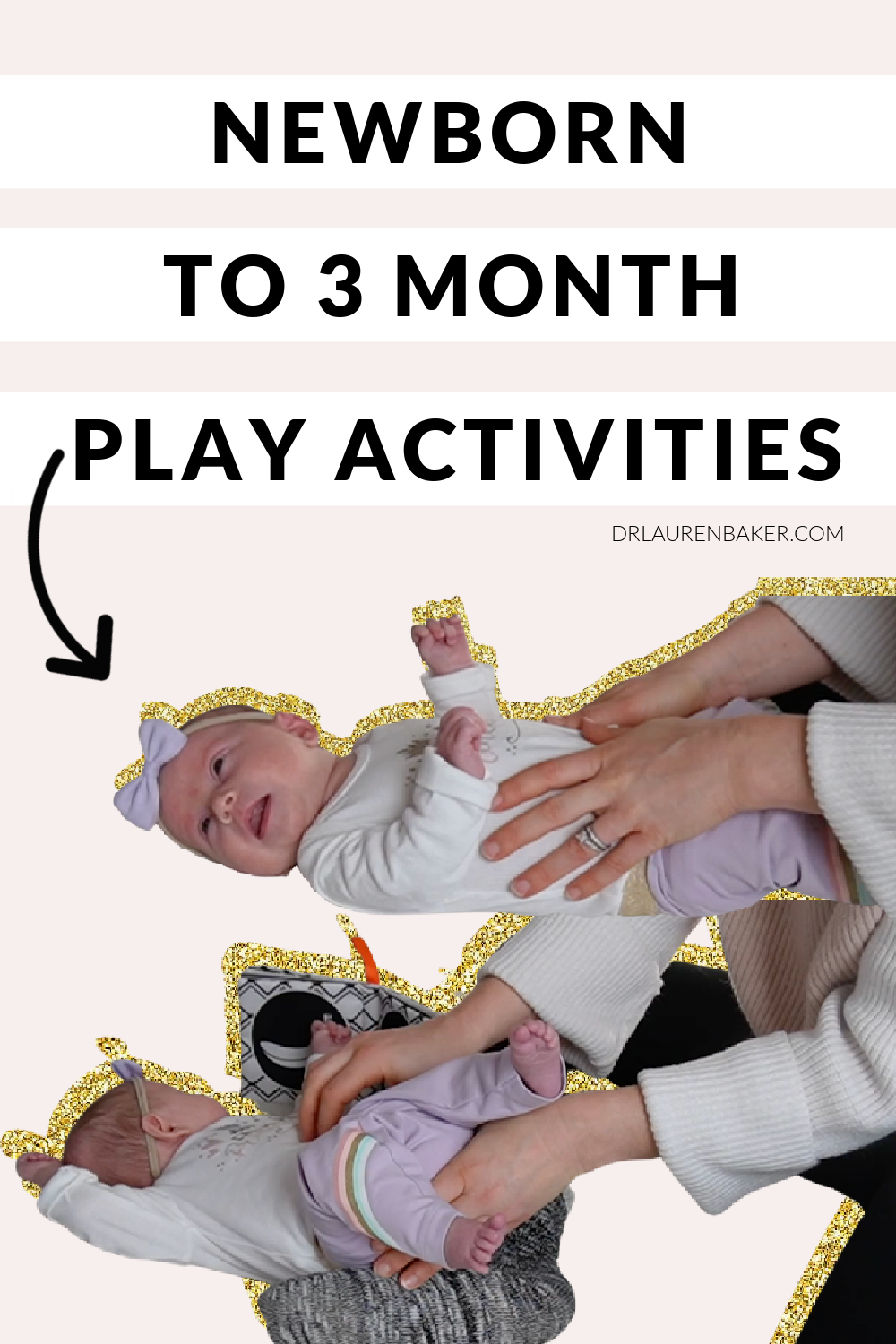
In this blog post, we're delving into an essential topic for new parents: physical therapy exercises for newborns and 3 month-old babies.
👋Hi I am Dr. Lauren Baker, a Pediatric Physical Therapist and I created this YouTube video to provide insights for parents seeking to support their baby's early physical development, especially getting babies in proactive play positions that can help them build the muscles they need for their next season of milestones, in this case, rolling (4-6 months).
The activity we are going over today, works on flexing the spine and tilting the pelvis, which are needed so that the baby can be ready for rolling, sitting, and crawling. This activity and exercise is especially important for babies who tend to arch their backs or who have experienced reflux or unique in utero positions.
These conditions can lead babies to prefer an extended posture, which we need to gently correct to aid their overall development. By gently guiding babies through these exercises, parents can help break the habit of extension, which can be disadvantageous for babies.
The bonus is this exercise takes almost no actual brain power from parents and is super easy to slip into their normal day without much thought.
The exercise in today’s video involves propping the baby's bottom up on a parent's foot, leg, or a folded bath towel while supervised. This simple yet effective position helps babies relax into a posterior pelvic tilt, a fundamental posture for further developmental progress.
The posterior pelvic tilt or rounding of the baby’s back will also support development for later mini milestones such as grabbing their feet while on their and back rolling to their sides. It's an activity that parents can easily integrate into their daily routine, requiring minimal effort but offering significant benefits.
If babies struggle with tilting their pelvis or look uncomfortable when placed in this position, it is important to decrease the length of time to their tolerance, even if their tolerance is only at 5-10 seconds before they kick out of the position. Completing this position/exercise frequently but in low amounts of time, can increase tolerance through gentle familiarization.
If a baby continues to avoid this position, they are at risk for potential difficulty with rolling, sitting, or crawling as all of those positions also require a rounding of the spine and tilting of the pelvis. If a baby cannot tolerate this position when they are a newborn, they may struggle once more challenges of gravity and positioning occur.
In order of ease & activities that require this same positioning of the body:
Posterior Pelvic Tilt/Rounding of spine (this exercise)
Lying on their side
Rolling back to side
Rolling back to belly
Sitting
Crawling
This exercise is great for newborns to 3 month olds, but I have also utilized it in my Pediatric Physical Therapy practice with babies who are 4-7 months if they are struggling with rolling or sitting. This premise is also utilized in other activities for littles who are struggling with crawling or walking, but this exercise isn’t the best because usually by 8 months they are too wiggly to stay on their back :).
The video demonstrates how this position not only promotes physical development but also provides opportunities for interactive play. Parents can incorporate grabbing and abdominal activation by helping the baby play with their feet, making the exercise both beneficial and enjoyable for the baby.
It is recommended to maintain this position for one to five minutes, allowing the baby to comfortably acclimate to it. Longer durations (more time) allow the baby to develop abdominal muscle strength (ability to get the body part to the position without letting gravity force it to the ground) AND endurance (ability to hold a body part in a position for a long period of time) as well as hand/eye, hand/foot coordination.
The approach I utilize is all about empowering parents with the knowledge and skills to facilitate their baby's development through strategic play and movement activities. I believe through proactive play that we can help babies avoid preventable motor delays and help parents connect more deeply with their babies.
For the full example on how to complete the exercise including a demonstration on a newborn, see the video below:
Curious about learning more on Tummy Time, Rolling, or Both?
The absolute best book for parents on tummy time and rolling is: Tummy Time and Learning to Roll: A Baby Development Book for Ambitious Parents and Pediatric Healthcare Providers to Help Babies Learn to Roll Independently. The book comes with a free online video course to help parents fully understand how to complete the different exercises, printable checklists to know exactly where your baby is at, and when to reach out for additional help.
This book was written by Dr. Lauren Baker, PT, DPT, ATC, MTC, who is a Pediatric Physical Therapist in Boise, Idaho, trained in helping parents learn how to help their babies move and master their milestones. She loves teaching parents how to see how their babies are moving as well as how to influence those movements though play positions and exercises to help babies move with confidence and ease.
Tummy Time and Learning to Roll is the first book in the Proactive Play series written by Pediatric Physical Therapist Dr. Lauren Baker in order to help Ambitious Parents and Pediatric Healthcare Providers learn how to help babies master tummy time and learn to roll. It is meant to help ambitious parents understand baby development from birth to six months (tummy time to rolling).
This book is a mix of easy-to-follow and more in-depth information than is typically found in baby development books because Dr. Baker believes parents deserve to have all the information at their fingertips.
This book breaks down each piece of movement in checklists so that parents know what their babies need for tummy time and rolling. It also covers what areas might limit a child with rolling, why it is so important, and when to seek help from a pediatric PT.
This book comes with colored photos and easy-to-follow demonstration videos that can help parents implement safe, strategic play-based exercises with their babies in 20 minutes per day.
A Great Resource For:
Parents and Pediatric Healthcare Providers of babies 0-6 months
Parents of babies who are struggling with tummy time, rolling back to belly, belly to back, or only to one side
Access to simple, easy-to-follow videos of play positions and exercises
Learning the four pillars of movement needed in order to master rolling
240+ Color Photo Examples of:
Tummy Time, Sidelying, and Back Play
Developmental Toys and Equipment
Hand Placement and Strategic Play Positions
Common Areas of Restriction or Weakness
When To Reach Out For Help
What If You Want Extra Help?
If you have concerns about their movement, remember, you can always reach out to a pediatric physical therapist. It's your right as a parent to advocate for your child's development. Sometimes, a few tips and tricks are all you need to get your baby moving better. We're here to support you and release those mama worries. If you are looking for in home pediatric physical therapy, check our listing of therapists.
For those eager to learn more or seeking personalized guidance, I offer online video parent consultations internationally and Pediatric Physical Therapy in Boise, ID and the Treasure Valley – by clicking to the appointment tab or by clicking here. I am dedicated to answering questions and providing tailored play activities for each unique developmental journey.
Remember, these early months are crucial for your baby's development. By incorporating these simple physical therapy exercises for your newborn or 3-month-old, you're setting a strong foundation for their future milestones, including rolling and tolerating tummy time.
Stay tuned for more insights from Dr. Lauren Baker, your go-to expert for nurturing your baby's early steps in life. If you have not yet, subscribe to our youtube channel.
Baby Struggling With Rolling Belly to Back? Try This Exercise.

Are you a proactive parent determined to help your baby achieve their developmental milestones?
Dr. Lauren Baker, a pediatric physical therapist, is here to guide you on a journey towards enhancing your baby's mobility and strength. In this blog post, we will explore the importance of tummy time, discuss exercises to help your baby bear weight through their elbows (including how to help them shift their weight onto one elbow!), and discover the secrets to independent rolling. Plus, stay tuned for an exclusive offer to boost your parenting skills with Dr. Baker's book, "Tummy Time and Learning to Roll: A Baby Development Book for Ambitious Parents and Pediatric Healthcare Providers.”
The Significance of Tummy Time:
Tummy time is more than just an adorable photo opportunity; it's a crucial building block in your baby's development. Dr. Baker emphasizes that tummy time strengthens the muscles needed for rolling, crawling, and later, walking. The American Physical Therapy Association recommends that babies engage in 60 minutes of tummy time per day by three months of age. Starting tummy time from day one, lays the foundation for their journey into being able to have the foundational skills they need to roll on their own.
Weight Bearing Through Elbows:
Some parents may notice that their baby prefers pushing through one elbow during tummy time while neglecting the other. This can be due to a variety of factors, including musculoskeletal issues like torticollis, which result in muscle imbalances. The solution? Target the weaker shoulder, focus on it strategically, and bridge the gap between strength and coordination — jump to the exercise.
What if my baby only rolls belly to back in one direction?
Rolling is a multifaceted developmental milestone and it is important that a baby is able to roll belly to back in both directions (over their left arm and over their right arm).
Why is this so important? It's all about symmetry and balance. When babies consistently roll in one direction while neglecting the other, it may indicate a restriction or limitation in the less-favored direction. This condition is referred to as an "asymmetry" in pediatric physical therapy.
Babies don't naturally have a preferred rolling direction; they usually explore both sides equally. If your baby appears to favor one side, it's crucial to address this early. Neglecting one side can lead to potential problems in the future. It’s also important to figure out the underlying reason why a baby is only rolling in one direction, because often there are things parents can do to address it at home easily with access to the right information.
Rolling Exercise to Increase Arm Strength in Babies
To support your baby's transition from belly to back, you must work on weight-bearing through one elbow. This precursor activity paves the way for independent rolling. In the video below, Dr. Baker provides a hands-on demonstration of how to help your baby bear weight through both their left and right elbows while offering valuable insights into their motor development.
How to help your baby reach with one arm to build arm strength needed for rolling belly to back:
Start with the baby on their belly
Place your hand in an open cupped shape blocking their left elbow
Create a c shape with your other hand underneath their right armpit
Rotate their upper trunk to the right while also helping them reach with your pointer finger so they reach for a toy on the ground in front of them
They may need less support at the trunk to rotate and shift their weight over their left elbow and more support at their elbow to reach in front of them with a straight arm or vice versa
Complete for 30 seconds to 1 minute on left elbow and switch
Upper Trunk Rotation:
As babies attempt to roll, they encounter the need for upper trunk rotation. If your little one struggles with this movement, they may avoid lifting one hand to play with toys on their own. Lifting an arm to reach while stabilizing their other arm on the ground, is a precursor activity to rolling from belly to back.
If a baby struggles with upper trunk rotation, make sure to purchase the Tummy Time and Learning to Roll book which walks you through how to screen this motion and exercises directly related to helping improve it on both sides. It also comes with a free video course (details in the book) to help you be able to confidently complete all the motions on your own.
In addition to upper trunk rotation, babies need the ability to shift their weight from both elbows to one elbow. Shifting their weight is complex, because it requires them to hold all their body weight on one limb instead of two – kind of like how standing on one leg is much harder than standing with both feet on the ground.
It’s the same for babies on their belly, but in order to roll from belly to back, they need to first be able to shift their weight to one elbow and reach with their opposite hand for a toy or object without collapsing. If they are able to do this equally on both sides, they are one step closer to rolling belly to back on their own, symmetrically.
Curious about learning more on Tummy Time, Rolling, or Both?
For proactive parents and healthcare providers, Dr. Lauren Baker's book, Tummy Time and Learning to Roll: A Baby Development Book for Ambitious Parents and Pediatric Healthcare Providers to Help Babies Learn to Roll Independently is an invaluable resource. Dive deeper into the world of baby development, understand the intricacies of tummy time and rolling, and empower yourself to support your baby's journey.
This book is packed with easy-to-follow information, checklists, colorful photos, and demonstration videos to make learning how to roll easily accessible for both you and the baby. Don't miss the chance to enhance your parenting skills and boost your baby's development.
The book comes with a free online video course to help parents fully understand how to complete the different exercises, printable checklists to know exactly where your baby is at, and when to reach out for additional help.
This book was written by Dr. Lauren Baker, PT, DPT, ATC, MTC, who is a Pediatric Physical Therapist in Boise, Idaho, trained in helping parents learn how to help their babies move and master their milestones. She loves teaching parents how to see how their babies are moving as well as how to influence those movements though play positions and exercises to help babies move with confidence and ease.
More information on the book:
Tummy Time and Learning to Roll is the first book in the Proactive Play series written by Pediatric Physical Therapist Dr. Lauren Baker in order to help Ambitious Parents and Pediatric Healthcare Providers learn how to help babies master tummy time and learn to roll.
It is meant to help ambitious parents understand baby development from birth to six months (tummy time to rolling). This book is a mix of easy-to-follow and more in-depth information than is typically found in baby development books because Dr. Baker believes parents deserve to have all the information at their fingertips.
This book breaks down each piece of movement in checklists so that parents know what their babies need for tummy time and rolling. It also covers what areas might limit a child with rolling, why it is so important, and when to seek help from a pediatric PT.
This book comes with colored photos and easy-to-follow demonstration videos that can help parents implement safe, strategic play-based exercises with their babies in 20 minutes per day.
A Great Resource For:
Parents and Pediatric Healthcare Providers of babies 0-6 months
Parents of babies who are struggling with tummy time, rolling back to belly, belly to back, or only to one side
Access to simple, easy-to-follow videos of play positions and exercises
Learning the four pillars of movement needed in order to master rolling
240+ Color Photo Examples of:
Tummy Time, Sidelying, and Back Play
Developmental Toys and Equipment
Hand Placement and Strategic Play Positions
Common Areas of Restriction or Weakness
When To Reach Out For Help
What If You Need Extra Help?
If your baby is struggling with rolling or you have concerns about their movement, remember, you can always reach out to a pediatric physical therapist. It's your right as a parent to advocate for your child's development. Sometimes, a few tips and tricks are all you need to get your baby moving better. We're here to support you and release those mama worries.
If you have any questions or want to schedule an online parent consultation with me, you can schedule anytime by clicking to the appointment tab or by clicking here. Or, consider reaching out to a local pediatric physical therapist who can provide insights and guidance.
Let’s embrace the adventure of babies learning to roll and help your little one conquer this exciting milestone! 👶🌟
In this blog post, we've uncovered the importance of tummy time, explored exercises to help your baby bear weight through their elbows including learning how to reach one hand out to play with a toy with support to boost rolling skills. Dr. Lauren Baker is your go-to resource for understanding and facilitating your baby's journey to mobility. With her book in hand, you'll have all the knowledge and guidance you need to become the proactive parent you want to be for your baby. Don't wait; take the first step toward empowering your baby's growth and development today.
To purchase or learn more about the book click here