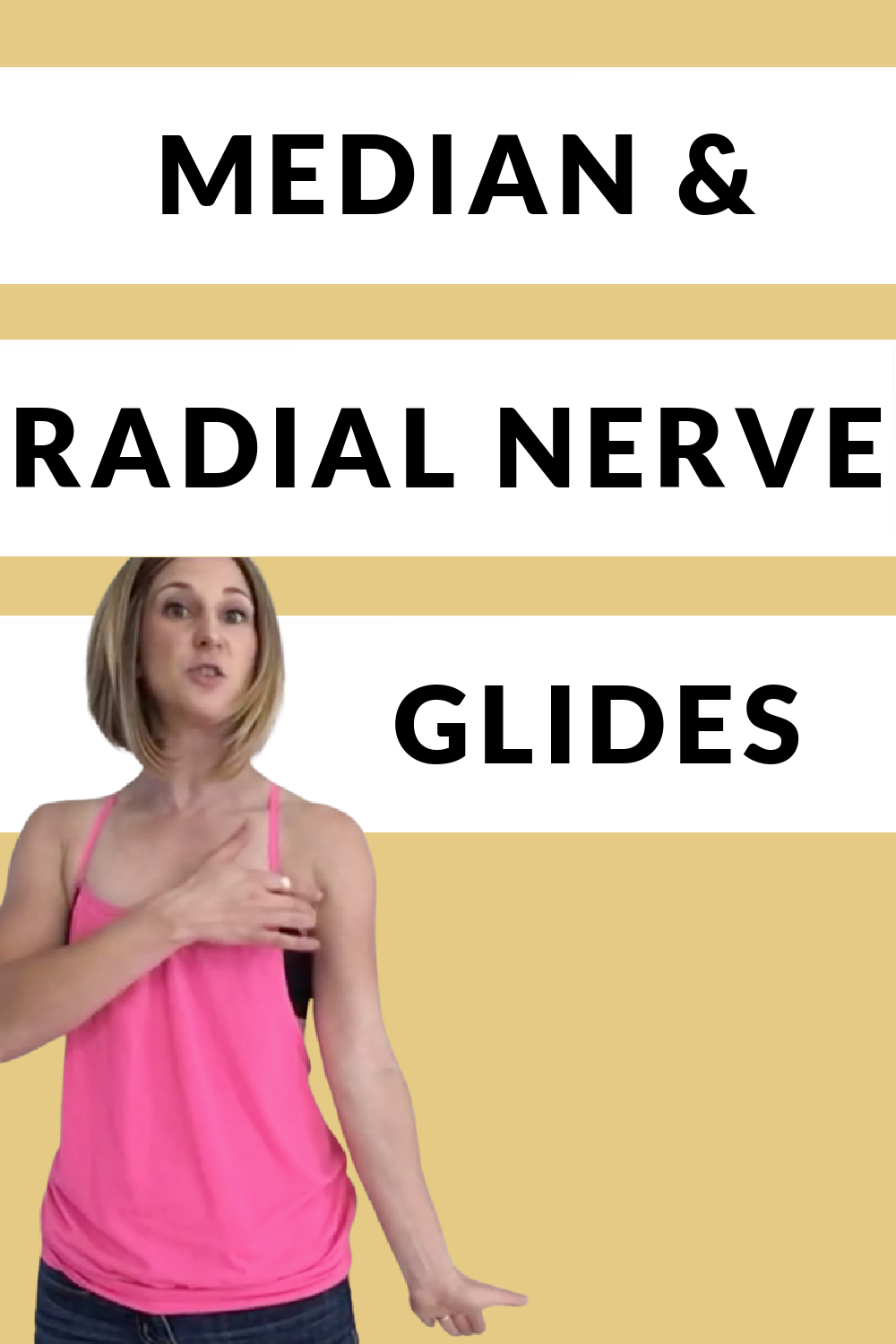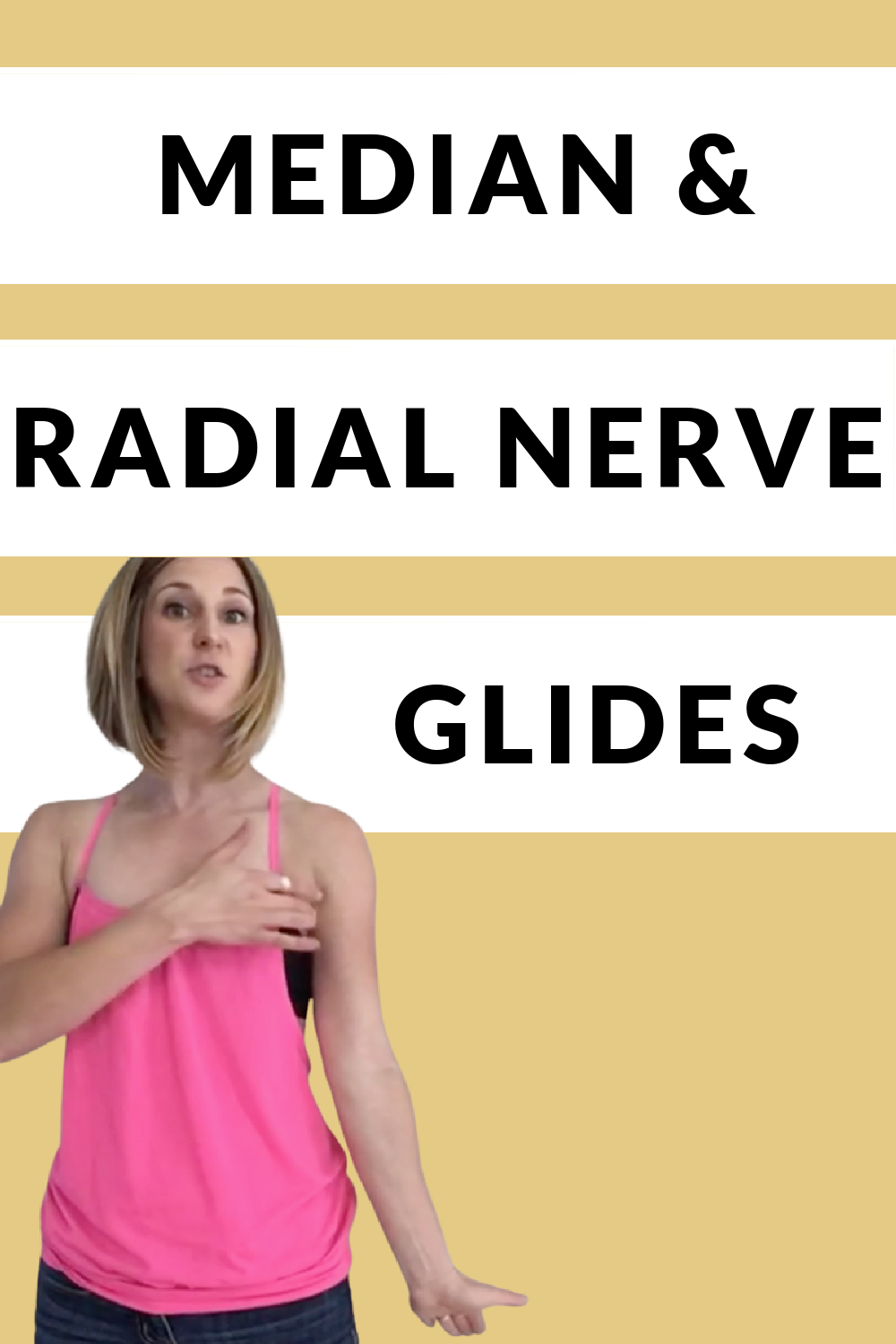
How To Complete Median and Radial Nerve Glides
Originally published: August 23, 2021 | Updated: October 15, 2026
This post contains affiliate links, which means if you click on a link and purchase the item, I will receive an affiliate commission at no extra cost to you. All opinions remain my own. As an amazon associate I earn from qualifying purchases. Please see my disclaimer for more information.
Here are two nerve glide exercises to decrease shoulder, wrist, and hand pain and tingling without surgery.
The median and radial nerves are the most common nerves in the arm to cause problems; including radiating arm pain, numbness and tingling from the arm down to the fingers, aching in the forearm, and difficulty raising your arm above 90 degrees.
Radial and median nerve glides can help with carpal tunnel symptoms and may help some people avoid carpal tunnel surgery.
Who These Nerve Glides Can Help
These exercises can help with:
Neural tension in the upper arm, elbow, wrist, and hand
Numbness and tingling in the arm, wrist, or hand
Median nerve pain
Radial nerve pain
Watch the Video
Watch the video below to learn how to do radial and median nerve glides.
Hello, World!
Timestamps:
00:27 Background on the nerves in the arm and hand (radial and median nerves)
01:22 Median nerve glide
02:31 Radial nerve glide
Why Your Arms and Hands Fall Asleep
When you put pressure on any part of your body, that pressure doesn’t stop at the skin. It goes all the way down into the deeper structures of your body, including your nerves.
Your nerves are rope-like structures that send signals to/from your brain and muscles so you can move. They also carry signals from your skin so you can feel things touching your hands or other body parts. Any tingling you feel in your hands or arms is essentially your body telling your brain that your nerves need to move or that there’s too much pressure on them.
There are three main nerves that go from your neck down your arm: the median nerve, the radial nerve, and the ulnar nerve. In this video we talk about the median nerve and the radial nerve because the nerve glides we use to treat neural tension or difficulty of the nerves moving in the body are very similar.
How to Do a Median Nerve Glide
The median nerve supplies the middle part of your hand, around your middle finger. This is the nerve most responsible for carpal tunnel issues. The video shows you how to do this, so if written directions are difficult to follow make sure you jump here to check it out.
Start in a standing position and extend your arm with your elbow straight
Face your palm away from you and bend your wrist back as far as you can (wrist extension).
Keep your shoulders down, away from your ears.
Slowly bring your arm out to the side (keep your elbow straight and your wrist extended) until you feel a little stretching or pulling in your armpit or along the front of your arm.
Slowly bring your arm back down, then repeat 10-15 times or until your arm is kind of “dead tired,” it’s a different feeling of fatigue than muscular.
Focus on keeping your wrist bent back. That matters more than how far your arm moves away from your body. Make sure that your arm is going outward in a “snow angel” position (shoulder abduction) and not forward or backward. If you lose the wrist extension position, shake it out, bend your wrist back again, and bring your arm out.
Move slowly and don’t hold the stretch at the top. This technique is made to move from arm by your side, to feeling the stretch, to directly back to your side without holding it in any one position.
Keep going until your arm feels pretty tired. I usually aim for 10 to 15 reps, three to five times a day. Your arm may feel like dead weight afterward, like it’s asking, “What did you just do to me?”
How to Do a Radial Nerve Glide
The radial nerve runs along the back of your hand and the outside of your elbow. Sometimes pain on the outside of the elbow isn’t coming from the elbow itself but from this nerve. The video shows you how to do this, so if written directions are difficult to follow make sure you jump here to check it out.
Start in a standing position and extend your arm with your elbow straight
Face your palm behind you and bend your wrist the opposite way, curling it down toward your palm (wrist flexion).
Keep your shoulders down and back.
Slowly bring your arm out to the side (shoulder abduction: think snow angels), until you feel a little stretching or pulling in your armpit or along the front of your arm. Keep your elbow straight and your wrist flexed the whole time.
Then bring it immediately back down (do not hold), and repeat. Keep your elbow straight and your wrist flexed the whole time.
Repeat 10-15 times or until your arm is kind of “dead tired,” it’s a different feeling of fatigue than muscular.
This is usually the tightest one for me, and I feel it all the way down to my wrist. Aim for 10 to 15 reps, three to five times a day.
Pro Tip: Move slowly and don’t hold the stretch at the top. This technique is made to move from arm by your side, to feeling the stretch, to directly back to your side without holding it in any one position.
Listen to Your Body
Nerve glides may aggravate your symptoms a little when you first start, so trust your body and go gently. If your symptoms get worse or don’t improve, check in with a physical therapist or your doctor.
Want to find this video again? Subscribe to Dr. Lauren Baker on YouTube so you can come back to it whenever you need it, or share it with a friend who might benefit.

About the Author
Dr. Lauren Baker holds her Doctorate in Physical Therapy and Certification in Manual Therapy from The University of St. Augustine for Health Sciences. She has built a thriving career while navigating the unique challenges as a military spouse, including serving as an adjunct professor in the DPT curriculum, owning multiple successful cash-based mobile pediatric physical therapy practices, and authoring multiple books on baby development and pediatric physical therapy for both parents and healthcare providers. She now focuses on empowering proactive parents & providers through her books, website, and YouTube channel @drlaurenbaker.